
Deuteronomy 27:4-8 is about the Israelites building an altar with unhewn stones on Mount Ebal as an essential act of worship and commitment to God after entering the Promised Land, symbolizing the unadorned sincerity and purity of their devotion.
4 So when you have crossed over the Jordan, you shall set up these stones, concerning which I command you today, on Mount Ebal, and you shall plaster them with plaster.
5 And there you shall build an altar to the Lord your God, an altar of stones. You shall wield no iron tool on them;
6 You shall build the altar of the Lord your God of uncut stones, and you shall offer burnt offerings on it to the Lord your God.
7 And you shall sacrifice peace offerings and shall eat there, and you shall rejoice before the Lord your God.
8 And you shall write on the stones all the words of this law very plainly.”
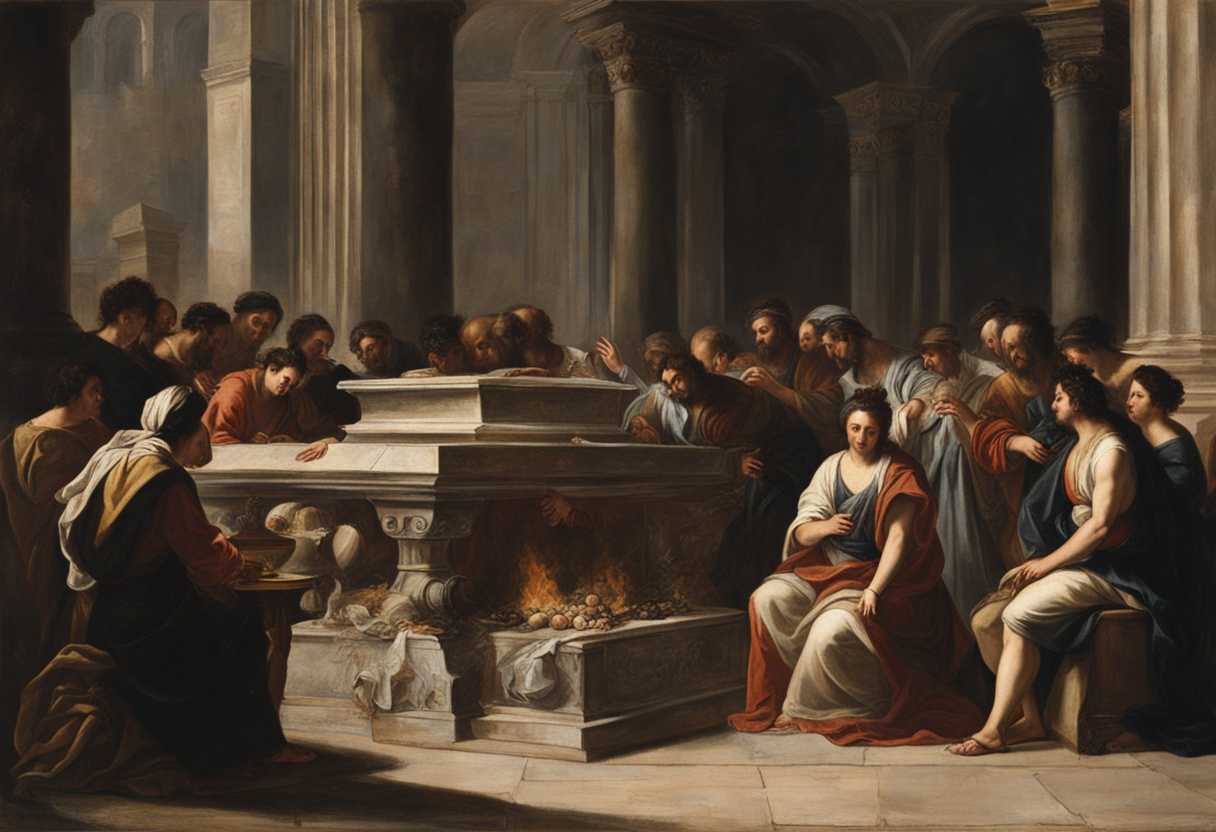
Setting the Scene for Deuteronomy 27:4-8
In Deuteronomy chapter 27, Moses gathers the Israelites at the foot of Mount Ebal to carry out a solemn ceremony. The scene is set in the vast wilderness, with the imposing Mount Ebal in the background and the Israelite camp spread out before it. The people have been journeying through the desert for years, following Moses as he leads them towards the Promised Land.
As the Israelites stand before Mount Ebal, Moses instructs them to build an altar using uncut stones and to inscribe the words of the law on the stones. The elders and priests are present, along with all the tribes of Israel, from the youngest to the oldest. The atmosphere is charged with reverence and anticipation as the people prepare to reaffirm their covenant with God.
The ceremony is a powerful reminder of the importance of obedience to God’s commandments and the consequences of disobedience. As the people stand before the altar, they listen as the blessings and curses of the law are proclaimed. This solemn occasion serves to reinforce the covenant between God and His people, setting the tone for their future as they prepare to enter the land that God has promised them.
What is Deuteronomy 27:4-8 about?
This verse refers to the construction and purpose of an altar in the context of ancient religious practices. The altar is made of uncut stones, symbolizing simplicity and purity in the offering of sacrifices to God. The altar serves as a constant reminder for the worshipers to follow and uphold divine commandments by inscribing God’s law on it.
The sacrifices offered on the altar are a way for the worshipers to demonstrate their devotion and gratitude to God. Through these sacrifices, they seek blessings from God and also acknowledge the consequences of straying from His commandments, hence the declaration of blessings and curses. This verse highlights the significance of rituals and ceremonies in religious practices, emphasizing the importance of obedience and faithfulness to God’s teachings.
Reflect on the imagery of the uncut stones, the inscribed law, the offerings, and the declarations of blessings and curses. Consider how each element’s depth of meaning comes together to create a profound spiritual experience. How does the idea of sacrifice and obedience resonate with your own beliefs and practices? Let this verse inspire you to think about the ways in which you uphold your faith and show reverence to the divine in your own life.
Understanding what Deuteronomy 27:4-8 really means
Deuteronomy 27:4-8 provides us with a profound insight into the significance of God’s law and the importance of establishing a firm foundation in our faith. As Moses instructs the Israelites to set up large stones on Mount Ebal and write the law on them, we see a tangible representation of the permanence and centrality of God’s commandments in the lives of His people. This act serves as a visual reminder of the unchanging nature of God’s word and the necessity of adhering to His laws.
In Joshua 8:30-35, we witness the fulfillment of Moses’ command as Joshua builds an altar on Mount Ebal and inscribes the law on stones. This continuity underscores the continuity and reverence for God’s law across generations. The parallel in Exodus 24:12, where God gives Moses the tablets of stone with the commandments, further emphasizes the written word’s significance as a tangible expression of divine guidance.
Jeremiah 31:33 offers a glimpse into the future, where God promises a new covenant where His law will be written on the hearts of His people. This internalization of God’s word speaks to the transformative power of His commandments in shaping our beliefs and actions. Just as the Israelites needed physical reminders of God’s law, we too require constant reinforcement of our values and principles to stay aligned with God’s will.
Consider a family tradition where essential values are inscribed and prominently displayed in the home, serving as a daily guide for living out those values. Similarly, a friend’s practice of journaling Bible verses and reflections provides a tangible reminder of God’s word, grounding her in faith. These examples mirror the significance of tangible reminders in reinforcing our commitment to God’s teachings and principles.
The phrases in Deuteronomy 27:4-8, such as “Set up these stones” and “Write on them all the words of this law,” highlight the intentional and enduring nature of following God’s commandments. Building an altar to the Lord signifies worship and dedication, emphasizing that obedience to God’s law is an act of reverence and devotion. The instruction to use stones untouched by iron tools underscores the purity and unalterable essence of God’s commandments, emphasizing the need to preserve His word in its original form.
By delving into the depths of these verses and their implications, we gain a deeper understanding of the necessity of a steadfast foundation in our faith and the continual reinforcement of God’s unchanging word in our lives. Let us reflect on the enduring significance of God’s law and strive to uphold His commandments with unwavering dedication and reverence.
What does it mean to acknowledge God’s covenant?
Acknowledging God’s covenant means recognizing the significance of the relationship between God and His people. The act of acknowledging the covenant involves displaying obedience and reverence towards God’s commandments and promises. Individuals commit themselves to following God’s laws and upholding their end of the agreement with God by acknowledging the covenant. The covenant signifies a sacred bond between God and His people, emphasizing the obligations and responsibilities that come with being part of His chosen community.
Acknowledging God’s covenant also entails a deep sense of gratitude for the blessings and protection that God provides to His people. It demonstrates an understanding of the history and faithfulness of God towards His chosen ones. Individuals affirm their belief in God’s faithfulness by acknowledging the covenant, recognizing His role as the ultimate authority and source of guidance in their lives. This act of acknowledgment serves as a reminder of the enduring relationship between God and His people, highlighting the importance of faith, obedience, and trust in God’s plan. Acknowledging God’s covenant involves making a public declaration and affirming one’s commitment to following God’s commandments and living according to His will. It is a proactive step towards maintaining a close relationship with God and ensuring that His laws are upheld within the community. Individuals acknowledge their dependence on God for protection, guidance, and blessings by acknowledging the covenant, recognizing His sovereignty and their role as faithful followers. Acknowledging God’s covenant is a profound act of faith, loyalty, and devotion to God and His teachings.
Application
Embrace the call to action from Deuteronomy 27:4-8. God seeks dedication and obedience, not just empty promises. Let’s go beyond lip service and embody His teachings in our everyday actions. Will you rise up with resolve and steadfast faith to answer His call?

Reverend Michael Johnson is an experienced Church Minister with a profound expertise in spirituality and guidance. With a serene presence and a compassionate heart, he has faithfully served his congregation for over 20 years, leading them on a spiritual journey towards inner peace and enlightenment. Reverend Johnson’s extensive knowledge of religious philosophies and profound understanding of human nature have made him a trusted confidant and mentor to many, as he seamlessly weaves his profound wisdom into life teachings. Reverend Johnson’s calming demeanor and empathetic nature continue to uplift and heal souls, nurturing a sense of unity and tranquility within his community.