
68 And the Lord will bring you back in ships to Egypt, a journey that I promised that you should never make again; and there you shall offer yourselves for sale to your enemies as male and female slaves, but there will be no buyer.”
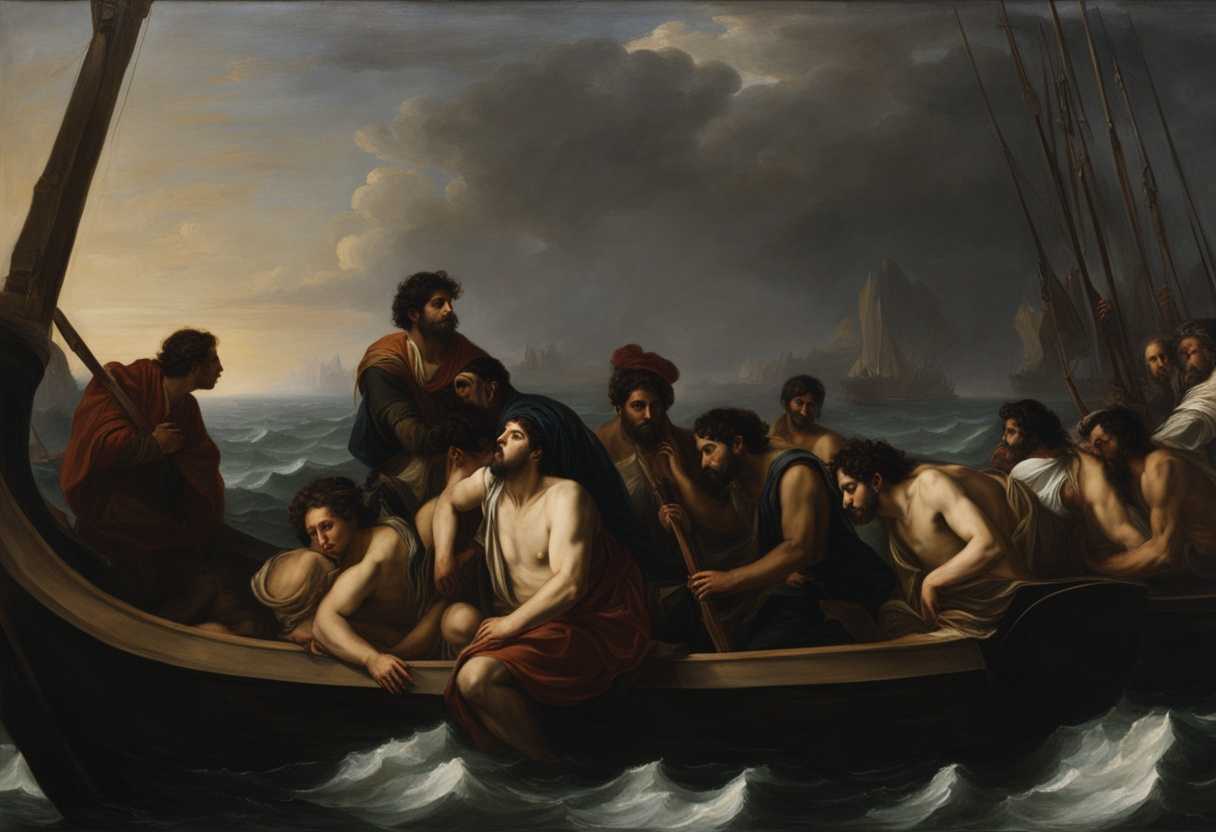
Setting the Scene for Deuteronomy 28:68
In Deuteronomy chapter 28, Moses is addressing the Israelites before they enter the Promised Land. The scene is set in the vast wilderness, with the Israelites gathered around Moses as he delivers a solemn message from God. The Israelites have been wandering in the desert for forty years, enduring trials and tribulations as they await their entry into the land flowing with milk and honey.
Among the crowd are men, women, and children of all ages, their faces weathered from years of journeying through the harsh terrain. Some are listening intently, while others are weary from the long journey. Moses, a venerable figure with a long white beard, stands before them, his voice resonating with authority as he speaks of the blessings and curses that will come upon them depending on their obedience to God’s commandments.
As Moses reaches the conclusion of his speech, he warns the Israelites of the consequences of turning away from God. He speaks of the possibility of being taken captive and sold into slavery in a foreign land, a fate that would befall them if they stray from the path of righteousness. The weight of his words hangs heavy in the air, a stark reminder of the importance of faithfulness and obedience to God’s laws.
What is Deuteronomy 28:68 about?
This verse from Deuteronomy foretells a grave consequence of disobedience and turning away from God. “The Lord will bring you back to Egypt in ships” symbolizes a severe punishment for those who do not obey His commandments. It points to a state of captivity, oppression, and slavery. God is warning about the consequences of straying from His ways by returning to Egypt, the place of the Israelites’ former bondage and suffering.
Reflecting on this verse prompts us to consider the importance of obedience and faithfulness in our relationship with God. It challenges us to examine our own actions and choices, questioning whether they align with God’s will. The imagery of being brought back to Egypt in ships serves as a stark reminder of the potential repercussions of straying from the path of righteousness. It encourages us to stay steadfast in our faith and walk in obedience to God to avoid the spiritual captivity and suffering that disobedience may bring.
Understanding what Deuteronomy 28:68 really means
To provide a structured commentary on this verse, we’ll follow these steps:
- Introduction and Context
- Key Phrases and Their Meanings
- Relevant Cross-References
- Modern-Day Relevance
- Anecdotal Illustration
- Conclusion and Reflection
Introduction and Context
Deuteronomy 28:68 is part of a larger passage in which Moses outlines the blessings for obedience and the curses for disobedience to God’s commandments. This verse specifically addresses the severe consequences that will befall the Israelites if they turn away from God. Understanding this verse requires us to see it in the context of the covenant relationship between God and Israel, where obedience brings blessings and disobedience results in curses.
Key Phrases and Their Meanings
The phrase “The Lord will send you back in ships to Egypt” is particularly striking. Egypt symbolizes bondage and oppression, a place from which God had delivered the Israelites. Returning there signifies a reversal of God’s salvation and a return to a state of slavery. This is a powerful imagery of lost freedom due to disobedience.
Another poignant phrase is “by the way of which I said to you, ‘You shall never see it again.’” This emphasizes the severity of their disobedience, as it leads them back to a place they were never meant to return. It’s a stark reminder of the consequences of forsaking the path God has set.
Relevant Cross-References
Jeremiah 42:15-16 warns the Israelites that if they return to Egypt, seeking safety, they will face the sword and famine they fear. This reinforces the idea that disobedience leads to the very perils they seek to avoid.
Hosea 11:5 also speaks of Israel returning to Egypt and Assyria because of their refusal to repent. These cross-references highlight a recurring theme in the Bible: disobedience leads to bondage and suffering.
Modern-Day Relevance
Today, this verse serves as a sobering reminder of the consequences of turning away from God’s guidance. While we may not face literal enslavement, disobedience can lead to various forms of bondage — addiction, broken relationships, and spiritual emptiness. A man chose to misuse substances despite knowing the dangers. His disobedience to wisdom and guidance led him into a state of addiction, a modern form of “returning to Egypt.” It was only through recognizing his need for help and turning back to a supportive community that he found freedom again.
Anecdotal Illustration
Let me share a story from my own congregation. A young woman, despite being raised in a loving, faith-filled home, chose to pursue a lifestyle contrary to her upbringing. She sought freedom in worldly pleasures but found herself in a metaphorical “Egypt” of loneliness and despair. It was only when she turned back to her faith community that she experienced true liberation and peace.
Conclusion and Reflection
Deuteronomy 28:68 is a powerful reminder of the consequences of disobedience and the importance of remaining faithful to God’s commandments. Let us consider this verse as we reflect on our own lives. Are there areas where we are straying from God’s path? What “Egypts” are we risking returning to?
May this verse inspire us to remain steadfast in our faith and obedient to God’s guidance, knowing that true freedom lies in His ways. Let us encourage one another to stay the course, avoiding the pitfalls of disobedience and embracing the blessings of a life lived in harmony with God’s will.
How does God deliver us from slavery?
God delivers us from slavery by bringing us out with great power and a mighty hand. He sets us free from the oppression and bondage of slavery, leading us into a place where we can experience freedom and life abundantly. Through His intervention and miraculous works, God uproots us from the chains of slavery and guides us towards a new beginning. We invite His deliverance into our lives by trusting in God and obeying His commands. The fulfillment of His promises brings about our liberation from slavery, both physically and spiritually. Through His grace and mercy, God shows us the way to break free from the shackles of sin and bondage, leading us to a life of freedom, righteousness, and peace.
Application
Think of your life as a GPS – sometimes we take the wrong turn. Deuteronomy 28:68 is like a warning, recalculating your route. Are you ready to correct your course and follow God’s directions, so you land where you truly want to be? Your actions today will shape your tomorrow. Are you prepared to walk the right path?

Reverend Michael Johnson is an experienced Church Minister with a profound expertise in spirituality and guidance. With a serene presence and a compassionate heart, he has faithfully served his congregation for over 20 years, leading them on a spiritual journey towards inner peace and enlightenment. Reverend Johnson’s extensive knowledge of religious philosophies and profound understanding of human nature have made him a trusted confidant and mentor to many, as he seamlessly weaves his profound wisdom into life teachings. Reverend Johnson’s calming demeanor and empathetic nature continue to uplift and heal souls, nurturing a sense of unity and tranquility within his community.