
Deuteronomy 2:16-23 is about God directing the Israelites on their journey through the wilderness and how God’s power was demonstrated through their victories over various nations.
16 “So as soon as all the men of war had perished and were dead from among the people,
17 the Lord said to me,
18 You are to pass through the territory of your brothers the people of Esau, who live in Seir; and they will be afraid of you. So be very careful.
19 And when you approach the territory of the people of Ammon, do not harass them or contend with them, for I will not give you any of the land of the people of Ammon as a possession, because I have given it to the sons of Lot for a possession.’”
20 (It is also counted as a land of Rephaim. Rephaim formerly lived there, but the Ammonites call them Zamzummim,).
21 a people great and many, and tall as the Anakim, but the Lord destroyed them before the Ammonites, and they dispossessed them and settled in their place,
22 As he did for the people of Esau, who live in Seir, when he destroyed the Horites before them, and they dispossessed them and settled in their place even to this day.
23 As for the Avvim, who lived in villages as far as Gaza, the Caphtorim, who came from Caphtor, destroyed them and settled in their place.
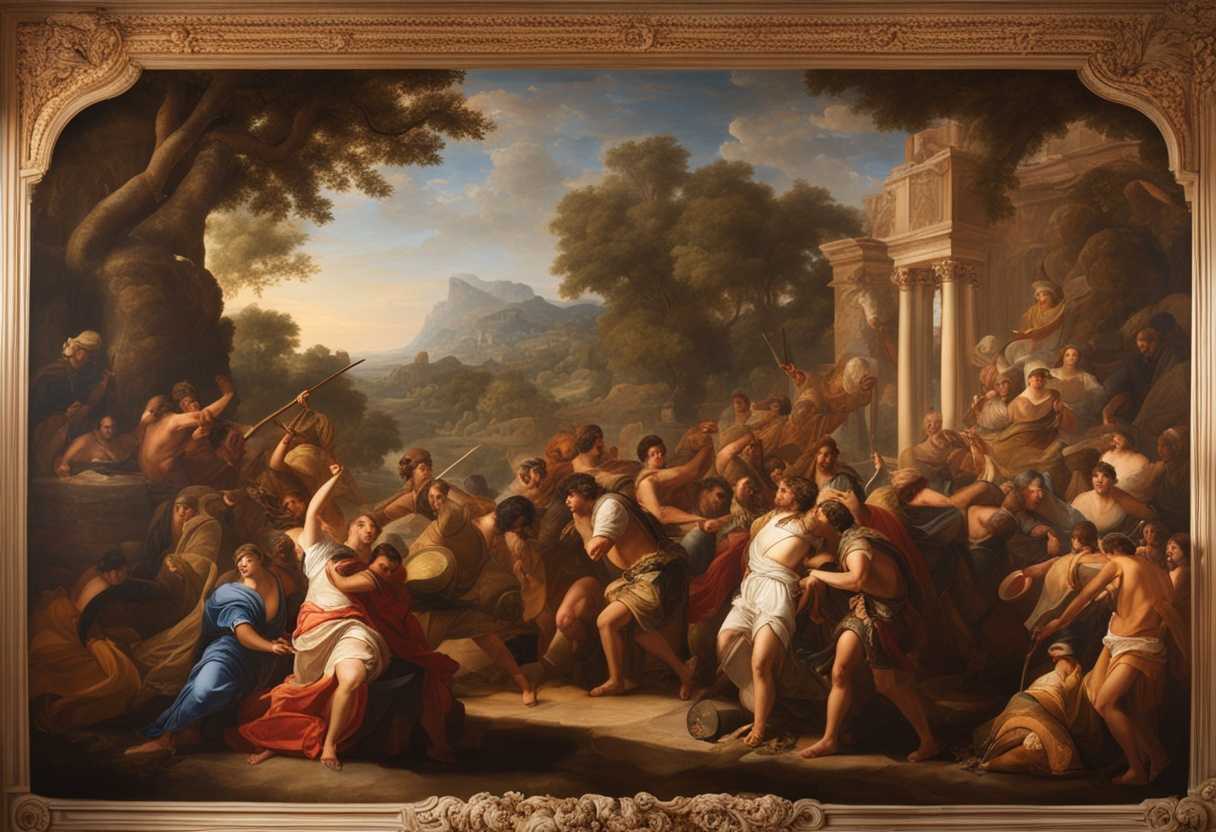
Setting the Scene for Deuteronomy 2:16-23
In the scene described in Deuteronomy 2:16-23, we find the Israelites on their journey through the wilderness towards the Promised Land. They had been wandering for years, following the guidance of Moses and Aaron, as they sought the land that God had promised to their ancestors. The group was made up of men, women, and children, all carrying their belongings and herding their livestock through the harsh desert terrain.
As they traveled, they encountered various nations and territories along the way. In this particular passage, the Israelites approached the land of the Ammonites, descendants of Lot, who were not to be disturbed by the Israelites as it was not part of the land promised to them by God. The Ammonites were known for their strength and military prowess, and the Israelites respected the boundaries set by God.
The surroundings were arid and unforgiving, with rocky terrain and scarce vegetation. The sun beat down relentlessly on the weary travelers as they pressed on towards their destination, guided by their faith in God’s promise. The scene captures a moment of obedience and trust as the Israelites respected the boundaries set by God and continued on their journey, despite the challenges they faced along the way.
What is Deuteronomy 2:16-23 about?
God promises the people of Israel the land He had promised to their ancestors in this verse. This promise was not merely about physical land, but it symbolized God’s faithfulness, protection, and provision for His people. God would demonstrate His power and sovereignty by defeating their enemies, ensuring that Israel’s possession of the land was secure and prosperous. This verse speaks to the covenant relationship between God and the Israelites, where God’s promises are a source of hope and assurance for His people.
Think about the significance of God’s promise in this verse. How does it reflect His character as a faithful and powerful God? God’s promise to defeat their enemies speaks to His role as their protector and defender in the journey of the Israelites and the challenges they faced. Reflect on the broader themes of trust, obedience, and God’s sovereignty in the context of this promise. We are invited to trust in God’s promises for us as we ponder this verse, knowing that He is faithful to fulfill His plans for our lives just as He did for the people of Israel.
Understanding what Deuteronomy 2:16-23 really means
In Deuteronomy 2:16-23, we delve into a pivotal moment in Israel’s journey through the wilderness, where the torch is passed from the older generation to the new. As Moses recounts this transition, we witness the significance of obedience and faithfulness in God’s plan. The phrase “When all the men of war had perished and were dead from among the people” marks the end of an era characterized by disobedience, paving the way for a fresh start for the Israelites. It serves as a poignant reminder of the consequences of straying from God’s path and the importance of staying steadfast in our faith.
“Rise up, set out on your journey and go over the Valley of the Arnon” resonates as a call to action, urging the Israelites to step forward in faith and embrace the unknown with trust in God’s guidance. This directive symbolizes the continuous movement and progression required in our spiritual walk, emphasizing the need to follow God’s lead even when the path seems uncertain. The assurance that “I have given into your hand Sihon the Amorite, king of Heshbon, and his land” showcases God’s faithfulness in fulfilling His promises and delivering victory over adversaries, reinforcing the Israelites’ reliance on His provision.
Drawing parallels to Numbers 14:29-30, we understand the consequences of disobedience and the importance of heeding God’s commands for our lives. Similarly, Joshua 1:2-3 echoes the sentiment of seizing the opportunities presented by God, mirroring the encouragement found in Deuteronomy 2:16-23 to claim the promises set before us. Hebrews 3:16-19 serves as a cautionary tale, reminding us of the perils of unbelief and the necessity of remaining faithful to God’s word.
The relevance of this passage extends beyond ancient Israel, resonating with us today as a metaphor for personal renewal and the enduring nature of God’s promises. Just as the new generation of Israelites had to learn from the past and trust in God’s guidance, we are called to reflect on our own histories, embrace God’s leading, and move forward with unwavering faith. The anecdote of a family business transitioning between generations illustrates this beautifully, emphasizing the blend of tradition and innovation, mirroring the balance between learning from the past and embracing new directions in our spiritual journey.
In conclusion, Deuteronomy 2:16-23 stands as a testament to God’s faithfulness, urging us to walk in obedience and trust in His timing and provision. It serves as a beacon of hope, guiding us to learn from past mistakes, embrace new beginnings, and move forward with renewed faith in God’s promises. This passage speaks to universal themes of renewal, trust, and the fulfillment of God’s plans, offering timeless wisdom for our spiritual growth and journey with the Lord.
How can we show kindness and respect to strangers?
One way to show kindness and respect to strangers, following the guidance of this verse, is by practicing empathy and putting ourselves in their shoes. We can approach strangers with understanding and compassion by considering their challenges and experiences. This can involve actively listening to their stories, acknowledging their humanity, and treating them with dignity.
Additionally, we can show kindness and respect to strangers by offering them assistance and support when needed. This can include providing practical help such as food, shelter, or guidance, as well as emotional support through words of encouragement or a listening ear. We demonstrate our willingness to stand in solidarity with strangers and promote a sense of community and connection by extending a helping hand to them.
Another way to show kindness and respect to strangers is by being inclusive and welcoming towards them. This can involve creating a safe and inclusive space where strangers feel accepted and valued, regardless of their background or circumstances. We can strengthen relationships within our community and promote a sense of unity and belonging by fostering an environment of respect and kindness towards all individuals.
Application
Dear reader, when we look at Deuteronomy 2:16-23, we see that God always keeps His promises at the right moment. Like a compass guiding a ship in a storm, He directs us through life’s trials. Let’s embrace His timing, knowing that He will provide for us just as he did for the Israelites. Will you have faith in His plan for your life, believing that He will lead you to prosperity and joy?

Reverend Michael Johnson is an experienced Church Minister with a profound expertise in spirituality and guidance. With a serene presence and a compassionate heart, he has faithfully served his congregation for over 20 years, leading them on a spiritual journey towards inner peace and enlightenment. Reverend Johnson’s extensive knowledge of religious philosophies and profound understanding of human nature have made him a trusted confidant and mentor to many, as he seamlessly weaves his profound wisdom into life teachings. Reverend Johnson’s calming demeanor and empathetic nature continue to uplift and heal souls, nurturing a sense of unity and tranquility within his community.