
Deuteronomy 32:17 is about warning against the seductive temptation of false idols and the dangers of straying from the true path of faith.
17 They sacrificed to demons that were no gods,
to gods they had never known,
to new gods that had come recently,
whom your fathers had never dreaded.
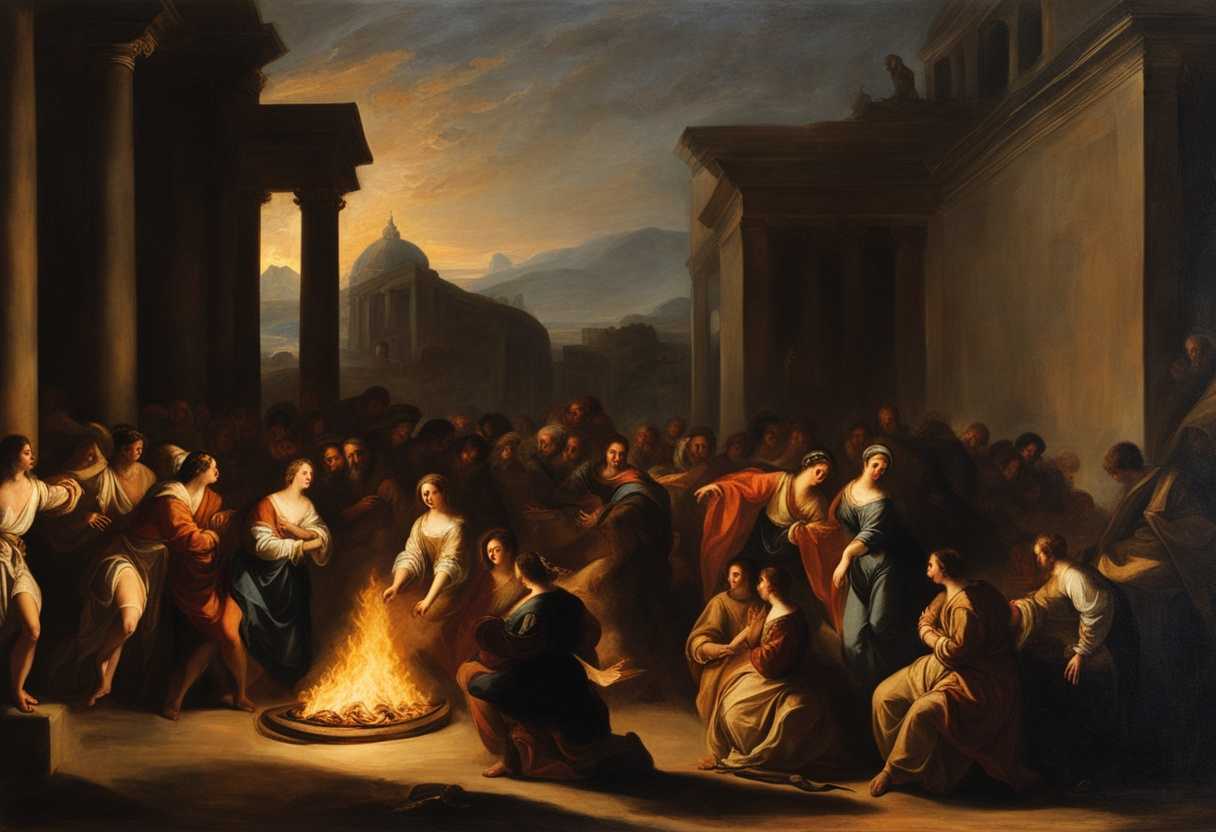
Setting the Scene for Deuteronomy 32:17
The scene in Deuteronomy 32:17 takes place in the wilderness during the time when the Israelites were wandering after their exodus from Egypt. The Israelites, led by Moses, had been traveling through the desert for years, following the guidance of God. The surroundings are harsh and barren, with vast stretches of sand and rocky terrain under the scorching sun.
In this particular moment, the Israelites have set up camp for the night, with their tents pitched around a central fire. As the night falls, some of the Israelites begin to stray from their faith and start worshiping false gods, idols made of gold and silver. These actions provoke the anger of God, who had shown them numerous miracles and signs of His power.
Moses, upon seeing this disobedience, is filled with sorrow and frustration. He knows that the Israelites are testing the patience of God and risking His wrath. The scene captures the tension between the chosen people of God and their struggle to remain faithful in the face of adversity and temptation.
What is Deuteronomy 32:17 about?
The verse in Deuteronomy 32:17 emphasizes the grave consequences of turning away from God and worshiping false idols. It serves as a stark reminder of the dangers of straying from the path of righteousness and falling into the trap of idolatry. The people described in the verse have willfully turned their backs on the one true God who offers love, guidance, and salvation by sacrificing to demons and idols instead of God. This verse underscores the importance of staying faithful to God, avoiding the allure of false gods, and honoring the divine presence in our lives.
Have you ever considered what idols might be present in your own life? It’s not just physical statues or objects that can become idols, but anything that we prioritize above God. This verse challenges us to reflect on where our devotion lies and whether we are truly worshiping the one true God. It prompts us to reevaluate our actions, choices, and beliefs to ensure that we are not inadvertently sacrificing to demons or idols that are not God. We can realign our hearts and minds with the will of God, embracing His love and avoiding the pitfalls of idolatry by heeding the message of this verse.
Understanding what Deuteronomy 32:17 really means
In the book of Deuteronomy, we find Moses delivering his final messages to the Israelites as they prepare to enter the Promised Land. Chapter 32, often referred to as the Song of Moses, stands out as a poignant reminder of God’s faithfulness throughout history and a stern warning against the allure of idolatry. The text paints a vivid picture of the Israelites’ descent into idol worship, a stark deviation from their covenant with the one true God.
“They sacrificed to demons, not to God,” a chilling phrase that exposes the Israelites’ betrayal of their divine covenant. It unveils the gravity of their actions, choosing to offer sacrifices to entities devoid of true power or righteousness. The mention of “Gods they had not known” underscores the foreign and counterfeit nature of these idols, contrasting sharply with the familiar and faithful God who had guided them through the wilderness.
The reference to “new gods that had come recently” hints at the seductive appeal of contemporary spiritual trends that deviate from the established truths of their faith. It serves as a cautionary tale against being swayed by the latest fads in spirituality that may lead one astray from the solid foundation of God’s Word. Additionally, the phrase “whom your fathers had never dreaded” points to a generational shift away from the reverence and fear of the Lord that had characterized their ancestors’ relationship with God.
Drawing parallels from related biblical passages such as Exodus 20:3-5, 1 Corinthians 10:20, and Psalm 106:37, we see a consistent warning against the dangers of idolatry throughout Scripture. These passages reinforce the severity of turning away from the true God and the dire consequences of placing false gods above Him. The echoes of these warnings resonate through the ages, reminding us of the timeless relevance of remaining steadfast in our faith.
In our contemporary context, idolatry may manifest in subtler forms than bowing before statues. It can seep into our lives through the prioritization of material possessions, status, or even relationships above our devotion to God. The cautionary tale of the Israelites serves as a mirror for us to examine our own hearts and identify any modern idols that may be vying for supremacy in our lives.
Consider a scenario where a driven professional becomes consumed by their career, neglecting their spiritual well-being and relationships in pursuit of success. Though not overtly worshipping an idol, their career has taken precedence over their connection with God, mirroring the Israelites’ misplaced priorities. This anecdote serves as a poignant reminder for us to evaluate our own lives and ensure that God remains at the center of our affections and priorities.
In conclusion, Deuteronomy 32:17 stands as a timeless admonition against the dangers of idolatry and a call to unwavering faithfulness to the one true God. It prompts us to reflect on the “new gods” that may be subtly creeping into our lives and redirects us to realign our hearts with the foundational truths of our faith. Let us heed this warning, remaining vigilant against the allure of false gods and steadfast in our devotion to the God who has been faithful throughout generations.
How can we avoid idolatry and stay faithful to God?
To avoid idolatry and remain faithful to God, we must acknowledge and remember that God alone is worthy of our worship and devotion. Idolatry occurs when we put anything or anyone above God in our lives, whether it be material possessions, power, relationships, or even our own desires. We can guard our hearts and minds against the temptation to worship anything else by recognizing God’s supreme power, love, and authority over all things.
Staying faithful to God also involves actively seeking a relationship with Him through prayer, reading His Word, and worshipping Him in spirit and truth. We can strengthen our faith and resist the lure of idolatry by prioritizing our connection with God and allowing His truth to guide our thoughts and actions. Additionally, surrounding ourselves with a community of believers who encourage, support, and hold us accountable in our faith journey can provide a strong foundation for staying faithful to God amidst the distractions and temptations of the world. Staying faithful to God ultimately requires us to make a conscious effort to align our hearts and minds with His will, constantly seeking His guidance and following His commandments. We can resist the pitfalls of idolatry and walk in obedience to His word by fixing our eyes on God and trusting in His promises.
Application
Think about your daily grind—work, family, endless to-dos. Imagine if you gave God the same priority as those tasks. What are the ‘idols’ that pull your focus away from Him? Is it your job, social media, or even hobbies? Clear the clutter that’s blocking your path to God. Are you ready to truly put Him first and see the difference that makes in your life?

Reverend Michael Johnson is an experienced Church Minister with a profound expertise in spirituality and guidance. With a serene presence and a compassionate heart, he has faithfully served his congregation for over 20 years, leading them on a spiritual journey towards inner peace and enlightenment. Reverend Johnson’s extensive knowledge of religious philosophies and profound understanding of human nature have made him a trusted confidant and mentor to many, as he seamlessly weaves his profound wisdom into life teachings. Reverend Johnson’s calming demeanor and empathetic nature continue to uplift and heal souls, nurturing a sense of unity and tranquility within his community.