
Deuteronomy 34:10-12 is about recognizing Moses as a unique and unmatched prophet chosen by God, who performed exceptional miracles, displayed wisdom and humility, and left behind a legacy of great impact on the Israelites.
10 And there has not arisen a prophet since in Israel like Moses, whom the Lord knew face to face,
11 in all the mighty power and all the great deeds of terror that Moses did in the sight of all Israel.
12 and for all the mighty power and all the great deeds of terror that Moses did in the sight of all Israel.
Setting the Scene for Deuteronomy 34:10-12
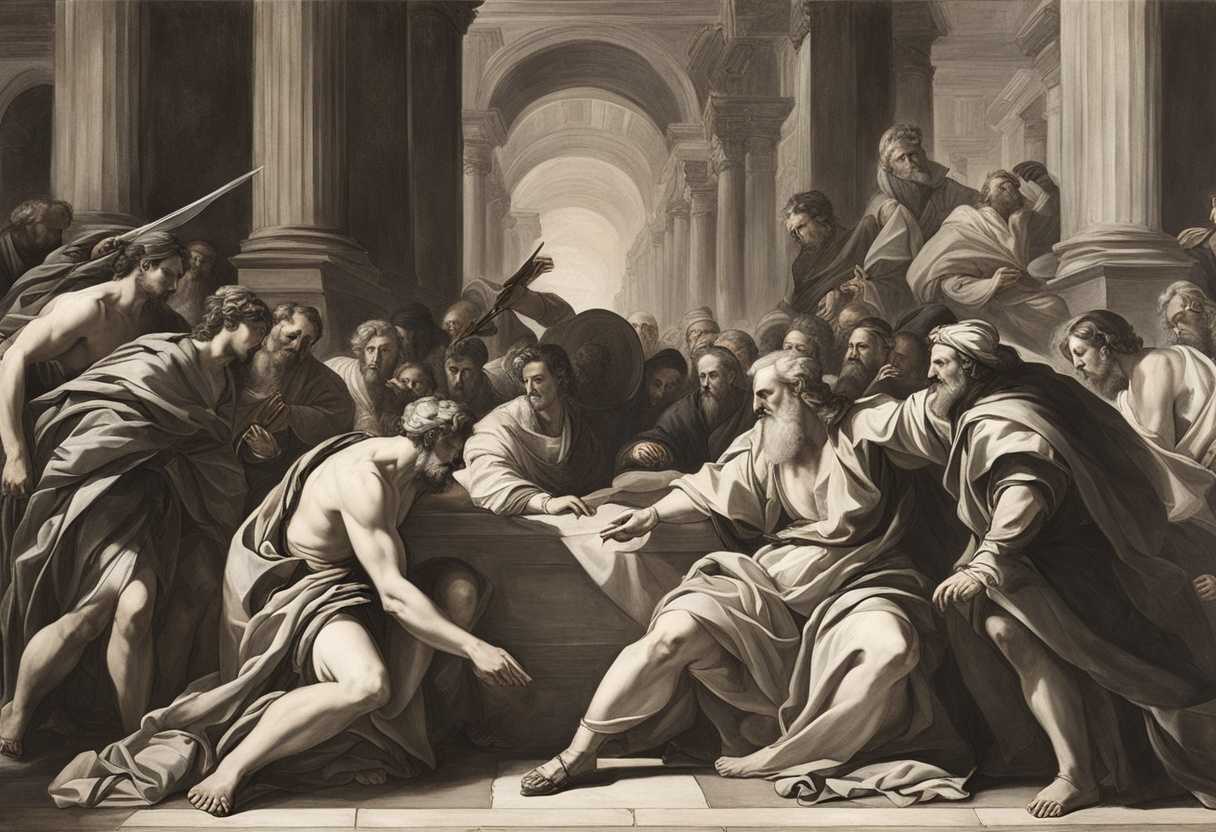
The scene in Deuteronomy 34:10-12 takes place after the death of Moses, the great leader of the Israelites. Joshua, who had been Moses’ assistant and chosen successor, now finds himself in a position of leadership. The Israelites have been wandering in the wilderness for forty years, and they are on the cusp of entering the Promised Land.
As Joshua stands before the people, he is filled with the spirit of wisdom and leadership, for Moses had laid his hands on him and passed on his authority. The Israelites look to Joshua with respect and trust, knowing that he has been chosen by God to lead them into the land flowing with milk and honey.
The surroundings are significant, as they are standing on the plains of Moab, overlooking the Jordan River and the land of Canaan beyond. The sun is setting, casting a warm glow over the scene, symbolizing the end of one chapter and the beginning of a new journey for the Israelites. The people are filled with anticipation and hope as they prepare to follow Joshua into the land promised to their ancestors.
What is Deuteronomy 34:10-12 about?
This verse highlights a significant transition in the history of the Israelites. The death of Moses, the revered leader who had led the Israelites out of Egypt and received the Ten Commandments from God, marks the end of an era. However, it also signifies the continuation of God’s plan for His people. Joshua, who had been a faithful servant to Moses and was chosen by God to succeed him, steps into the role of leadership to guide the Israelites into the promised land of Canaan. This fulfillment of God’s promise demonstrates His faithfulness and the importance of obedience and trust in His plan. We can ponder the themes of leadership, faithfulness, and the fulfillment of promises as we reflect on this verse. The Israelites faced challenges, doubts, and uncertainties along their journey. Yet, through it all, God remained steadfast in His promises and provided guidance and strength for His people. We can find encouragement and reassurance in knowing that God’s plans for us are good, and He will faithfully lead us into the fulfillment of His promises, just as He did for the Israelites under Joshua’s leadership in our own lives. What lessons can we draw from Moses and Joshua’s stories to apply to our own journeys of faith and leadership? How can we cultivate obedience and trust in God’s plan, even when faced with unknown circumstances or challenges? God guides us towards His promised blessings every step of the way, let us take heart in this reminder.
Understanding what Deuteronomy 34:10-12 really means
In Deuteronomy 34:10-12, we reach the culmination of Moses’ life and leadership journey. These verses encapsulate the unparalleled connection between Moses and God, showcasing the profound influence of Moses on the Israelites. The phrase “Since then, no prophet has risen in Israel like Moses” underscores the exceptional nature of Moses’ prophetic role and his unparalleled closeness to God. This unique relationship is further emphasized by the statement “whom the Lord knew face to face,” highlighting the intimate and direct communication Moses shared with the Divine, a level of intimacy not experienced by other prophets. Additionally, the mention of “who did all those signs and wonders” points to the miraculous acts performed by Moses, such as the plagues in Egypt and the parting of the Red Sea, solidifying his authority and mission in the eyes of all Israel.
Drawing parallels from related biblical passages, Exodus 33:11 reinforces the extraordinary relationship between God and Moses, where the Lord spoke to Moses face to face as one speaks to a friend. Numbers 12:6-8 further distinguishes Moses from other prophets, as God declares His direct and clear communication with Moses. Looking ahead to the New Testament, Hebrews 3:5-6 acknowledges Moses’ faithfulness as a servant in God’s house while also pointing to Jesus Christ as the ultimate authority over God’s house.
The relevance of Moses’ life extends to contemporary times, offering valuable lessons on leadership, intimacy with God, and the power of witness and testimony. Moses exemplifies faithful and humble leadership, emphasizing the importance of serving others and obeying God’s calling. His intimate relationship with God inspires believers to seek a deeper connection with the Divine, illustrating that God desires personal communication with His people. Moreover, just as Moses’ actions were witnessed by all Israel, our lives serve as a testimony to others about our faith and the God we serve.
Consider a modern-day leader who, like Moses, perseveres through challenges fueled by unwavering faith and a deep relationship with God. Picture a community leader tirelessly working to uplift those around them, drawing strength from their faith. Their actions, akin to Moses’, become a compelling testament to the transformative power of faith and dedication.
In conclusion, Deuteronomy 34:10-12 stands as a poignant reminder of Moses’ extraordinary life and the enduring impact of his leadership. It prompts us to reflect on our own relationship with God, our responsibilities as leaders in our communities, and the legacy we aspire to leave behind.
How can we seek to know God more deeply?
To seek to know God more deeply, we can learn from the example of Moses as described in the verse. Moses had a unique intimacy with God, speaking to Him face to face and performing signs and wonders that showcased God’s power. We can deepen our knowledge of God by seeking to establish a personal and close relationship with Him through prayer, meditation on His Word, and obedience to His commands.
Like Moses, who walked closely with God and followed His guidance, we can strive to align our will with God’s will. We can grow in our knowledge and experience of God by seeking to understand His character, His attributes, and His ways through studying the Scriptures and reflecting on His faithfulness in our lives. Cultivating a deeper relationship with Him allows us to trust Him more fully, serve Him more wholeheartedly, and glorify Him in all that we do.
Application
Embrace Moses’ legacy, dive into the word just like you would into your work or family. Be inspired by his obedience and commitment to God. Walk with faith, wholeheartedly following His ways. Will you step up and live today with the same devotion Moses had?

Reverend Michael Johnson is an experienced Church Minister with a profound expertise in spirituality and guidance. With a serene presence and a compassionate heart, he has faithfully served his congregation for over 20 years, leading them on a spiritual journey towards inner peace and enlightenment. Reverend Johnson’s extensive knowledge of religious philosophies and profound understanding of human nature have made him a trusted confidant and mentor to many, as he seamlessly weaves his profound wisdom into life teachings. Reverend Johnson’s calming demeanor and empathetic nature continue to uplift and heal souls, nurturing a sense of unity and tranquility within his community.