
Deuteronomy 5:2-3 is about emphasizing the importance of actively listening and obeying the commandments given by God as a way to cultivate a faithful relationship with Him.
2 The Lord our God made a covenant with us at Horeb.
3 The Lord did not make this covenant with our fathers, but with us, who are all of us here alive today.
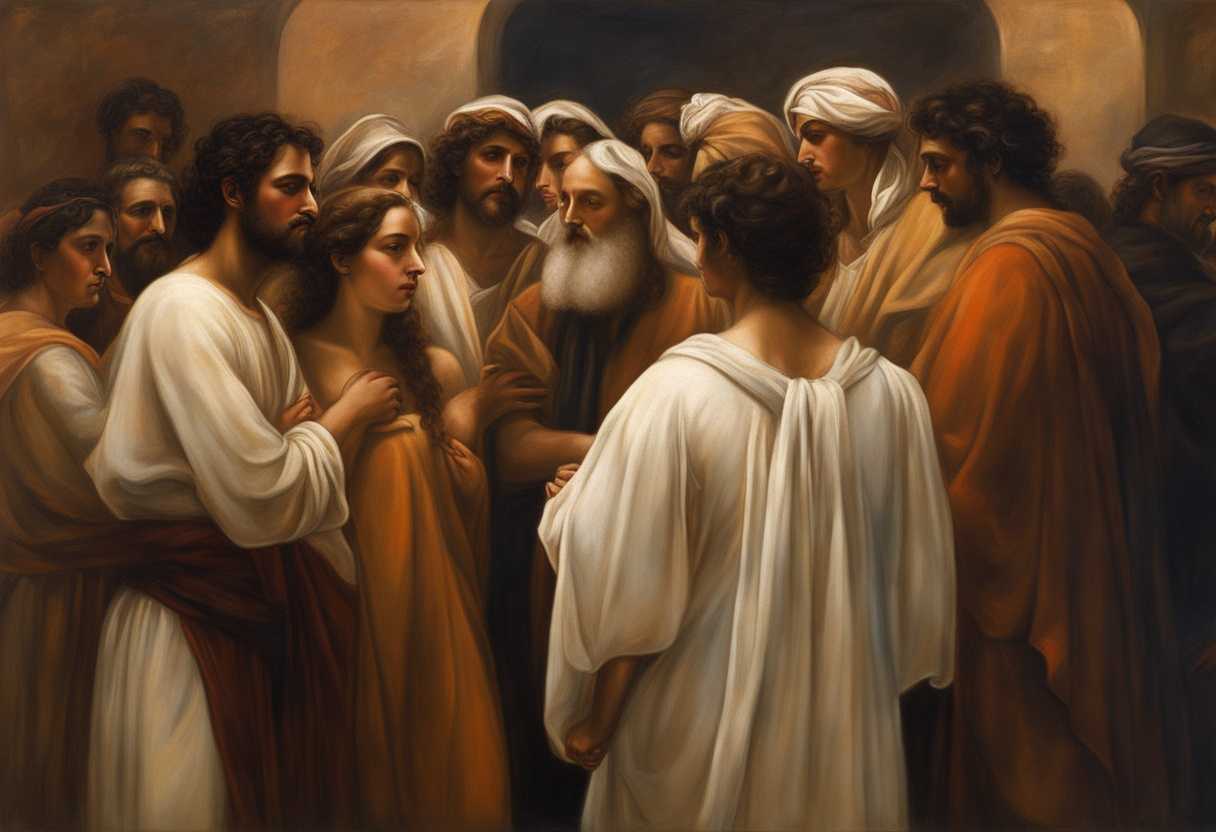
Setting the Scene for Deuteronomy 5:2-3
The scene in Deuteronomy chapter 5 takes place at the foot of Mount Sinai, where the Israelites have been camped for some time. The Israelites, led by Moses, have just been freed from slavery in Egypt and are now on their journey to the Promised Land. The atmosphere is charged with anticipation and reverence as the people gather to hear the words of the Lord.
Moses stands before the vast assembly of men, women, and children, their faces turned towards him in rapt attention. Surrounding them are the rugged cliffs and slopes of Mount Sinai, shrouded in a haze of mystery and majesty. The air is still, save for the occasional rustle of robes or the low murmur of the crowd.
As Moses begins to speak, his voice carries across the valley, echoing off the rocky walls. He recounts the commandments that the Lord has given to the people, reminding them of their covenant with God. The people listen intently, their hearts stirred by the solemnity of the moment. In this sacred space, amidst the awe-inspiring beauty of the mountain, the Israelites reaffirm their commitment to follow the laws of the Lord.
What is Deuteronomy 5:2-3 about?
The verse emphasizes that the covenant was made directly with the people of Israel at Horeb, rather than with their ancestors. This reinforces the idea of a personal and direct relationship between God and the Israelites. It is a reminder that each generation has a unique responsibility to uphold the covenant and walk in obedience to God. It underscores the importance of individual commitment and accountability within the community by highlighting that the covenant was made specifically with the people present at Horeb.
Reflecting on this verse, we can ponder the significance of our own personal relationship with God. Just like the Israelites at Horeb, we are called to enter into a covenant with God and live out our faith in a way that is genuine and authentic. This verse challenges us to consider how we are honoring the covenant in our own lives, and reminds us of the importance of actively participating in our spiritual journey. It prompts us to ask ourselves: How are we individually embracing our relationship with God? Are we wholeheartedly committed to walking in obedience and faithfulness? Let us take inspiration from the Israelites at Horeb and strive to cultivate a deep and personal connection with God in our daily lives.
Understanding what Deuteronomy 5:2-3 really means
The Book of Deuteronomy serves as a collection of speeches delivered by Moses to the Israelites as they prepare to enter the Promised Land. Within this context, Deuteronomy 5:2-3 specifically points to the covenant established by God with the Israelites at Mount Horeb, also known as Mount Sinai. This covenant signifies a profound relationship between God and His people, emphasizing the personal connection and commitment involved. It is a reminder that the covenant was not made with distant ancestors but with the present generation, highlighting the immediacy and relevance of God’s promises to those alive at that time.
In Exodus 19:5-6, we witness the initial establishment of the covenant at Mount Sinai, where the Israelites are described as a “kingdom of priests and a holy nation.” This designation underscores the special relationship God intended to have with His chosen people. Jeremiah 31:31-34 speaks of a new covenant that God will inscribe on the hearts of the house of Israel, indicating a deeper, more intimate connection between God and His people. Hebrews 8:6-13 reflects on the new covenant brought about through Jesus Christ, surpassing and fulfilling the old covenant, ushering in a new era of grace and redemption.
The concept of a covenant remains relevant today, symbolizing a committed relationship with God that lies at the core of Christian faith. Just as the Israelites were reminded of the covenant’s personal nature, modern believers are called to recognize the direct and intimate relationship they have with God. This relationship is not merely a historical relic but a vibrant, ongoing connection that each individual must embrace and embody in their daily lives.
Consider a family tradition passed down through generations, like a cherished recipe or a treasured heirloom. While it holds historical significance, its true value is realized when each new generation embraces it and makes it their own. Similarly, the covenant with God is not a distant memory but a living, active relationship that requires personal acceptance and active participation from each believer.
Deuteronomy 5:2-3 prompts us to acknowledge the personal and immediate nature of our relationship with God. It serves as a reminder that God’s promises and expectations are not confined to the past but are ever-present and applicable to us today. This verse encourages us to view our faith as a dynamic and ongoing relationship with God, one that is continually renewed and reaffirmed in our daily walk.
How can we fully commit to God’s covenant?
We can fully commit to God’s covenant by understanding its true meaning and significance. This involves acknowledging God as our Creator, Redeemer, and Sustainer, and recognizing His authority and sovereignty over our lives. We show our dedication and loyalty to the covenant by submitting ourselves to His will and obeying His commandments.
Furthermore, we can fully commit to God’s covenant by continuously seeking His guidance and wisdom through prayer, meditation on His word, and fellowship with other believers. This ongoing relationship with God helps us to stay focused on His covenant, to remain faithful in times of trial, and to receive His grace for forgiveness when we fall short.
Lastly, we can fully commit to God’s covenant by living out our faith in every aspect of our lives. This means honoring God in our thoughts, words, and actions, and being a light to others by sharing the love and truth of Christ. Through our consistent witness and obedience, we bear witness to the power and reality of God’s covenant in our lives.
Application
Let’s reflect on Deuteronomy 5:2-3 and check our obedience to God’s commandments. Our connection with God is like our connection with work and family – strong and non-negotiable. Let’s prioritize keeping God’s word in all that we do each day. Are we ready to embrace this challenge and commit to following God’s commandments with all our hearts?

Reverend Michael Johnson is an experienced Church Minister with a profound expertise in spirituality and guidance. With a serene presence and a compassionate heart, he has faithfully served his congregation for over 20 years, leading them on a spiritual journey towards inner peace and enlightenment. Reverend Johnson’s extensive knowledge of religious philosophies and profound understanding of human nature have made him a trusted confidant and mentor to many, as he seamlessly weaves his profound wisdom into life teachings. Reverend Johnson’s calming demeanor and empathetic nature continue to uplift and heal souls, nurturing a sense of unity and tranquility within his community.