
Deuteronomy 9:13-21 is about Moses interceding with God on behalf of the sinful Israelites, highlighting the importance of repentance, mercy, and the power of prayer in seeking forgiveness and reconciliation.
13 “Furthermore, the Lord said to me, ‘I have seen this people, and behold, it is a stubborn people.”
14 Let me alone, that I may destroy them and blot out their name from under heaven. And I will make of you a nation mightier and greater than they.’
15 “So I turned and came down from the mountain, and the mountain was burning with fire. And the two tablets of the covenant were in my two hands.”
16 And I looked, and behold, you had sinned against the Lord your God. You had made yourselves a golden calf.
17 And I took hold of the two tablets and threw them out of my two hands and broke them before your eyes.
18 Then I lay prostrate before the Lord as before, forty days and forty nights.
19 For I was afraid of the anger and hot displeasure that the Lord bore against you, so that he was ready to destroy you. But the Lord listened to me that time also.
20 And the Lord was so angry with Aaron that he was ready to destroy him. And I prayed for Aaron also at the same time.
21 And I took the sinful thing, the calf that you had made, and burned it with fire and crushed it, grinding it very small, until it was as fine as dust. And I threw the dust of it into the brook that ran down from the mountain.
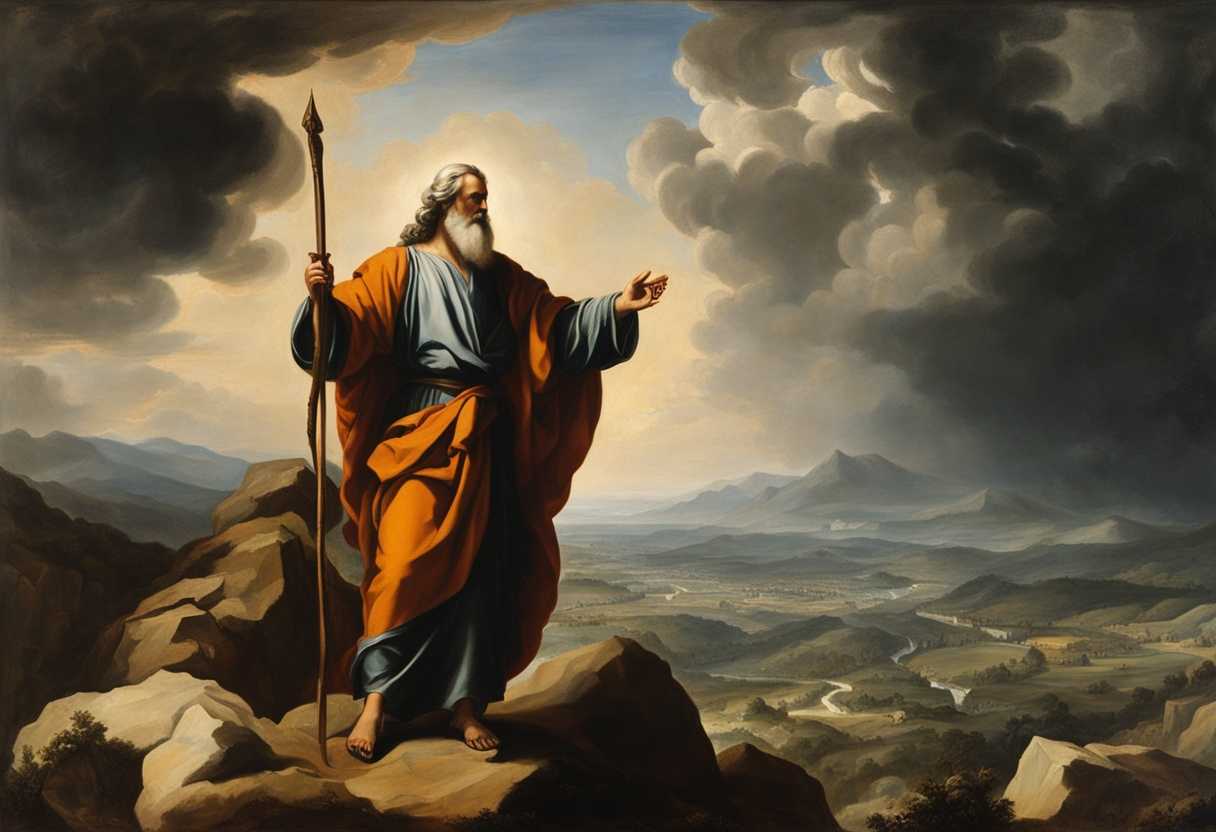
Setting the Scene for Deuteronomy 9:13-21
In Deuteronomy chapter 9, Moses recounts the time when he was on Mount Sinai for forty days and forty nights, receiving the tablets of stone with the Ten Commandments written by the finger of God. During this period, the Israelites grew impatient in the camp at the foot of the mountain and turned to idolatry, crafting a golden calf to worship. The scene is one of chaos and disobedience as the people abandon their faith in the one true God who had delivered them from slavery in Egypt.
Moses, upon descending from the mountain and witnessing the idolatry, is filled with righteous anger and breaks the tablets of the covenant that God had given him. He then burns the golden calf, grinds it into powder, scatters it on the water, and makes the Israelites drink it as a punishment for their sin. The atmosphere is tense and somber as Moses confronts the people for their transgression and intercedes on their behalf before God’s wrath is unleashed upon them. The surroundings are likely dusty and dry, with the mountain looming in the background, serving as a stark reminder of God’s holiness and the people’s need for repentance.
What is Deuteronomy 9:13-21 about?
Imagine being in Moses’ position – he has just returned from Mount Sinai to find the Israelites worshiping a golden calf. The people have strayed so far from God’s commands, and the consequences are severe. Moses chooses to intercede for his people in this moment, even though they have turned away from God. His actions demonstrate incredible compassion and courage.
Moses’ intercession for the Israelites highlights the power of forgiveness and redemption. Despite the gravity of their sin, Moses pleads with God to spare the people. Through his actions, we see the importance of standing up for others, even in their moments of weakness and failure. Moses serves as a model of compassion and leadership, showing us that we can make a difference by advocating for those who have gone astray. We reflect on this verse and are reminded of the significance of interceding for others. It challenges us to consider how we can advocate for those who may have strayed from the right path, offering them a chance for redemption and reconciliation. We are encouraged to show compassion and forgiveness towards others, even when they have made mistakes, just as Moses stood in the gap for the Israelites. Let us strive to take inspiration from Moses’ example and be a source of support and grace for those around us.
Understanding what Deuteronomy 9:13-21 really means
The Book of Deuteronomy provides a poignant backdrop for Moses’ heartfelt address to the Israelites as they stand on the cusp of the Promised Land. Within this pivotal moment, Moses revisits the grievous misstep of the Golden Calf, a stark reminder of the Israelites’ fickle faith and penchant for waywardness. The term “stiff-necked people” encapsulates their stubborn defiance, a trait that resonates across time, prompting us to ponder our own inclinations towards pride and disobedience in the face of divine guidance.
Moses’ prostration before the Lord, a gesture of profound humility and supplication, speaks volumes about his role as an intercessor for the wayward nation. His forty-day vigil, marked by fasting and prayer, underscores the gravity of the situation and his unwavering commitment to seeking God’s mercy on behalf of the people. This period of intense communion with the Divine serves as a beacon, illuminating the path of earnest repentance and fervent intercession in times of spiritual crisis.
The narrative of the Golden Calf reverberates through related biblical passages, offering a multifaceted exploration of God’s mercy, human frailty, and the redemptive power of intercession. From the vivid account in Exodus to the poetic reflections in Psalms and the cautionary tale echoed in Paul’s epistles, the theme of idolatry and divine forgiveness weaves a tapestry of timeless truths for believers of all ages. It beckons us to examine our own lives, to identify the idols that vie for our allegiance, whether tangible or intangible, and to realign our priorities in humble submission to God’s will.
In a contemporary context, the allure of idolatry manifests in myriad forms, subtly entwining itself with the fabric of our daily pursuits. Materialism, ambition, and misplaced priorities can easily supplant our devotion to God, leading us down a treacherous path of spiritual erosion. The narrative of the Golden Calf stands as a cautionary beacon, urging us to heed the call to humility, repentance, and intercession in our quest for spiritual renewal and restoration.
Consider a parallel drawn from modern times, where a community grapples with discord and division stemming from misguided choices and misplaced loyalties. In this scenario, a leader emerges, mirroring Moses’ humility and fervor in seeking divine intervention through prayer and dialogue. This anecdote underscores the enduring relevance of humility and intercession in fostering reconciliation, healing rifts, and nurturing communal harmony.
As we delve into the depths of this passage and its resonances across scripture, let us introspect on our own “stiff-necked” tendencies, our resistance to God’s leading, and our need for humble contrition. Let us embrace the transformative power of intercessory prayer, standing in the gap for others in their hour of need, and cultivating a spirit of humility and repentance as we navigate the complexities of our faith journey. In this reflection lies the seed of spiritual growth, beckoning us towards a deeper communion with the Divine and a more profound connection with our fellow pilgrims on the path of faith.
How can we show humility in times of success?
One way to show humility in times of success is to remember that our achievements are not solely due to our own efforts, but also because of the blessings and guidance we have received. We can remain humble and grateful by acknowledging the role that Divine providence has played in our success. This awareness can help us to avoid becoming prideful and arrogant, recognizing that our accomplishments are ultimately gifts from God.
Additionally, displaying humility in times of success involves giving credit and recognition to others who have supported us along the way. Gratitude towards those who have helped us reach our goals is an important aspect of humility. It shows that we value and appreciate the contributions of others, recognizing that we have not succeeded alone. We demonstrate humility and a sense of gratitude by sharing the recognition and spotlight with those who have played a part in our success. Maintaining a balanced perspective and remembering that our achievements do not define our worth is ultimately about showing humility in times of success. We can cultivate a spirit of humility by staying grounded and recognizing the role of others and higher powers in our success.
Application
Reflect on your past actions, just like reviewing a progress report at work or addressing issues within your family. It’s time to humbly seek forgiveness and renew your dedication to following God’s path. Is it not time to realign your actions with His commands?

Reverend Michael Johnson is an experienced Church Minister with a profound expertise in spirituality and guidance. With a serene presence and a compassionate heart, he has faithfully served his congregation for over 20 years, leading them on a spiritual journey towards inner peace and enlightenment. Reverend Johnson’s extensive knowledge of religious philosophies and profound understanding of human nature have made him a trusted confidant and mentor to many, as he seamlessly weaves his profound wisdom into life teachings. Reverend Johnson’s calming demeanor and empathetic nature continue to uplift and heal souls, nurturing a sense of unity and tranquility within his community.