
Deuteronomy 9:15-17 is about how despite Moses’ anger and frustration at the golden calf worship, he interceded on behalf of the sinful Israelites, showing the importance of mercy and forgiveness in times of disobedience.
15 “So I turned and came down from the mountain, and the mountain was burning with fire. And the two tablets of the covenant were in my two hands.”
16 And I looked, and behold, you had sinned against the Lord your God. You had made yourselves a golden calf.
17 And I took hold of the two tablets and threw them out of my two hands and broke them before your eyes.
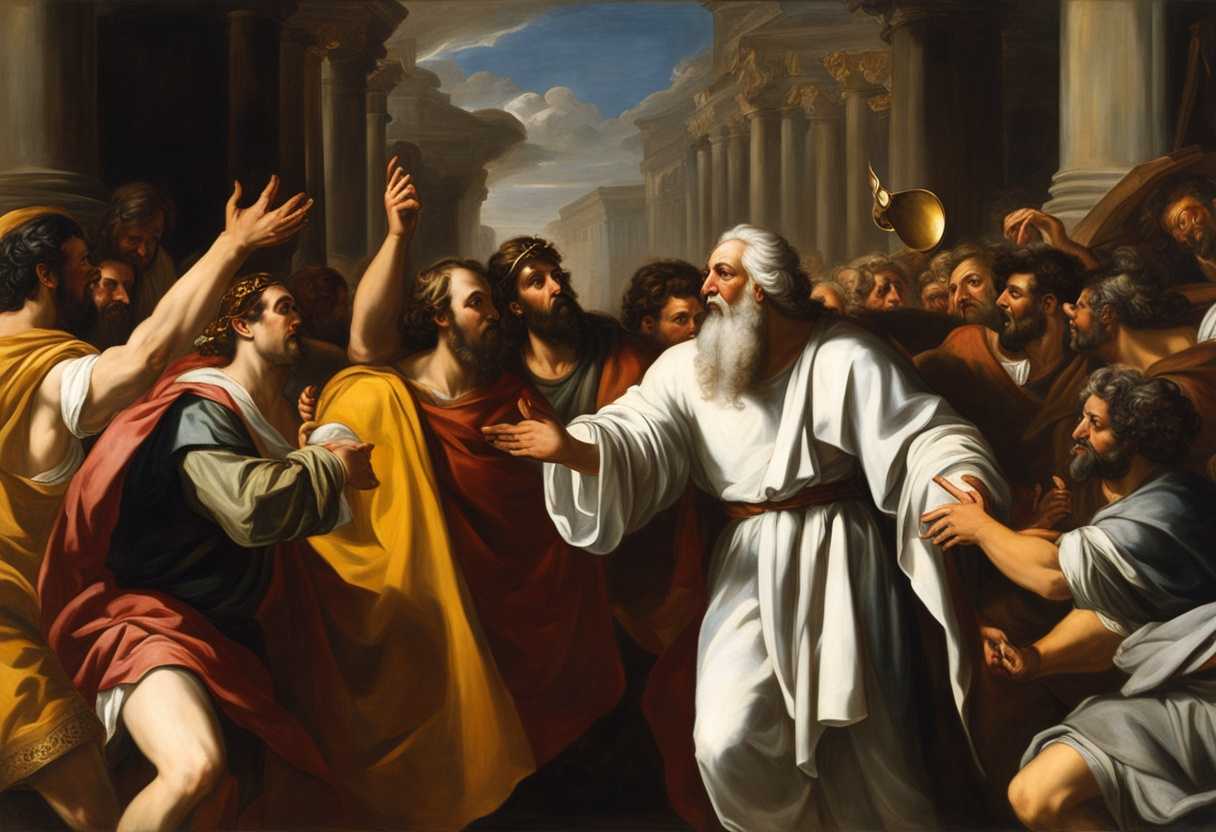
Setting the Scene for Deuteronomy 9:15-17
In Deuteronomy chapter 9, we find Moses recounting the Israelites’ journey through the wilderness as they approached the promised land. The scene described in verses 15-17 takes place at the foot of Mount Sinai, where Moses had gone up to receive the tablets of stone containing the Ten Commandments from the Lord. The Israelites, led by Aaron, had grown impatient during Moses’ absence and had turned to idolatry, crafting a golden calf to worship.
As Moses descended the mountain with the tablets in hand, he witnessed the Israelites’ disobedience and was filled with righteous anger. In the midst of the camp, he confronted Aaron about the idolatrous act, holding the tablets as a symbol of the covenant between God and His people. The atmosphere was tense as Moses called the people to account for their sin and interceded on their behalf before the Lord, pleading for His mercy and forgiveness.
Surrounded by the vast desert landscape and the imposing presence of Mount Sinai, Moses stood as a mediator between the people and God, embodying both justice and compassion. The scene serves as a powerful reminder of the Israelites’ struggle with faithfulness and the enduring grace of God in the face of human frailty.
What is Deuteronomy 9:15-17 about?
Let’s pause for a moment and reflect on the powerful act of Moses interceding for the people of Israel after they had sinned by worshiping the golden calf. Imagine the weight of the situation – the chosen people of God had turned away from Him and embraced idolatry. Despite this grave betrayal, Moses didn’t condemn them or wash his hands of them. Instead, he stood in the gap as a mediator between the people and God, pleading for their forgiveness and salvation.
This act of intercession teaches us profound lessons about compassion, forgiveness, and the role of a leader. It shows us the importance of standing up for others, even when they have stumbled and fallen. It reminds us of the power of prayer and the impact it can have in reconciling broken relationships. We reflect on Moses’s intercession, inspiring us to be agents of reconciliation and grace in our own communities, standing in the gap for those who are in need of mercy and understanding.
Understanding what Deuteronomy 9:15-17 really means
In Deuteronomy 9:15-17, Moses recounts a pivotal moment in the Israelites’ history, the incident of the Golden Calf. As Moses descended from Mount Sinai with the two tablets of the covenant in hand, he witnessed the people’s grave sin of idolatry. Seeing their disobedience, he shattered the tablets, symbolizing the breaking of the sacred covenant due to their transgression. This act serves as a stark reminder of the consequences of turning away from God and violating His commandments.
The imagery of the tablets being broken signifies the severing of the covenant relationship between God and His people at that moment. It underscores the seriousness of sin and the need for repentance. Just as the Israelites faced the repercussions of their actions, we are reminded of our own fallibility and the importance of staying true to our faith and values.
The parallel passages in Exodus, Psalms, and Corinthians further emphasize the enduring lessons from this event. They highlight the dangers of idolatry, the role of intercession and repentance, and the consequences of straying from God’s path. These narratives provide a broader context for understanding the significance of Moses’ actions and God’s response to His people’s disobedience.
Today, these verses resonate as a timeless reminder of the human tendency to falter and the necessity of seeking forgiveness and reconciliation with God. They point to the enduring mercy and faithfulness of God, even in the face of our shortcomings. The story of the Golden Calf serves as a cautionary tale, urging us to remain steadfast in our faith, acknowledge our sins, and turn back to God in repentance.
Consider a parent who forgives their child for breaking a cherished family heirloom. Despite the initial disappointment, the parent’s love triumphs, offering a path to reconciliation and growth. Similarly, God’s response to the Israelites’ sin reflects His righteous anger tempered with boundless mercy, inviting them to repent and renew their commitment to Him. This narrative illustrates the depth of God’s love and His desire for reconciliation with His people.
In conclusion, Deuteronomy 9:15-17 prompts us to reflect on our own relationship with God, our capacity for sin, and the transformative power of repentance and forgiveness. It underscores the enduring nature of God’s covenant and His unwavering love for His people. Let us heed the lessons from this passage, remaining vigilant in our faith, humble in our repentance, and steadfast in our trust in God’s mercy and grace.
How do we overcome our rebellious nature?
To overcome our rebellious nature, we must humble ourselves before God and recognize our tendency to rebel against His ways. We should submit ourselves to His authority and guidance, not stiffening our necks and resisting God’s commands, as highlighted in the verse. We can begin to overcome our sinful nature by acknowledging our rebellious tendencies and seeking His forgiveness and help.
It is crucial to reflect on the consequences of our rebellious actions and ask God to help us change our ways. The verse also emphasizes the importance of remembering past mistakes and sins, which can serve as a reminder of our need for God’s grace and mercy. We can work towards a closer relationship with God and a more obedient heart by acknowledging our shortcomings and seeking His strength to resist temptation. We must ultimately seek God’s presence daily through prayer, reading His Word, and surrounding ourselves with a supportive Christian community to overcome our rebellious nature. We can gradually become more obedient and aligned with His will by staying connected to God and regularly seeking His guidance. Through a combination of self-reflection, repentance, and reliance on God’s strength, we can work towards overcoming our rebellious nature and growing in our faith.
Application
Embrace the strength prayer offers in turbulent times, much like a reliable anchor at sea. Channel your inner GPS, seeking divine guidance and forgiveness in moments of adversity or wandering. Are you prepared to enhance your bond with the divine through prayer, weaving it seamlessly into your daily tapestry of work and family?

Reverend Michael Johnson is an experienced Church Minister with a profound expertise in spirituality and guidance. With a serene presence and a compassionate heart, he has faithfully served his congregation for over 20 years, leading them on a spiritual journey towards inner peace and enlightenment. Reverend Johnson’s extensive knowledge of religious philosophies and profound understanding of human nature have made him a trusted confidant and mentor to many, as he seamlessly weaves his profound wisdom into life teachings. Reverend Johnson’s calming demeanor and empathetic nature continue to uplift and heal souls, nurturing a sense of unity and tranquility within his community.