
Ecclesiastes 2:18-21 is about the futility and frustration of toiling and accumulating wealth in life, as ultimately one cannot control how their hard-earned possessions will be used once they are gone.
18 I hated all my toil in which I toil under the sun, seeing that I must leave it to the man who will come after me,
19 and who knows whether he will be wise or a fool? Yet he will be master of all for which I toiled and used my wisdom under the sun. This also is vanity.
20 So I turned about and gave my heart up to despair over all the toil of my labors under the sun,
21 because sometimes a person who has toiled with wisdom and knowledge and skill must leave everything to be enjoyed by someone who did not toil for it. This also is vanity and a great evil.
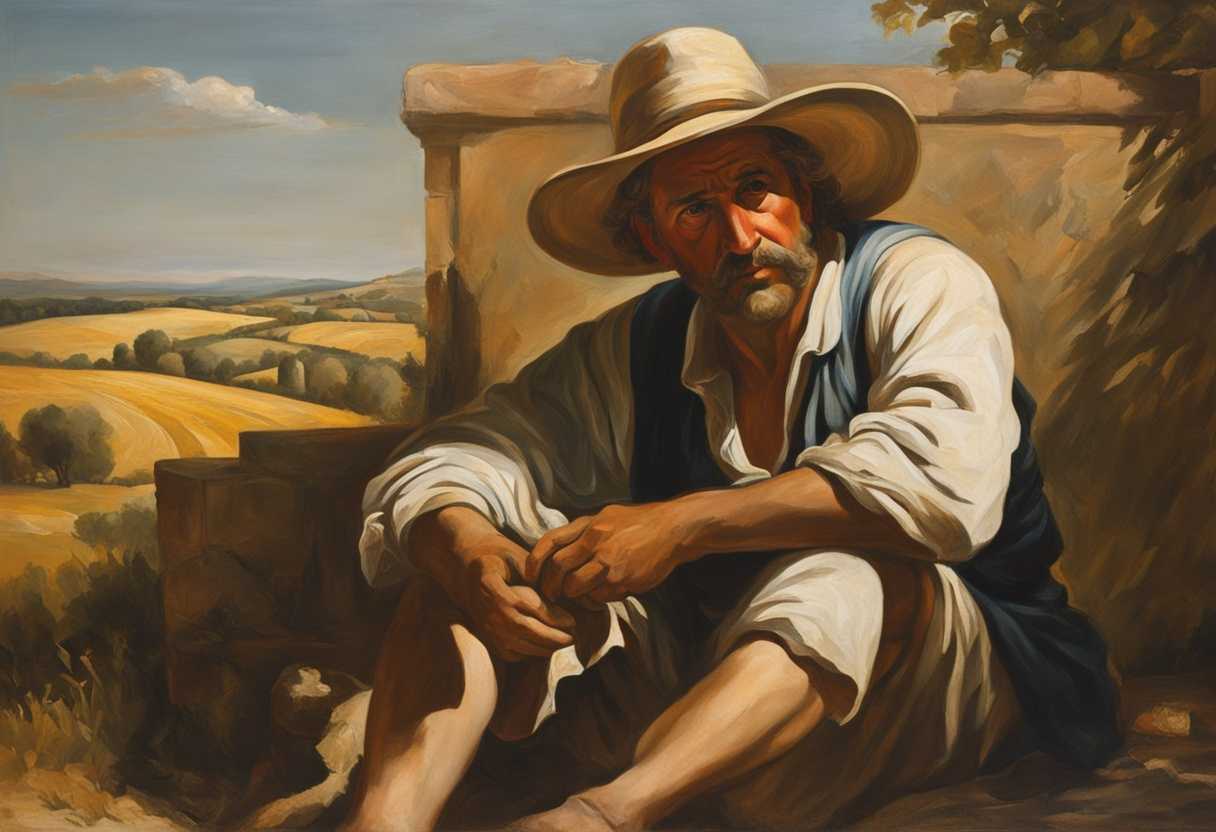
Setting the Scene for Ecclesiastes 2:18-21
In the scene described in Ecclesiastes 2:18-21, we find King Solomon, the wisest and wealthiest king of Israel, reflecting on the futility of his labor and the uncertainty of who will inherit his wealth after he is gone. The setting is a grand palace, adorned with opulent decorations and filled with servants bustling about attending to various tasks. Solomon, known for his wisdom and penchant for seeking knowledge and pleasure, is seated on his throne, deep in thought.
Surrounding him are his advisors and courtiers, who have gathered to seek his counsel and wisdom. They have come to discuss matters of state, seek guidance on important decisions, and bask in the presence of the renowned king. Despite the grandeur of the palace and the lavish lifestyle of those present, there is an air of solemnity as Solomon contemplates the fleeting nature of life and the inevitability of passing on his legacy to someone who may not be worthy.
As the sun sets outside the palace windows, casting a warm glow over the scene, Solomon’s words echo through the halls, reminding all present of the transience of earthly possessions and the importance of seeking meaning beyond material wealth. The scene is a poignant reminder of the impermanence of life and the need to focus on things of eternal value.
What is Ecclesiastes 2:18-21 about?
Imagine working tirelessly, putting in your all, pushing yourself to the limits, only to have someone else reap the benefits without putting in the same effort. How would that make you feel? This verse speaks to the importance of earning our successes through hard work and wisdom. It reminds us that simply possessing these qualities is not enough if they are not accompanied by the effort and dedication required to attain them.
Think about all the hard-earned wisdom you have gained through life experiences, the lessons learned through trials and errors. Now imagine someone else trying to claim that wisdom as their own without putting in the same sweat and tears. This verse serves as a reminder that true value comes from the combination of hard work and personal growth. It challenges us to appreciate the journey of earning toil and wisdom rather than taking shortcuts or claiming what we have not rightfully earned.
Understanding what Ecclesiastes 2:18-21 really means
Ecclesiastes 2:18-21 presents us with a profound reflection from King Solomon on the transient nature of human labor and the uncertainty of the legacy we leave behind. Solomon’s words resonate with a deep sense of disillusionment as he contemplates the toil he has undertaken in his lifetime. The phrase “I hated all my toil in which I toil under the sun” encapsulates a sentiment many may relate to – the feeling of emptiness that can accompany relentless work in pursuit of worldly success. It prompts us to consider whether our efforts in the material realm truly bring lasting satisfaction.
Solomon’s acknowledgment that he must eventually pass on his accomplishments to an unknown successor underscores the inevitability of parting with the fruits of our labor. The uncertainty of who will inherit our legacy – whether wise or foolish – raises questions about the enduring value of our earthly pursuits. The phrase “Who knows whether he will be wise or a fool?” serves as a poignant reminder of the unpredictability of life and the limitations of human control over the future. It challenges us to reflect on the significance of our actions in the grand scheme of things.
The recurring theme of “vanity” or meaninglessness in Ecclesiastes emphasizes the fleeting nature of worldly endeavors. This notion aligns with the teachings of Jesus in Matthew 6:19-21, where he advises against placing undue importance on earthly treasures that can be lost or destroyed. The parallel drawn between Solomon’s reflections and biblical wisdom underscores the universal nature of the struggle to find lasting fulfillment amidst the impermanence of material wealth. Psalm 39:6 and 1 Timothy 6:7 further reinforce the transient nature of human existence and possessions, urging us to consider the ultimate value of our pursuits.
In a contemporary context dominated by the pursuit of material success and external validation, Ecclesiastes 2:18-21 offers a sobering reminder of the limitations of such endeavors. It prompts individuals to pause and reflect on the true essence of a meaningful life beyond the accumulation of wealth and accolades. The passage challenges us to reassess our priorities and seek fulfillment in endeavors that transcend the temporal and superficial. By contemplating the message of Ecclesiastes, we are encouraged to seek a deeper sense of purpose and fulfillment that extends beyond the boundaries of material gain.
Consider the story of a successful entrepreneur who dedicated his life to building a thriving business, only to realize upon retirement that his legacy was at risk due to his successors’ lack of interest and competence. This narrative mirrors Solomon’s contemplation of the uncertainty surrounding the preservation of one’s achievements. It serves as a poignant illustration of the potential emptiness that can accompany a life solely focused on material success, highlighting the importance of cultivating a legacy rooted in enduring values and principles.
Ecclesiastes 2:18-21 challenges us to evaluate the true worth of our labor and the legacy we are building. It beckons us to seek a deeper understanding of life’s purpose and to prioritize contributions that have lasting significance. By internalizing the wisdom contained in this passage, individuals can embark on a journey towards a more meaningful and fulfilling existence, grounded in the recognition that true worth transcends fleeting possessions and transient accomplishments.
What is the value of wealth after death?
The value of wealth after death, according to the verse, is described as meaningless. It emphasizes that a person cannot take their riches with them after they die, leaving the question of who will benefit from all the toil and labor that was put into accumulating wealth during one’s lifetime. The verse reflects on the reality that all the wealth acquired will eventually be left behind and be inherited by someone else, without the original owner having any control over how it will be managed or used.
This perspective on wealth serves as a reminder of the transient nature of material possessions and the ultimate futility of solely focusing on the accumulation of wealth in this world. It encourages individuals to seek meaning and purpose beyond material goods and to prioritize aspects of life that have lasting significance. The verse prompts reflection on what truly matters in the grand scheme of life and eternity by acknowledging the limitations of wealth and emphasizing the importance of deeper values and legacies.
Application
Reflect on the legacy you will leave behind. Everything we work for will one day pass on to others. Let’s consider the true purpose of our efforts in this lifetime. Are we investing our time and resources for a greater cause? Think about the impact you want to make. What legacy do you want to create for future generations?

Reverend Michael Johnson is an experienced Church Minister with a profound expertise in spirituality and guidance. With a serene presence and a compassionate heart, he has faithfully served his congregation for over 20 years, leading them on a spiritual journey towards inner peace and enlightenment. Reverend Johnson’s extensive knowledge of religious philosophies and profound understanding of human nature have made him a trusted confidant and mentor to many, as he seamlessly weaves his profound wisdom into life teachings. Reverend Johnson’s calming demeanor and empathetic nature continue to uplift and heal souls, nurturing a sense of unity and tranquility within his community.