
Ecclesiastes 7:1-4 is about recognizing the value of reflecting on the brevity of life, the importance of seeking wisdom over fleeting pleasures, and the transformative power of facing sorrow with a humble heart.
1 A good name is better than precious ointment,
and the day of death than the day of birth.
2 It is better to go to the house of mourning than to go to the house of feasting, for this is the end of all mankind, and the living will lay it to heart.
3 Sorrow is better than laughter, for by sadness of face the heart is made glad.
4 The heart of the wise is in the house of mourning, but the heart of fools is in the house of mirth.
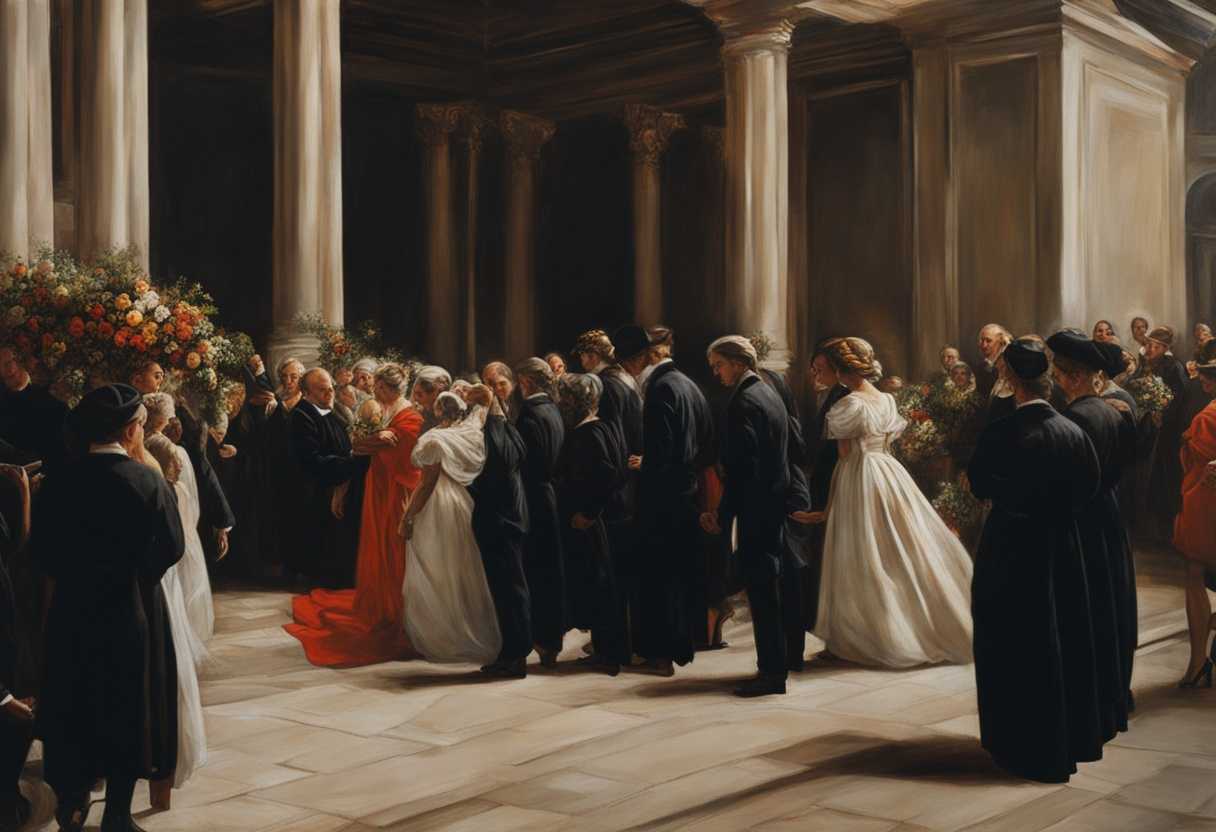
Setting the Scene for Ecclesiastes 7:1-4
In Ecclesiastes chapter 7, we find King Solomon, the wisest man who ever lived, reflecting on the complexities of life and the pursuit of wisdom. The scene is set in the grand palace of Jerusalem, where Solomon is surrounded by his advisors, scholars, and courtiers. The room is adorned with rich tapestries, golden candelabras, and intricate mosaics depicting scenes from the history of Israel.
Solomon, known for his deep contemplation and philosophical insights, has gathered his inner circle to discuss the meaning of life and the nature of human existence. As they sit on ornate cushions around a large marble table, the flickering candlelight casts a warm glow on their faces, emphasizing the seriousness of their discussion. The air is filled with the scent of burning incense, adding a sense of reverence to the atmosphere.
As the group delves into the complexities of human nature and the inevitability of death, Solomon’s words carry weight and authority. His words are like a soothing balm to their troubled souls, offering wisdom and guidance in the midst of life’s uncertainties. The scene is one of intellectual stimulation, spiritual contemplation, and a quest for deeper understanding of the mysteries of existence.
What is Ecclesiastes 7:1-4 about?
Ecclesiastes 7:1-4 reminds us of the significance of a good reputation and the virtue of humility. Have you ever pondered about the impact our actions and words have on how we are perceived by others? This verse encourages us to consider the weight of our reputations and how they reflect our character to the world. It prompts us to prioritize cultivating a positive image through our deeds and words.
Furthermore, the mention of humility in this passage serves as a vital reminder of the importance of modesty and selflessness. How often do we pause to reflect on our attitudes and behaviors towards others? Humility allows us to appreciate the perspectives and experiences of those around us, fostering empathy and understanding. By embodying humility, we enhance our relationships with others and cultivate inner peace and contentment. Ecclesiastes 7:1-4 calls us to value a good reputation and humility, guiding us towards a life of integrity and compassion.
Understanding what Ecclesiastes 7:1-4 really means
The Book of Ecclesiastes, often attributed to King Solomon, offers profound insights into the complexities of life and the human experience. In Ecclesiastes 7:1-4, the text delves into themes of wisdom, mortality, and the significance of introspection. One key phrase, “A good name is better than fine perfume,” underscores the enduring value of one’s reputation and character over material possessions or superficial appearances. It highlights the importance of integrity and righteousness in shaping a lasting legacy.
Contrary to conventional wisdom, the verse “The day of death better than the day of birth” suggests that the end of life can bring a sense of fulfillment, particularly for those who have lived wisely and righteously. It hints at the idea that death can offer release from life’s struggles and signify a completion of one’s journey. Similarly, the notion that “It is better to go to a house of mourning than to go to a house of feasting” encourages us to embrace moments of sorrow as opportunities for personal growth and introspection.
“Sorrow is better than laughter, because a sad face is good for the heart” challenges us to consider the deeper significance of experiencing sorrow. It implies that moments of sadness can lead to a profound understanding of life and nurture a compassionate heart. The contrast between the wise and fools, as depicted in “The heart of the wise is in the house of mourning, but the heart of fools is in the house of pleasure,” underscores the value of facing life’s difficulties with wisdom and contemplation.
These verses resonate with other biblical passages, such as Proverbs 22:1 and Psalm 90:12, which emphasize the importance of character and wisdom in the face of life’s brevity. James 1:2-4 further reinforces the idea that trials and challenges can lead to personal growth and perseverance. In a contemporary context, these verses serve as a poignant reminder of the enduring value of integrity, introspection, and the lessons learned through life’s adversities.
Consider a narrative of a successful individual who, amidst pursuing material success, undergoes a personal crisis that prompts deep reflection. Through this period of sorrow and introspection, they realize that true fulfillment lies in relationships and integrity, aligning with the wisdom found in Ecclesiastes 7:1-4. Ultimately, these verses challenge us to seek wisdom, value our reputation, and embrace the profound lessons that come from both joy and sorrow. They call us to live authentically and to find meaning in life’s complexities.
How can we find meaning in mourning and laughter?
The author reflects on the contrasting experiences of mourning and laughter in Ecclesiastes 7:1-4. Both mourning and laughter are intrinsic parts of the human experience, highlighting the dualities of life. Mourning is a time of reflection, introspection, and processing of difficult emotions. It allows us to confront loss, face our vulnerabilities, and appreciate the transient nature of life. Laughter represents joy, celebration, and light-heartedness in contrast. It serves as a release from the weight of sorrow and a reminder of the beauty and humor that can be found in everyday moments.
Finding meaning in mourning and laughter is about embracing the complexity of human emotions and experiences. Mourning allows us to connect with our feelings and find solace in shared grief, fostering empathy and compassion. It reminds us of the preciousness of life and the importance of relationships. On the other hand, laughter brings levity and perspective, offering a reprieve from sorrow and a chance to connect with others through joy and humor. Both experiences remind us of the ebb and flow of life, the inevitability of change, and the need to cherish each moment, whether in times of sadness or happiness. We can find a deeper appreciation for the richness and depth of the human experience by ultimately embracing both mourning and laughter.
Application
Life is a fleeting moment, like the busiest days at work or precious minutes with family. Embrace both joy and sorrow; they offer lessons only life can teach. Seek wisdom—it’s your roadmap for every tough decision and shape your journey. Today, will you let these truths guide your steps and decisions?

Reverend Michael Johnson is an experienced Church Minister with a profound expertise in spirituality and guidance. With a serene presence and a compassionate heart, he has faithfully served his congregation for over 20 years, leading them on a spiritual journey towards inner peace and enlightenment. Reverend Johnson’s extensive knowledge of religious philosophies and profound understanding of human nature have made him a trusted confidant and mentor to many, as he seamlessly weaves his profound wisdom into life teachings. Reverend Johnson’s calming demeanor and empathetic nature continue to uplift and heal souls, nurturing a sense of unity and tranquility within his community.