
Ecclesiastes 7:29 is about the recognition of humanity’s universal imperfection and tendency towards sin, highlighting the inherent flaws and limitations of human nature.
29 See, this alone I found, that God made man upright, but they have sought out many schemes.
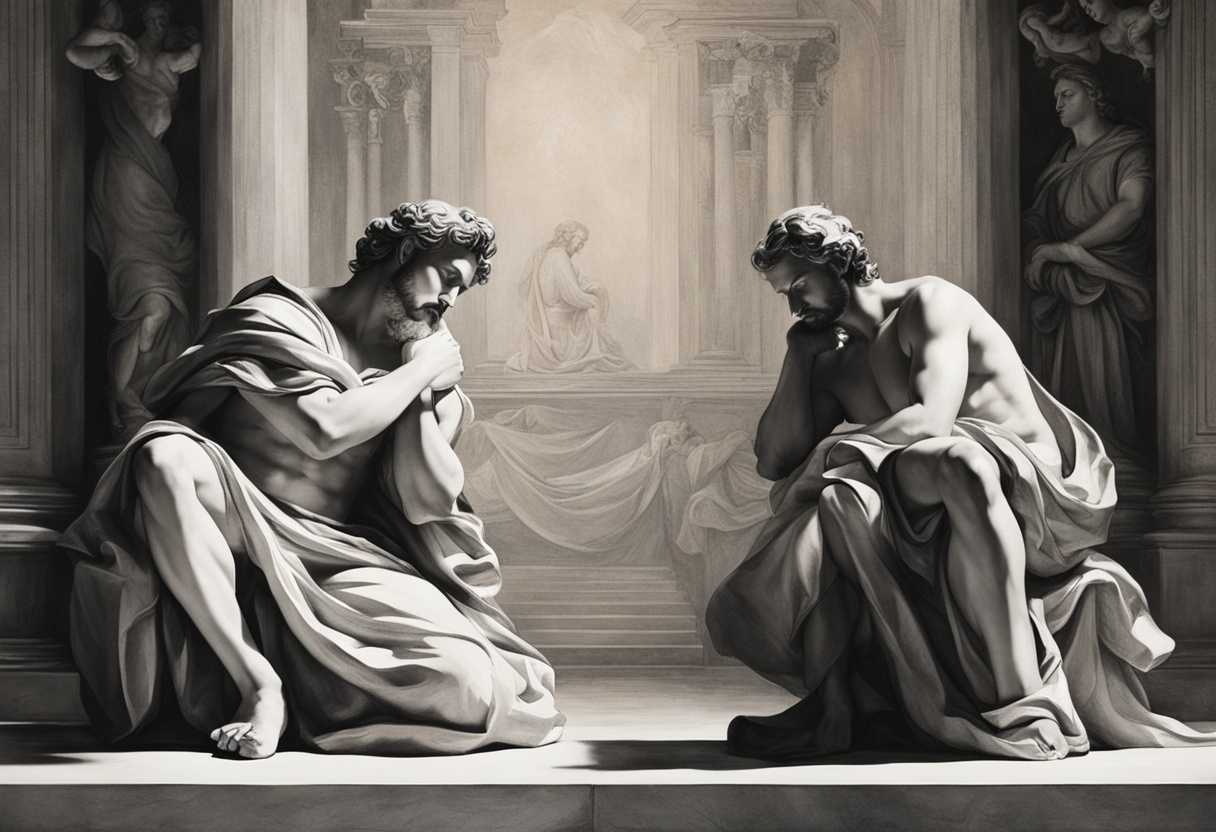
Setting the Scene for Ecclesiastes 7:29
In Ecclesiastes chapter 7, the scene is set in the royal court of King Solomon, known for his wisdom and wealth. The room is adorned with luxurious tapestries and golden ornaments, reflecting the opulence of the era. King Solomon is seated on his throne, surrounded by his advisors, courtiers, and visiting dignitaries from neighboring kingdoms.
Among those present is the renowned Queen of Sheba, who has traveled a great distance to test Solomon’s wisdom with her challenging questions and to witness his famed wealth firsthand. The air is filled with anticipation and intellectual energy as the Queen engages in a thought-provoking dialogue with the King, exchanging insights on matters of philosophy, governance, and the nature of existence.
As the discussion unfolds, it becomes evident that despite their worldly knowledge and power, both Solomon and the Queen recognize the limitations of human understanding and the fleeting nature of earthly pursuits. The scene captures a moment of profound reflection and humility, as they ponder the mysteries of life and the importance of seeking wisdom and righteousness in a world filled with uncertainties and vanities.
What is Ecclesiastes 7:29 about?
This verse from the Bible (Ecclesiastes 7:29) highlights the inherent goodness with which God created humans. It speaks to the idea that when God made us, He crafted us with upright intents, pure hearts, and good characteristics. However, it also acknowledges the reality that humans, with their free will, often veer off the path of goodness and righteousness. The pursuit of material desires, selfish ambitions, and sinful pleasures often leads people away from their upright nature.
Have you ever felt conflicted between your innate sense of right and wrong and the temptations of the world around you? This verse reminds us that while we are created with an upright nature, we are also prone to making choices that may lead us astray. It serves as a gentle nudge to reflect on our actions and consider whether we are following God’s intended path for us or if we have succumbed to the many schemes and distractions that pull us away from our true selves. It ultimately calls us to strive for alignment with our original design by seeking God’s guidance and living in accordance with His will.
Understanding what Ecclesiastes 7:29 really means
Introduction
The Book of Ecclesiastes, traditionally attributed to King Solomon, delves into profound reflections on the meaning of life and the complexities of the human experience. Through its poetic and philosophical lens, Ecclesiastes invites readers to ponder the fleeting nature of earthly pursuits and the ultimate significance of our existence.
Context of Ecclesiastes 7:29
In the context of Ecclesiastes 7, which centers on the themes of wisdom and folly, verse 29 serves as a poignant conclusion to the observations made in the preceding verses. It encapsulates the essence of human nature and the divine intention behind our creation, setting the stage for a deeper exploration of the human condition.
Meaningful Phrases
“God made mankind upright”: This phrase underscores the concept of original righteousness, highlighting humanity’s initial state of moral integrity as intended by God. It echoes the narrative in Genesis 1:27, where God creates man in His own image, signifying inherent goodness and uprightness within humanity.
“But men have gone in search of many schemes”: Here, the verse acknowledges the reality of human fallibility and our propensity to stray from God’s perfect design. It alludes to the tragic events of the Fall in Genesis 3, where Adam and Eve’s disobedience ushered sin into the world, disrupting the harmonious relationship between humanity and God.
Related Passages
Romans 3:23 reminds us that “all have sinned and fall short of the glory of God,” reinforcing the universal nature of humanity’s descent from its upright state into sin. Proverbs 14:12 warns of the deceptive allure of human schemes that may seem right but ultimately lead to destruction, emphasizing the crucial need for divine wisdom in navigating life’s complexities.
Relevance to People Today
Ecclesiastes 7:29 resonates with contemporary audiences grappling with similar struggles of seeking fulfillment through worldly pursuits that often lead them astray from God’s intended path. It serves as a timeless reminder of the enduring conflict between human ambitions and the wisdom of God, urging individuals to reflect on their choices and priorities.
Anecdote
Consider the story of an individual who relentlessly pursued success, wealth, and pleasure in a quest for fulfillment, only to find emptiness and disillusionment in the end. It was only when this person turned to God, seeking His guidance and wisdom, that true peace and purpose were discovered. This narrative mirrors the essence of Ecclesiastes 7:29, illustrating the stark contrast between human endeavors and the transformative power of divine truth.
Conclusion
In conclusion, Ecclesiastes 7:29 encapsulates profound truths about the human condition and our inherent need for God’s guidance. As we contemplate the implications of this verse, may we introspect on our own pursuits and choices, seeking alignment with God’s original design for our uprightness. Let us embrace the wisdom that transcends human understanding, leading us to a life of purpose, fulfillment, and eternal significance.
What is the true nature and purpose of humanity?
The verse in Ecclesiastes 7:29 conveys the idea that God made humans upright, but they have gone astray and sought out many schemes. Reflecting on this verse leads to the understanding that humanity was created with a sense of integrity, goodness, and righteousness by God. However, over time, due to various factors such as free will, temptation, and the influence of the world, humans have deviated from this original state of righteousness and pursued selfish and sinful endeavors.
Therefore, the true nature and purpose of humanity lie in striving to return to that state of integrity and righteousness that they were originally created with by God. It is about recognizing our faults, seeking forgiveness, and making efforts to align ourselves with God’s will and teachings. We can move closer to fulfilling our purpose as humans and nurturing a deeper connection with our Creator by acknowledging our imperfections and working towards personal growth, self-improvement, and living a life of righteousness.
Application
Just like each piece of a puzzle, you have a unique role to play in this vast world. Use your talents to bring light to your work and joy to your family. Don’t waste the gifts you’ve been given; these are your tools to make a difference. Are you ready to step into your purpose and shine?

Reverend Michael Johnson is an experienced Church Minister with a profound expertise in spirituality and guidance. With a serene presence and a compassionate heart, he has faithfully served his congregation for over 20 years, leading them on a spiritual journey towards inner peace and enlightenment. Reverend Johnson’s extensive knowledge of religious philosophies and profound understanding of human nature have made him a trusted confidant and mentor to many, as he seamlessly weaves his profound wisdom into life teachings. Reverend Johnson’s calming demeanor and empathetic nature continue to uplift and heal souls, nurturing a sense of unity and tranquility within his community.