
Ecclesiastes 8:1-8 is about acknowledging the limitations of human wisdom and understanding, and recognizing that life’s mysteries and the ways of God are beyond our complete comprehension.
1 Who is like the wise? And who knows the interpretation of a thing? A man’s wisdom makes his face shine, and the hardness of his face is changed.
2 I say: Keep the king’s command, because of God’s oath to him.
3 Be not hasty to go from his presence. Do not take your stand in an evil cause, for he does whatever he pleases.
4 For the word of the king is supreme, and who may say to him, “What are you doing?”
5 Whoever keeps a command will know no evil thing, and a wise heart will know the proper time and the just way.
6 For there is a time and a way for everything, although man’s trouble lies heavy on him.
7 For he does not know what is to be, for who can tell him how it will be?
8 No man has power to retain the spirit, or power over the day of death. There is no discharge from war, nor will wickedness deliver those who are given to it.
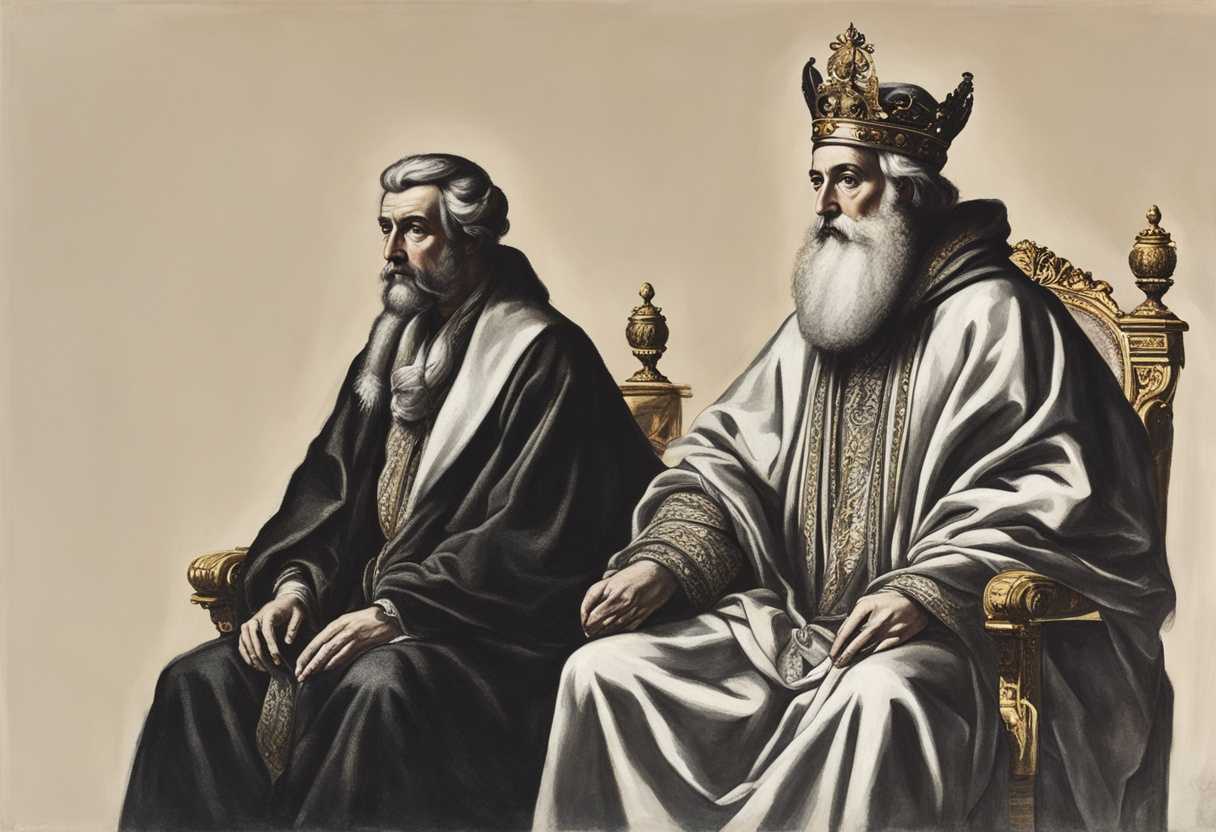
Setting the Scene for Ecclesiastes 8:1-8
In Ecclesiastes chapter 8, we find King Solomon, known for his wisdom, sitting in his grand palace in Jerusalem. The room is adorned with intricate tapestries, golden candelabras, and luxurious furnishings fit for a king. Surrounding him are his advisors, court officials, and scribes, all gathered to seek his counsel on matters of governance and justice.
Solomon, dressed in regal robes and wearing a crown encrusted with precious jewels, listens intently as his subjects present him with various dilemmas and disputes. His face is a mask of contemplation, his eyes reflecting the weight of his responsibilities as ruler of Israel. The air is thick with the scent of burning incense, adding a sense of solemnity to the proceedings.
As the discussion unfolds, Solomon imparts his wisdom with eloquence and authority, offering insights on how to navigate the complexities of leadership and uphold justice in the land. His words carry the weight of experience and divine inspiration, leaving his audience in awe of his sagacity. The scene is a testament to the power and influence of a wise and just ruler, whose words are revered and sought after by all who seek guidance and understanding.
What is Ecclesiastes 8:1-8 about?
This verse emphasizes the importance of obeying authority, in this case, the king’s command. It highlights the idea that ultimately, all authority comes from God. By obeying the king, one essentially obeys God’s authority. This verse calls for respect towards those in positions of authority and emphasizes the idea of submission to higher powers. It is a reminder that all authority on earth is ultimately derived from God’s ultimate authority.
Just think about it, if we show respect and obedience to human authority, isn’t that also showing reverence to God’s authority? We honor the order and structure that God has put in place by following the commands of a king or any other ruler. It serves as a reminder that no matter how high our position may be, we are all subject to a higher authority. So, let’s keep this in mind as we navigate our interactions with authority figures, always keeping in perspective the ultimate authority of God.
Understanding what Ecclesiastes 8:1-8 really means
The Book of Ecclesiastes, often attributed to King Solomon, delves into the essence of life and the human experience. Ecclesiastes 8:1-8 specifically explores themes of wisdom, authority, and the inevitability of death. The passage begins by highlighting the rarity and value of true wisdom, emphasizing its transformative power on an individual’s demeanor and interactions with others. It stresses the importance of obeying authority, especially when commitments are made before God, underscoring the significance of respecting and fulfilling obligations.
Furthermore, Ecclesiastes 8:1-8 underscores the supreme power of rulers and the wisdom in obeying their commands, which leads to safety and discernment in decision-making. The text also emphasizes the importance of timing and method in addressing life’s challenges, even amidst difficulties. It acknowledges the uncertainty of the future and the inevitability of death, reminding us of our limitations and the need for humility and trust in God. The passage draws parallels between the inability to control the wind and the time of one’s death, highlighting human powerlessness over certain aspects of life.
In today’s world, filled with rapid change and uncertainty, the wisdom found in Ecclesiastes 8:1-8 remains relevant and offers timeless guidance. It encourages individuals to seek wisdom, respect authority, and acknowledge the significance of timing and procedure in decision-making. The anecdote of a young professional navigating their career illustrates how applying the principles of wisdom, respect, and timing can lead to successful outcomes and recognition.
By reflecting on Ecclesiastes 8:1-8 and related biblical passages such as Proverbs 3:13-18, Romans 13:1-2, and James 4:14, individuals can find guidance and encouragement for navigating the complexities of life. These verses provide insights into the nature of wisdom, authority, and the human condition, offering a roadmap for approaching challenges with grace and discernment. Ultimately, Ecclesiastes 8:1-8 invites us to ponder the value of wisdom, the importance of respecting authority, and the inevitability of life’s uncertainties, guiding us towards a deeper understanding of our place in the world.
How can we respect and submit to authority?
We can respect and submit to authority by acknowledging that they have been placed in their positions by God, who ultimately holds all authority. Authority figures are there to carry out God’s will and provide order in society. By recognizing and respecting their authority, we also honor God’s sovereignty over all things. Submission to authority involves following their instructions, obeying laws, and showing a willingness to cooperate for the greater good of society.
Respecting and submitting to authority also involves trusting God’s ultimate plan and knowing that He works all things together for good for those who love Him. This trust should lead us to obediently follow the authority figures He has placed over us. Submission to authority does not mean blind obedience, but it involves a humble attitude of cooperation and a recognition of the authority’s role in maintaining order and justice. We demonstrate our trust in God’s sovereignty and exhibit a spirit of humility and reverence towards Him.
Application
Think of life like a bustling office or a busy family home; respecting authority and acting wisely is crucial. Just as rules keep the workplace and family functioning smoothly, respecting those guidelines brings peace and order. No one knows everything, but making sensible decisions helps us navigate chaos. Let’s embrace the patience to learn and the sense to follow wisely. Are you ready to lead your life with wisdom and respect today?

Reverend Michael Johnson is an experienced Church Minister with a profound expertise in spirituality and guidance. With a serene presence and a compassionate heart, he has faithfully served his congregation for over 20 years, leading them on a spiritual journey towards inner peace and enlightenment. Reverend Johnson’s extensive knowledge of religious philosophies and profound understanding of human nature have made him a trusted confidant and mentor to many, as he seamlessly weaves his profound wisdom into life teachings. Reverend Johnson’s calming demeanor and empathetic nature continue to uplift and heal souls, nurturing a sense of unity and tranquility within his community.