
Ecclesiastes 9:11-12 is about the unpredictability of life and the recognition that both time and chance play a role in determining the outcomes of human endeavors, emphasizing the importance of living wisely and making the most of the present moment.
11 Again I saw that under the sun the race is not to the swift, nor the battle to the strong, nor bread to the wise, nor riches to the intelligent, nor favor to those with knowledge, but time and chance happen to them all.
12 For man does not know his time. Like fish that are taken in an evil net, and like birds that are caught in a snare, so the children of man are snared at an evil time, when it suddenly falls upon them.
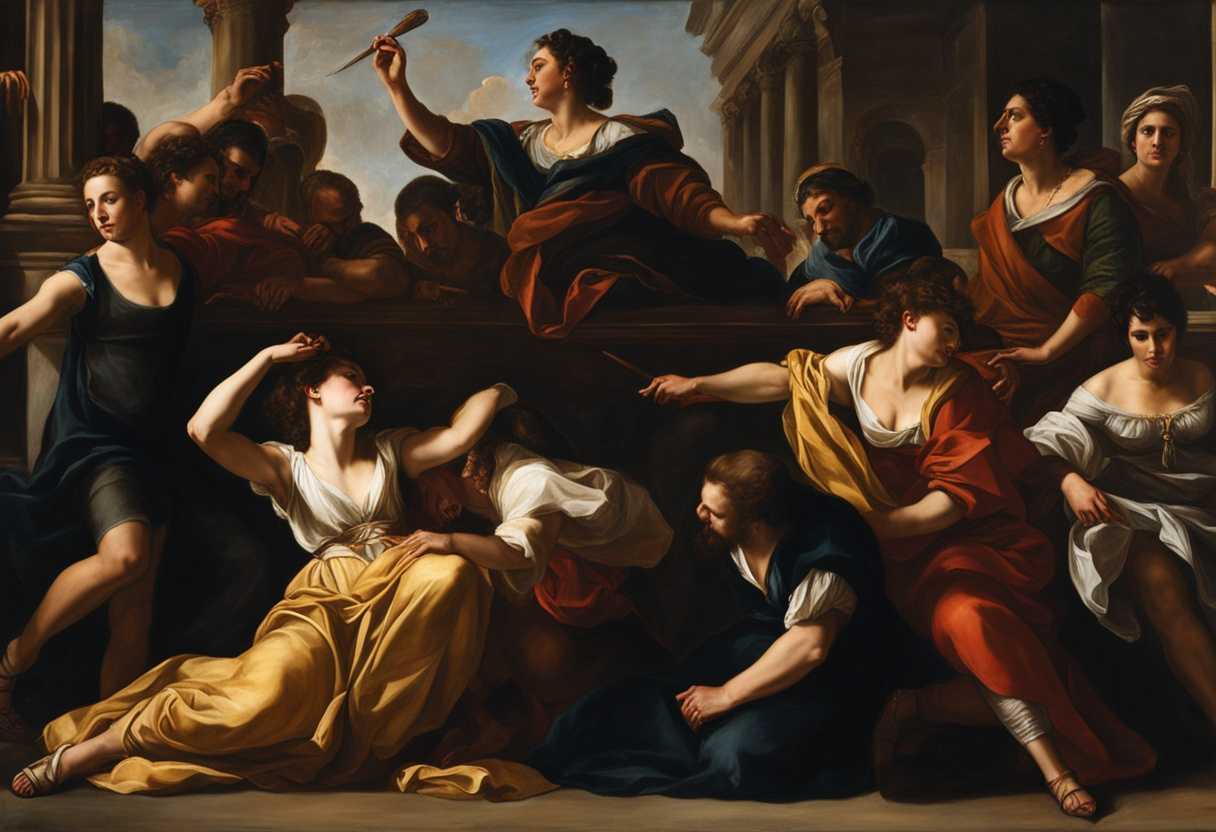
Setting the Scene for Ecclesiastes 9:11-12
In Ecclesiastes 9:11-12, the scene is set in a bustling city where a small group of people have gathered at the city gates. The group includes a wise and respected elder named Samuel, a young and ambitious merchant named Jacob, and a weary but hopeful farmer named Sarah. They have all come together at the city gates, a common meeting place in ancient times, to discuss matters of life and fate.
Surrounded by the sounds of merchants haggling, children playing, and animals braying, the group engages in a deep conversation about the uncertainties of life. Samuel, drawing from his years of wisdom, speaks about how time and chance happen to everyone, regardless of their station in life. Jacob, eager to make his mark on the world, listens intently, while Sarah, with calloused hands and a weathered face, nods knowingly at the truths being shared.
As the sun begins to set over the city, casting long shadows across the dusty ground, the group reflects on the mysteries of life and the importance of making the most of the time they have been given. In this moment, at the city gates, they find solace in each other’s company and in the shared understanding that life is full of uncertainties, but also opportunities for growth and meaning.
What is Ecclesiastes 9:11-12 about?
This verse from the book of Ecclesiastes reminds us of the uncertainty and unpredictability of life. It speaks to the idea that time and chance play a significant role in shaping our destinies, and no one can truly predict what the future holds. This serves as a humbling reminder that despite our best efforts to plan and control our lives, there are external factors beyond our control that can influence our outcomes.
Have you ever felt like no matter how much you plan and prepare, unexpected events can still alter the course of your life? This verse encourages us to acknowledge and accept the limitations of our knowledge and understanding of the future. It prompts us to approach life with humility and a sense of openness to the unknown, embracing the idea that there are forces at play that are beyond our comprehension. We can cultivate a mindset of adaptability, resilience, and faith in the midst of life’s uncertainties by recognizing the role of time and chance in our lives.
Understanding what Ecclesiastes 9:11-12 really means
Introduction
In the book of Ecclesiastes, attributed to King Solomon, we delve into profound reflections on the meaning of life and the complexities of the human experience. Within this context, Ecclesiastes 9:11-12 offers insights into the unpredictable nature of life and the limitations of human control over our circumstances.
Key Phrases and Their Meanings
“The race is not to the swift, nor the battle to the strong” underscores the idea that success is not solely determined by one’s speed or strength. It challenges the notion that sheer ability guarantees victory. Similarly, “Nor does food come to the wise or wealth to the brilliant or favor to the learned” highlights that intelligence, wisdom, or knowledge do not always translate into material prosperity. These phrases caution against placing undue confidence in our own capabilities.
“But time and chance happen to them all” introduces the concept that life is subject to unforeseen events and random occurrences. It suggests that despite our best-laid plans, external factors beyond our control can significantly impact our lives. The imagery of being caught like fish in a net or birds in a snare vividly portrays the sudden and unexpected nature of life’s challenges.
Related Biblical Passages
Drawing parallels, Proverbs 16:9 asserts, “In their hearts humans plan their course, but the Lord establishes their steps.” This verse aligns with the idea that while we may meticulously plan our paths, ultimately, it is divine intervention and unforeseen circumstances that shape our journey. James 4:13-15 further reinforces the theme of life’s unpredictability, cautioning against presumptuous planning and emphasizing the uncertainty of the future.
Relevance to People Today
In a world that often glorifies control, meticulous planning, and self-sufficiency, these verses serve as a poignant reminder of the inherent limitations of human agency. They prompt reflection on the role of unpredictability in our lives and the necessity of humility in acknowledging our vulnerabilities. Embracing these teachings encourages a shift towards reliance on God and a deeper understanding of our place in the grand scheme of existence.
Anecdote for Illustration
Consider a young professional meticulously crafting their career path through education and networking, only to face sudden job loss due to an unforeseen economic downturn. This scenario mirrors the unpredictability depicted in Ecclesiastes, illustrating the importance of resilience and faith amidst life’s uncertainties. It serves as a tangible reminder of the fragility of our plans in the face of unforeseen circumstances.
Conclusion
Ecclesiastes 9:11-12 invites us to navigate life’s uncertainties with a balanced perspective, acknowledging the interplay between our efforts and the unpredictable nature of existence. It advocates for a stance of trust in God and humility, recognizing that while we can strive and plan diligently, ultimate outcomes often lie beyond our control. Embracing a worldview that values faith and resilience equips us to confront life’s challenges with grace and fortitude.
What is the ultimate value of human effort?
The ultimate value of human effort, as stated in Ecclesiastes 9:11-12, lies in the fact that time and chance happen to us all. This implies that our efforts, no matter how great or small, do not guarantee success or victory. It emphasizes the unpredictable and uncontrollable nature of life, where outcomes are not solely dependent on our own efforts. Therefore, the value of human effort is in the labor and striving itself rather than in the assurance of specific outcomes.
This passage encourages humility and a recognition of the limitations of human effort. It reminds us that despite our hard work and dedication, we are still subject to the uncertainties of life. Thus, the true value of our endeavors is found in the journey itself, the growth and development that occur through our efforts, rather than in achieving a particular end result. It underscores the importance of perseverance, resilience, and a sense of purpose in the face of life’s unpredictability.
Application
Life is a whirlwind of unpredictability, much like a busy day at work or the chaos of family life. Ecclesiastes 9:11-12 teaches us that our success isn’t just about effort; it’s also about timing and divine will. Don’t wait for the perfect moment—grab the opportunities right in front of you. Are you ready to seize every chance, trusting that God’s timing is flawless?

Reverend Michael Johnson is an experienced Church Minister with a profound expertise in spirituality and guidance. With a serene presence and a compassionate heart, he has faithfully served his congregation for over 20 years, leading them on a spiritual journey towards inner peace and enlightenment. Reverend Johnson’s extensive knowledge of religious philosophies and profound understanding of human nature have made him a trusted confidant and mentor to many, as he seamlessly weaves his profound wisdom into life teachings. Reverend Johnson’s calming demeanor and empathetic nature continue to uplift and heal souls, nurturing a sense of unity and tranquility within his community.