
Esther 1:1-2:18 is about the rise of Queen Esther, a Jewish woman chosen by King Xerxes of Persia to become his queen, and how she risked her life to save her people from a plot to exterminate them.
1 Now in the days of Ahasuerus, the Ahasuerus who reigned from India to Ethiopia over 127 provinces,
2 in those days when King Ahasuerus sat on his royal throne in Susa, the citadel,
3 in the third year of his reign he gave a feast for all his officials and servants. The army of Persia and Media and the nobles and governors of the provinces were before him,
4 He displayed the riches of his royal glory and the splendor and pomp of his greatness for many days, 180 days.
5 And when these days were completed, the king gave for all the people present in Susa the citadel, both great and small, a feast lasting for seven days in the court of the garden of the king’s palace.
6 There were white cotton curtains and violet hangings fastened with cords of fine linen and purple to silver rods and marble pillars, and also couches of gold and silver on a mosaic pavement of porphyry, marble, mother-of-pearl, and precious stones.
7 Drinks were served in golden vessels, vessels of different kinds, and the royal wine was lavished according to the bounty of the king.
8 By the king’s command they served drinks in golden vessels, each one different from the other, and the royal wine was lavished according to the king’s bounty.
9 Queen Vashti also gave a feast for the women in the palace that belonged to King Ahasuerus.
10 On the seventh day, when the heart of the king was merry with wine, he commanded Mehuman, Biztha, Harbona, Bigtha and Abagtha, Zethar and Carkas, the seven eunuchs who served in the presence of King Ahasuerus,
11 to bring Queen Vashti before the king with her royal crown, in order to show the peoples and the princes her beauty, for she was lovely to look at.
12 But Queen Vashti refused to come at the king’s command delivered by the eunuchs. At this the king became enraged, and his anger burned within him.
13 Then the king said to the wise men who knew the times (for this was the king’s procedure toward all who were versed in law and judgment,
14 while they were in high spirits, they commanded the seven eunuchs who served in the presence of King Ahasuerus,
15 According to the law, what is to be done to Queen Vashti, because she has not performed the command of King Ahasuerus delivered by the eunuchs?”
16 And Memucan answered before the king and the officials, “Queen Vashti has not only wronged the king, but also all the officials and all the peoples who are in all the provinces of King Ahasuerus.
17 For the queen’s behavior will be made known to all women, causing them to look at their husbands with contempt, since they will say, ‘King Ahasuerus commanded Queen Vashti to be brought before him, and she did not come.’
18 This very day the noble women of Persia and Media who have heard of the queen’s behavior will say the same to all the king’s officials, and there will be contempt and wrath in plenty.
19 If it please the king, let a royal order go out from him, and let it be written among the laws of the Persians and the Medes so that it may not be repealed, that Vashti is never again to come before King Ahasuerus. And let the king give her royal position to another who is better than she.
20 And when the decree made by the king is proclaimed throughout all his kingdom, for it is vast, all women will give honor to their husbands, high and low alike.”
21 And the proposal pleased the king and the princes, and the king did as Memucan proposed.
22 He sent letters to all the royal provinces, to every province in its own script and to every people in its own language, that every man be master in his own household and speak according to the language of his people.
1 After these things, when the anger of King Ahasuerus had abated, he remembered Vashti and what she had done and what had been decreed against her.
2 Then the king’s young men who attended him said, “Let beautiful young virgins be sought out for the king.
3 And let the king appoint officers in all the provinces of his kingdom to gather all the beautiful young virgins to the harem in Susa the citadel, under custody of Hegai, the king’s eunuch, who is in charge of the women.
4 And let the young woman who pleases the king be queen instead of Vashti.” This pleased the king, and he did so.
5 Now there was a Jew in Susa the citadel whose name was Mordecai, the son of Jair, son of Shimei, son of Kish, a Benjaminite,
6 who had been carried away from Jerusalem among the captives carried away with Jeconiah king of Judah, whom Nebuchadnezzar king of Babylon had carried away.
7 He was bringing up Hadassah, that is Esther, the daughter of his uncle, for she had neither father nor mother. The young woman had a beautiful figure and was lovely to look at, and when her father and her mother died, Mordecai took her as his own daughter.
8 So when the king’s order and his edict were proclaimed, and when many young women were gathered in Susa the citadel in custody of Hegai, Esther also was taken into the king’s palace and put in custody of Hegai, who had charge of the women.
9 And the young woman pleased him and won his favor. And he quickly provided her with her cosmetics and her portion of food, and with seven chosen young women from the king’s palace, and advanced her and her young women to the best place in the harem.
10 Esther had not made known her people or kindred, for Mordecai had commanded her not to make it known.
11 And every day Mordecai walked in front of the court of the harem to learn how Esther was and what was happening to her.
12 Now when the turn came for each young woman to go in to King Ahasuerus, after being twelve months under the regulations for the women, since this was the regular period of their beautifying, six months with oil of myrrh and six months with spices and ointments for women.
13 Then in this way the girl came to the king: whatever she desired was given her to go with her from the harem to the king’s palace.
14 In the evening she would go in, and in the morning she would return to the second harem, to the custody of Shaashgaz, the king’s eunuch, who was in charge of the concubines. She would not go in to the king again, unless the king delighted in her and she was summoned by name.
15 When the turn came for Esther the daughter of Abihail the uncle of Mordecai, who had taken her as his own daughter, to go in to the king, she asked for nothing except what Hegai the king’s eunuch, who had charge of the women, advised. And Esther won favor in the sight of all who saw her.
16 And when Esther was taken to King Ahasuerus, into his royal palace, in the tenth month, which is the month of Tebeth, in the seventh year of his reign,
17 the king loved Esther more than all the women, and she won grace and favor in his sight more than all the virgins, so that he set the royal crown on her head and made her queen instead of Vashti.
18 Then the king gave a great feast for all his officials and servants; it was Esther’s feast. He also granted a remission of taxes to the provinces and gave gifts with royal generosity.
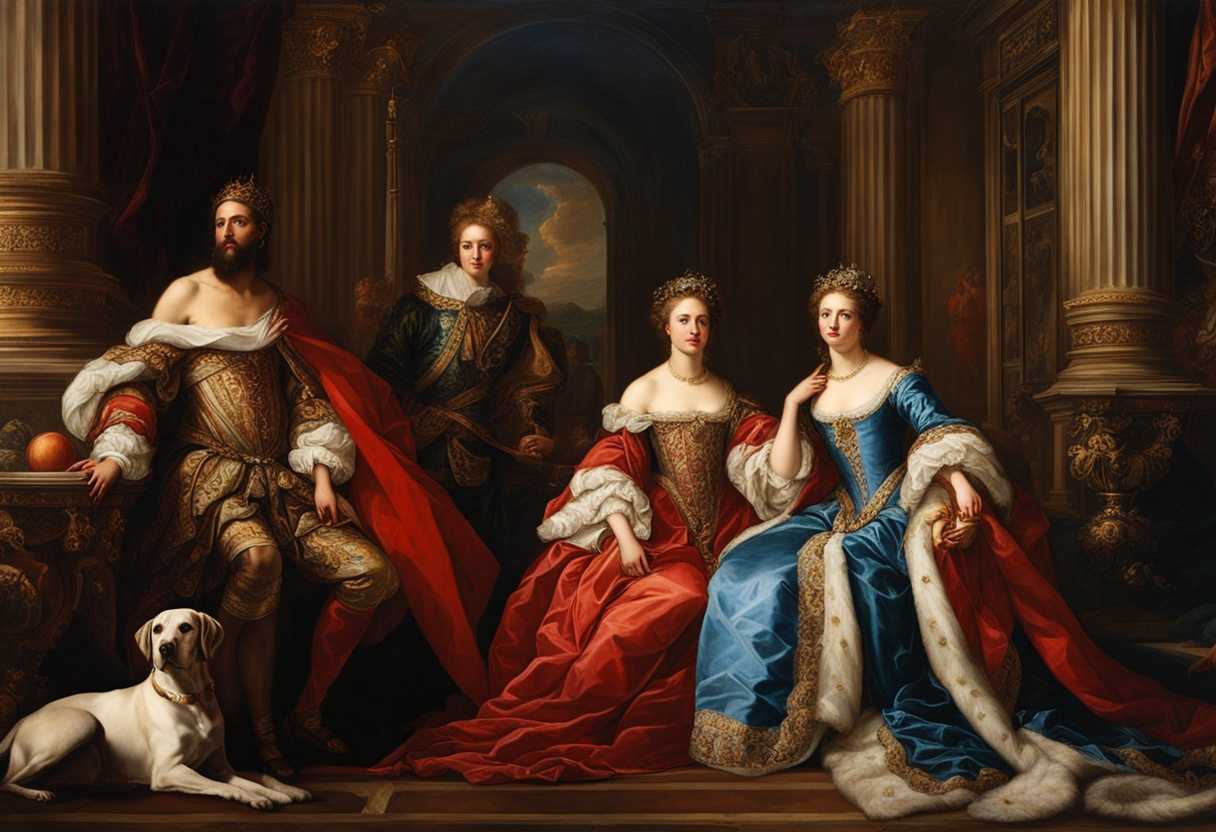
Setting the Scene for Esther 1:1-2:18
The scene is set in the opulent palace of King Xerxes in the ancient city of Susa. King Xerxes, also known as Ahasuerus, is hosting a grand banquet to showcase his wealth and power to his nobles, officials, and military leaders. The banquet hall is adorned with luxurious decorations, including gold and silver furnishings, and the finest tapestries and draperies. The guests are dressed in their most extravagant attire, displaying their status and wealth.
Among the guests is Queen Vashti, the wife of King Xerxes, who is hosting a separate banquet for the women in the royal palace. Vashti is known for her beauty and grace, and she is surrounded by her ladies-in-waiting and other noblewomen. The atmosphere is filled with music, laughter, and the aroma of delicious food and wine.
As the festivities continue, King Xerxes, in his drunken state, commands Queen Vashti to come before him and his guests to display her beauty. However, Queen Vashti refuses to obey the king’s command, causing a scandal in the palace. This defiance leads to Vashti being deposed as queen, setting the stage for the search for a new queen among the young virgins of the kingdom, including a Jewish orphan named Esther.
What is Esther 1:1-2:18 about?
The story of Esther becoming queen and saving her people from genocide is a powerful testament to the strength of courage and faith in the face of adversity. This verse highlights how Esther, a young Jewish woman, found herself in a position of power and used it to protect her people from a cruel decree issued by the King’s advisor, Haman. Despite the risks and challenges she faced, Esther showed great bravery and faith in God, ultimately risking her own life to plead for the safety of her people. We are reminded of the importance of standing up for what is right, even when it is difficult or dangerous as we reflect on this story. Esther’s example teaches us that even in the most dire circumstances, we can make a difference with courage and faith. It prompts us to consider how we can use our own positions and abilities to advocate for justice and protect those who are vulnerable. Our actions too can have a meaningful and lasting impact on the world around us, just as Esther’s actions had profound consequences for her people. How does Esther’s story inspire you to be courageous and faithful in your own life? What challenges do you face that require you to take a stand for what you believe is right?
Understanding what Esther 1:1-2:18 really means
The Book of Esther takes us back to the time of the Persian Empire, under the rule of King Xerxes, also known as Ahasuerus. In Esther 1:1-2:18, we witness the unfolding of events that lead to Esther’s remarkable journey to becoming queen. The narrative begins with Queen Vashti’s bold decision to refuse the king’s summons, setting the stage for a series of events that will shape the destiny of the characters involved. This passage serves as a prelude to the gripping tale of Esther, highlighting themes of divine providence, courage, and the intricate timing of God’s plans.
The phrase “In the days of Ahasuerus” grounds the story in a specific historical context, underscoring the vastness of the Persian Empire and the authority wielded by its king. Queen Vashti’s act of defiance in refusing to appear before the king not only showcases her personal integrity but also sets a precedent for standing up for one’s dignity in the face of power. Meanwhile, the mention of Esther finding favor with the king and others throughout the narrative serves as a poignant reminder of how God’s providence can work through human relationships and circumstances, shaping the course of events in unexpected ways.
Drawing parallels from other biblical passages, such as Proverbs 21:1, Romans 8:28, and Daniel 2:21, we see a consistent theme of God’s sovereignty over rulers and historical events. These verses reinforce the idea that God is in control, orchestrating circumstances for the good of those who trust in Him. The story of Esther resonates with contemporary audiences, urging individuals to embody courage and integrity in the face of adversity, trust in God’s perfect timing, and recognize His providential hand even in challenging situations.
Consider a scenario where someone confronts ethical dilemmas at work, akin to Vashti’s stand for dignity. Despite facing initial repercussions, their integrity may pave the way for positive change and respect in the long run. Similarly, individuals feeling out of place in unfamiliar environments, like Esther in the Persian court, can find solace in the reminder that God’s placement is purposeful, leading to significant impacts in due time. Through these anecdotes, we see echoes of Esther’s story in modern-day experiences, illustrating the timeless relevance of themes like courage, divine timing, and providence.
“In the days of Ahasuerus,” “Queen Vashti refused,” and “Esther found favor” are not mere phrases but pivotal elements that enrich the narrative with layers of meaning. They emphasize historical context, personal integrity, and divine favor, inviting readers to delve deeper into the text and reflect on how these themes resonate in their own lives. By exploring these key themes, connecting them to other biblical passages, and drawing parallels to contemporary situations, we uncover profound insights that illuminate the enduring significance of Esther’s story for us today.
How can one remain faithful in times of uncertainty?
Trusting in God’s sovereignty and plan can help one remain faithful in times of uncertainty. We must remember that God is in control even when we cannot see the outcome, just as Esther was placed in a challenging and uncertain situation. Esther’s story teaches us that God works behind the scenes, orchestrating events for His purpose and the ultimate good of those who trust in Him. We can find the strength to remain faithful during times of uncertainty by staying connected to God through prayer, studying His Word, and seeking guidance from wise counsel. Esther’s courage and willingness to take risks, even when the outcome was uncertain, serve as a powerful example of how faith and obedience can lead to remarkable outcomes. When we lean on God and follow His leading, we can navigate uncertainty with confidence, knowing that He is with us every step of the way.
Application
Dive into the captivating tale of Queen Esther and her unwavering courage in times of adversity. Let her bravery ignite a fire within you to fearlessly advocate for what is right, even in daunting circumstances. Just as she risked everything to protect her people, be ready to stand up for what you believe in without hesitation. When the chance to speak out and create positive change presents itself in your life, will you seize it with the same resilience and determination as Queen Esther?

Reverend Michael Johnson is an experienced Church Minister with a profound expertise in spirituality and guidance. With a serene presence and a compassionate heart, he has faithfully served his congregation for over 20 years, leading them on a spiritual journey towards inner peace and enlightenment. Reverend Johnson’s extensive knowledge of religious philosophies and profound understanding of human nature have made him a trusted confidant and mentor to many, as he seamlessly weaves his profound wisdom into life teachings. Reverend Johnson’s calming demeanor and empathetic nature continue to uplift and heal souls, nurturing a sense of unity and tranquility within his community.