
Esther 1:1-8 is about the grandiose display of King Xerxes’ wealth and power, highlighting his opulence and the lavishness of his court in order to set the stage for the events to follow in the book of Esther.
1 Now in the days of Ahasuerus, the Ahasuerus who reigned from India to Ethiopia over 127 provinces,
2 in those days when King Ahasuerus sat on his royal throne in Susa, the citadel,
3 in the third year of his reign he gave a feast for all his officials and servants. The army of Persia and Media and the nobles and governors of the provinces were before him,
4 He displayed the riches of his royal glory and the splendor and pomp of his greatness for many days, 180 days.
5 And when these days were completed, the king gave for all the people present in Susa the citadel, both great and small, a feast lasting for seven days in the court of the garden of the king’s palace.
6 There were white cotton curtains and violet hangings fastened with cords of fine linen and purple to silver rods and marble pillars, and also couches of gold and silver on a mosaic pavement of porphyry, marble, mother-of-pearl, and precious stones.
7 Drinks were served in golden vessels, vessels of different kinds, and the royal wine was lavished according to the bounty of the king.
8 By the king’s command they served drinks in golden vessels, each one different from the other, and the royal wine was lavished according to the king’s bounty.
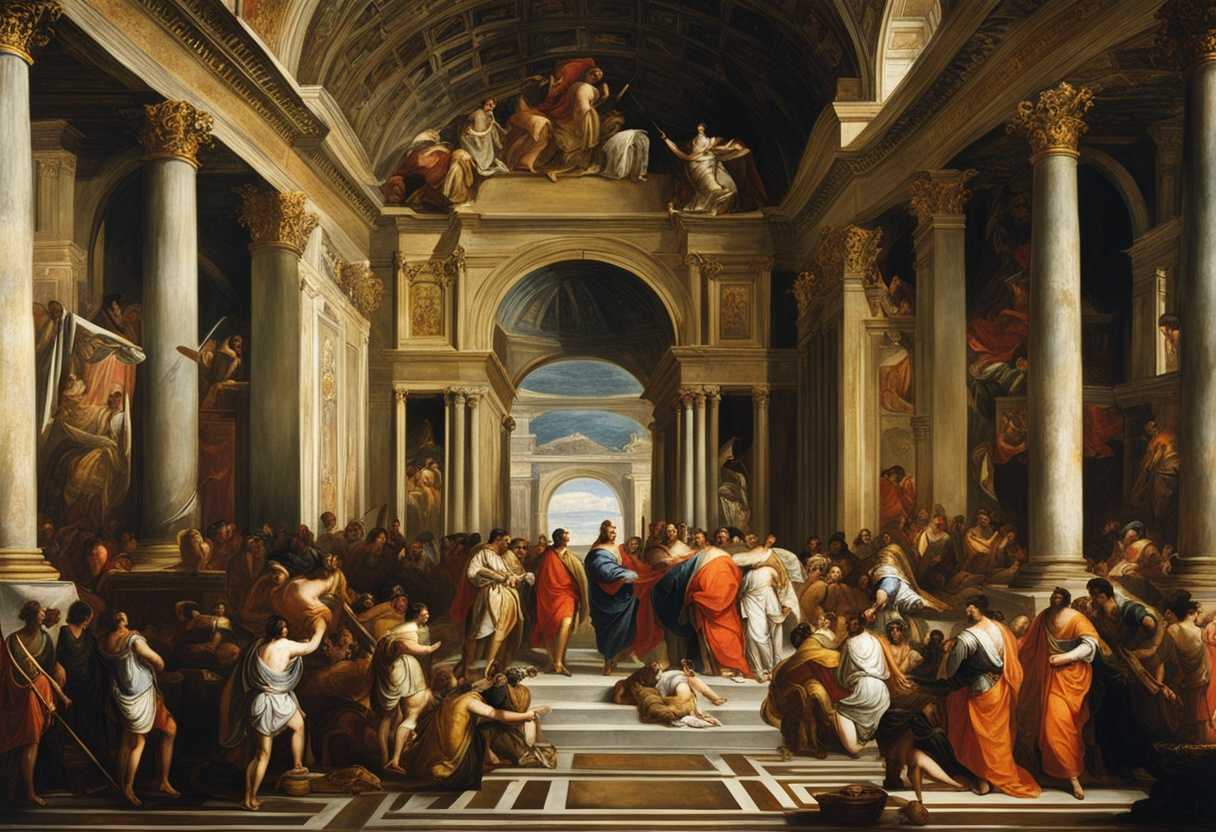
Setting the Scene for Esther 1:1-8
The scene in Esther chapter 1 opens in the opulent palace of King Xerxes in the ancient city of Susa. The king, known for his extravagant lifestyle and grand feasts, decides to host a lavish banquet for all his nobles and officials. The banquet is held in the royal palace, a magnificent structure adorned with gold and precious stones, symbolizing the wealth and power of the Persian Empire.
Among the guests at the banquet are the king’s closest advisors, military leaders, and governors from the various provinces under his rule. They have all been summoned by the king to partake in the festivities and enjoy the abundance of food and wine that is being served. The atmosphere is one of luxury and indulgence, with the guests reclining on couches and being attended to by servants.
As the banquet progresses, King Xerxes, in his desire to display his wealth and power, orders the queen, Vashti, to come before the guests and show off her beauty. However, Queen Vashti refuses to obey the king’s command, setting the stage for a series of events that will ultimately lead to the rise of Esther as queen and the saving of the Jewish people.
What is Esther 1:1-8 about?
King Xerxes hosts a grand feast for his officials and subjects in this verse. Such a banquet would have been a display of power, wealth, and generosity for the king. It may have been a way for him to showcase his status and authority to those in his kingdom. The mention of the banquet highlights the opulence and extravagance of the Persian court during this time.
Imagine the scene—elaborate decorations, sumptuous food, lively music, and guests dressed in their finest attire. The banquet would have been a social event where important political discussions may have taken place, alliances formed, and decisions made. We, as the reader, can picture the splendor of the event and the intricate dynamics at play within the royal court. It gives us a glimpse into the lifestyle and power dynamics of ancient kings and their interactions with their subjects and officials.
Understanding what Esther 1:1-8 really means
The Book of Esther opens a window into the opulent world of the Persian Empire, specifically during the reign of King Xerxes, also known as Ahasuerus. In these initial verses, we are transported to a grand banquet hosted by the king, a lavish display of his wealth and power. The setting of this banquet is crucial as it sets the stage for the unfolding events, including Queen Vashti’s defiance and the eventual rise of Esther to prominence.
“In the third year of his reign,” the text begins, pinpointing the timeline of these extravagant festivities. This phrase subtly hints at the stability and established authority of King Xerxes, setting the backdrop for the unfolding drama. The description of a banquet “for all his nobles and officials” underscores the inclusivity and grandeur of the event, symbolizing the king’s desire to showcase his riches and influence to all in his court.
The verses vividly portray the king’s pride and the magnificence of his reign as he “displayed the vast wealth of his kingdom and the splendor and glory of his majesty.” The imagery of the royal garden, where the banquet takes place, adds to the luxurious and extravagant ambiance of the scene. The mention of drinks served in unique golden goblets highlights the unparalleled richness of the banquet, each detail emphasizing the king’s immense resources and extravagance.
“Royal wine was abundant, in keeping with the king’s liberality,” further accentuates the king’s generosity and the lavishness of the celebration. These details not only paint a picture of excess but also serve as a cautionary tale against the dangers of pride and materialism. The biblical passages of Proverbs 16:18 and Luke 12:15 offer timeless wisdom, warning against the perils of arrogance and the fleeting nature of material possessions.
In a contemporary context, the narrative of King Xerxes’ banquet resonates as a cautionary tale for today’s society, where the pursuit of wealth and status often overshadows values of humility and compassion. The story prompts reflection on the true essence of leadership and the impact of one’s actions on others. Just as a modern-day CEO’s extravagant party may alienate employees, King Xerxes’ display of opulence leads to significant consequences, highlighting the repercussions of excessive pride and materialism.
Ultimately, the verses in Esther 1:1-8 serve as a poignant reminder of the transient nature of wealth and the enduring importance of humility. By contemplating these passages, readers are encouraged to reevaluate their priorities, focusing on values that truly matter and guarding against the pitfalls of pride and materialism. The story of King Xerxes’ banquet offers a timeless lesson on the dangers of excess and the enduring virtues of humility and moderation.
How can we demonstrate humility in positions of power?
One way to demonstrate humility in positions of power is by acknowledging that our abilities and achievements are ultimately dependent on God’s grace and guidance. Through recognizing that our success is not solely a result of our own efforts, we can cultivate a spirit of humility and gratitude. This can be exemplified by attributing our accomplishments to the support and contributions of others, rather than boasting about our own accomplishments.
Another way to show humility in positions of power is by serving others with compassion and empathy. We can demonstrate humility by prioritizing the well-being of those under our leadership and considering their perspectives and needs, focusing on lifting others up rather than seeking personal gain or recognition. This servant leadership approach can foster trust and respect among team members, creating a more collaborative and harmonious work environment. Staying open to feedback and willing to learn from others, regardless of their status or position, can also reflect humility in leadership. Accepting constructive criticism and being open to different viewpoints can not only help us grow personally and professionally, but also show a willingness to set aside our egos and recognize that there is always room for improvement. We can embody humility in positions of power by approaching our roles with a teachable spirit and a willingness to listen.
Application
In a world where our daily roles at work and home can easily inflate our egos, the story of King Xerxes and Queen Vashti serves as a powerful reminder of the dangers of pride. Let us reflect on our actions and strive to embody humility in all that we do. Just as Vashti faced consequences for her disobedience, let us embrace obedience to God’s will with grace and conviction. Will you choose to humble yourself and walk faithfully in obedience today?

Reverend Michael Johnson is an experienced Church Minister with a profound expertise in spirituality and guidance. With a serene presence and a compassionate heart, he has faithfully served his congregation for over 20 years, leading them on a spiritual journey towards inner peace and enlightenment. Reverend Johnson’s extensive knowledge of religious philosophies and profound understanding of human nature have made him a trusted confidant and mentor to many, as he seamlessly weaves his profound wisdom into life teachings. Reverend Johnson’s calming demeanor and empathetic nature continue to uplift and heal souls, nurturing a sense of unity and tranquility within his community.