
Esther 6:1-3 is about how God’s timing and providence led to the recognition and reward of Mordecai for his loyalty and righteousness, demonstrating that God works in mysterious ways to bring about justice and honor to those who remain faithful to Him.
1 On that night the king could not sleep. And he gave orders to bring the book of memorable deeds, the chronicles, and they were read before the king.
2 And it was found written how Mordecai had told about Bigthana and Teresh, two of the king’s eunuchs, who guarded the threshold, and who had sought to lay hands on King Ahasuerus.
3 And the king said, “What honor or distinction has been bestowed on Mordecai for this?” The king’s young men who attended him said, “Nothing has been done for him.”
Setting the Scene for Esther 6:1-3
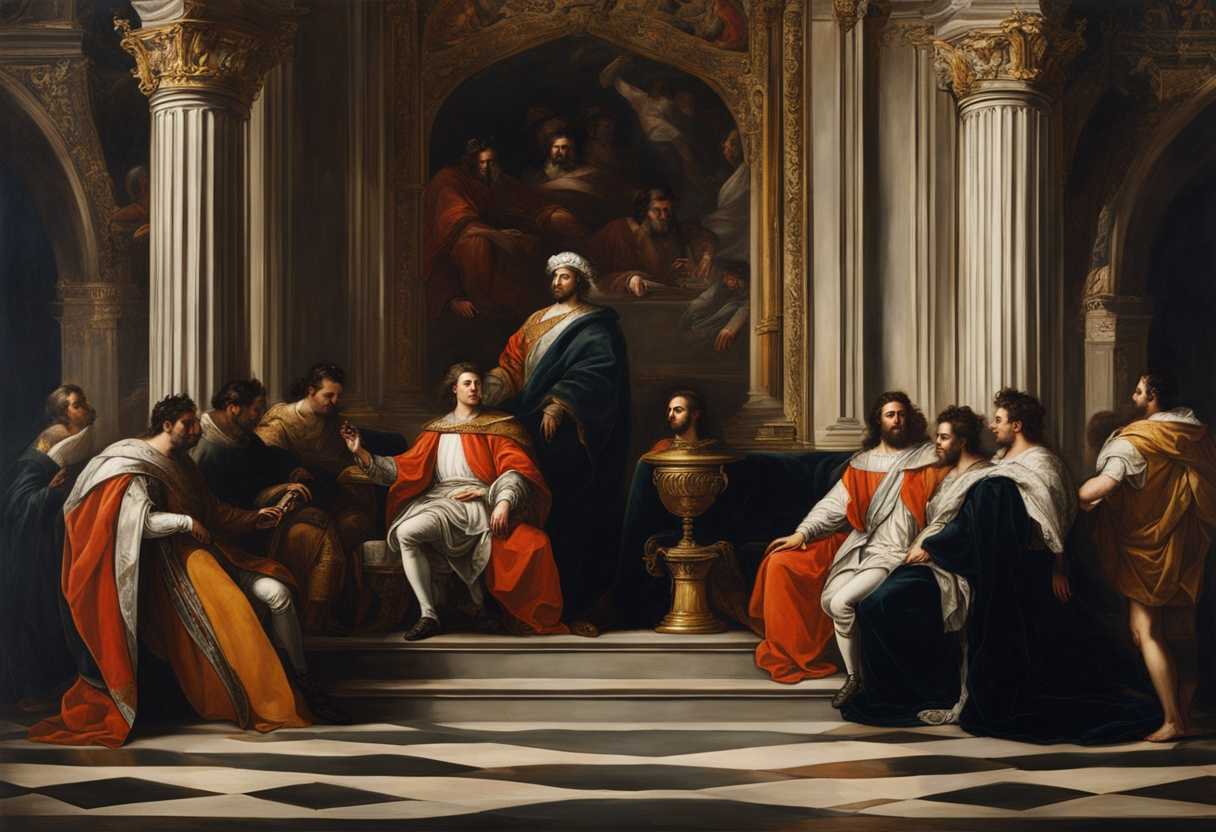
In Esther chapter 6, the scene opens in the royal palace of King Xerxes in the ancient city of Susa. It is the middle of the night, and the king is unable to sleep. To pass the time, he orders the book of memorable deeds, the chronicles of his reign, to be brought and read to him. As the scribe reads, they come across the account of Mordecai, who had uncovered a plot to assassinate the king but had not been rewarded for his loyalty.
As the king listens to the story, he realizes that Mordecai had never been honored for his actions. Just at that moment, Haman, the king’s chief advisor who harbors a deep hatred for Mordecai, arrives at the palace to request permission to have Mordecai hanged on the gallows he had prepared. Little does Haman know that the king is about to ask him how to honor someone deserving of recognition, and he assumes the king is referring to him.
The tension in the room is palpable as the king contemplates how to honor Mordecai while Haman eagerly suggests grand gestures, unaware that the king is actually planning to honor Mordecai. The scene is set with the king’s chambers dimly lit by torches, the air heavy with anticipation as the fate of Mordecai and Haman hangs in the balance.
What is Esther 6:1-3 about?
This verse highlights the concept of divine intervention and the ultimate rewards for those who remain faithful and righteous in their actions. It shows that God is actively involved in shaping events and circumstances to elevate and honor those who follow His will. The story of Mordecai being rewarded by King Xerxes is a testament to the idea that goodness and loyalty do not go unnoticed or unrewarded. It serves as a reminder that even in the face of adversity or uncertainty, staying true to one’s beliefs and principles will eventually lead to recognition and honor. We reflect on this verse and examine our own lives, considering how our actions align with the values and teachings that we hold dear. It prompts us to question whether we are consistently acting with integrity and faithfulness, trusting that God will ultimately bring about justice and reward for our efforts. We are reminded that a loving and just God will not go unnoticed of our own steadfastness and righteousness, just as Mordecai was elevated to a position of honor for his loyalty. Let us continue living in accordance with our beliefs, taking inspiration from this verse and trusting in the divine orchestration of events that will ultimately lead to our own rewards and blessings.
Understanding what Esther 6:1-3 really means
The Book of Esther, set in the Persian Empire, recounts the tale of Esther, a Jewish queen who saves her people from annihilation. In Esther 6:1-3, King Ahasuerus, unable to sleep, orders the book of memorable deeds to be read to him, discovering Mordecai’s past act of saving his life unrewarded. This moment of insomnia sets the stage for divine intervention, hinting at God’s unseen hand guiding events for His purpose. The reading of the chronicles underscores the significance of recording good deeds, showcasing how God utilizes ordinary occurrences to fulfill His plans. The king’s inquiry about Mordecai’s lack of recognition highlights the theme of justice and the necessity of acknowledging and rewarding virtuous actions.
Scriptures like Proverbs 21:1 and Romans 8:28 echo the narrative’s message of God’s sovereignty over rulers’ hearts and His orchestration of events for the benefit of His people. Mordecai’s eventual acknowledgment serves as a poignant reminder that acts of kindness, though initially overlooked, are ultimately noticed and rewarded, urging patience and reliance on God’s timing. In a world fixated on instant gratification and acknowledgment, this passage emphasizes the value of steadfastness and the certainty that God observes and remembers our deeds.
Consider a dedicated teacher whose years of hard work went unnoticed until a former student publicly praised their impact, leading to widespread recognition. This anecdote mirrors Mordecai’s story, illustrating that our actions, though unseen by others, are never forgotten by God. Esther 6:1-3 imparts lessons on divine timing, the significance of documenting good deeds, and the assurance of God’s unseen workings. It inspires us to persevere faithfully, trusting that God will honor and reward our endeavors in His perfect timing.
How can we recognize and honor the divine timing?
We can recognize and honor divine timing by acknowledging the seemingly coincidental or unexpected occurrences that align perfectly to bring about a specific outcome. When events unfold in a way that surpasses human planning and control, it can be a clear indication of a higher power at work, guiding and orchestrating events according to a greater purpose. We attribute these instances as divine timing, recognizing the circumstances as a force beyond our understanding, showing reverence and respect for the mysterious ways in which life unfolds. The intricate timing of events played a crucial role in the unfolding of a plan that ultimately saved the Jewish people in the story of Esther. The arrival of critical information at just the right moment, the king’s inability to sleep leading to him reading about Mordecai’s loyalty, and the subsequent honoring of Mordecai all point to a divine orchestration of events. We can cultivate a sense of awe and gratitude towards a power greater than ourselves by reflecting on these instances and recognizing the hand of the divine in the timing of events. We can also find solace and trust in the unfolding of our own lives by acknowledging and honoring divine timing. When we encounter delays, setbacks, or unexpected turns, viewing these as opportunities for growth and learning rather than mere chance occurrences can help us navigate difficult times with faith and patience. Understanding that there is a divine plan at work, even if it may not be immediately clear to us, can bring comfort and a sense of surrender to the flow of life, knowing that all things will come together in their appointed time.
Application
Just like in the story of Esther, every moment in your life has the potential for divine intervention. Trust in God’s perfect timing and guidance, even when things seem ordinary or uncertain. Stay faithful and open to unexpected opportunities that may lead to something truly remarkable. Will you embrace the journey ahead with unwavering faith, knowing that God is always working for your good?

Reverend Michael Johnson is an experienced Church Minister with a profound expertise in spirituality and guidance. With a serene presence and a compassionate heart, he has faithfully served his congregation for over 20 years, leading them on a spiritual journey towards inner peace and enlightenment. Reverend Johnson’s extensive knowledge of religious philosophies and profound understanding of human nature have made him a trusted confidant and mentor to many, as he seamlessly weaves his profound wisdom into life teachings. Reverend Johnson’s calming demeanor and empathetic nature continue to uplift and heal souls, nurturing a sense of unity and tranquility within his community.