
Esther 7:1-4 is about Queen Esther’s courageous plea to King Xerxes to save her people from the genocidal plot orchestrated by Haman, ultimately revealing the wicked intentions of Haman and leading to his downfall.
1 So the king and Haman went in to feast with Queen Esther.
2 And on the second day, as they were drinking wine after the feast, the king again said to Esther, “What is your wish, Queen Esther? It shall be granted you. And what is your request? Even to the half of my kingdom, it shall be fulfilled.”
3 Then Queen Esther answered, “If I have found favor in your sight, O king, and if it please the king, let my life be granted me for my wish, and my people for my request.
4 For we have been sold, I and my people, to be destroyed, to be killed, and to be annihilated. If we had been sold merely as slaves, men and women, I would have been silent, for our affliction is not to be compared with the loss to the king.”
Setting the Scene for Esther 7:1-4
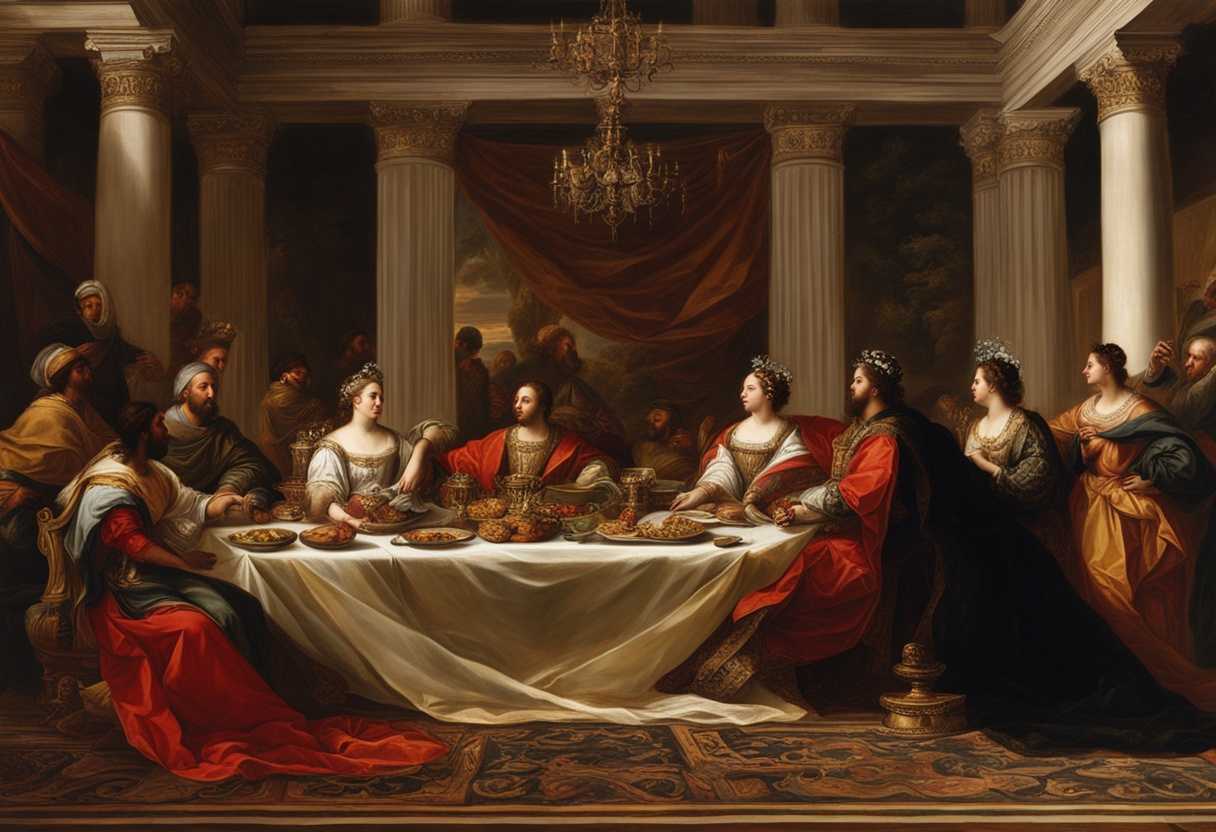
In Esther chapter 7, we find Queen Esther, King Xerxes (also known as King Ahasuerus), Haman, and Mordecai in a tense and dramatic scene set in the royal palace of Susa. The events leading up to this moment began with Haman’s plot to annihilate the Jewish people, which Queen Esther, who was herself Jewish but had kept her identity a secret, had bravely exposed to the king.
As the scene unfolds, Queen Esther, dressed in her royal attire, stands before King Xerxes, with Haman also present. The atmosphere is charged with anticipation as Esther prepares to reveal Haman’s evil intentions and plead for the lives of her people. The opulent surroundings of the palace, with its grand pillars and luxurious furnishings, serve as a stark contrast to the gravity of the situation at hand.
As Esther gathers her courage to speak, the tension in the room is palpable. The fate of the Jewish people hangs in the balance as Esther unveils the truth about Haman’s wicked scheme. The scene is a pivotal moment in the story of Esther, showcasing her bravery and faith as she risks everything to save her people from destruction.
What is Esther 7:1-4 about?
This verse from the book of Esther showcases a pivotal moment in the story where the protagonist, Esther, bravely exposes the sinister plot devised by Haman to annihilate the Jewish community. It not only highlights Esther’s courage and quick thinking but also symbolizes the triumph of good over evil. Esther reveals Haman’s true intentions, saving her people and bringing justice to the antagonist who sought to harm them. This verse is a powerful reminder of the importance of standing up against tyranny and fighting for what is right, even in the face of grave danger.
Reflecting on this verse prompts us to ponder the significance of speaking out against injustice and standing up for those who are vulnerable. It serves as a poignant lesson on the power of courage and conviction, inspiring us to confront challenges head-on and make a difference in the lives of others. How often do we find ourselves in situations where we must choose between staying silent and risking everything to speak out? Esther’s actions remind us that sometimes, taking a stand is not just a choice but a responsibility we hold towards one another. Let this verse be a beacon of hope and a call to action, urging us to be brave and fight for justice in our own lives and communities.
Understanding what Esther 7:1-4 really means
The Book of Esther unfolds in the grandeur of the Persian Empire, where Queen Esther, a Jewish woman, rises to a position of influence during King Xerxes’ reign. Her story is one of courage and sacrifice, as she navigates a plot by Haman to annihilate her people. In Esther 7:1-4, a crucial moment unfolds as Queen Esther, King Xerxes, and Haman come together for a fateful dinner.
As the scene is set, we witness the unique relationship between Esther and the king, built on trust and intimacy. This setting becomes the backdrop for Esther’s bold revelation of Haman’s sinister plan. Her plea to the king is both personal and communal, as she risks her own life to save her people. Esther’s courage shines through as she lays bare the gravity of the situation, emphasizing the imminent threat of destruction facing her and her people.
Drawing parallels from other biblical passages, we see echoes of courage and faith in the face of adversity. The refusal of Shadrach, Meshach, and Abednego to bow to the golden image mirrors Esther’s defiance of injustice. Nehemiah’s deep sense of responsibility and intercession for his people resonates with Esther’s selfless advocacy. The New Testament verse from Romans 8:31 reinforces the theme of divine protection and trust in God’s sovereignty, akin to Esther’s unwavering faith.
Esther’s story transcends time, offering timeless lessons for today’s world. Her bravery in standing up against injustice serves as a beacon for those navigating challenging circumstances. The example of advocacy and intercession she sets prompts reflection on how we can leverage our positions and privileges to aid others in need. Esther’s unwavering faith in God’s plan amidst adversity serves as a reminder for us to trust in divine providence, even when faced with seemingly insurmountable challenges.
In a modern context, envision a whistleblower risking their career to expose corruption within a company. Like Esther, this individual confronts personal peril to uphold integrity and justice. Their courage mirrors Esther’s resolve, inspiring others to take a stand against wrongdoing and champion righteousness. Esther 7:1-4 encapsulates a narrative of courage, advocacy, and faith, urging us to contemplate how we can emulate Esther’s example in championing justice and placing our trust in God’s guiding hand, even in the midst of daunting risks.
What does true courage look like in adversity?
True courage in adversity is displayed when someone is willing to take a stand and speak up for what is right, even when faced with great danger or risk. It involves confronting a challenging situation head-on, without hesitation, in order to bring about justice or change. This kind of courage often requires a deep conviction in one’s beliefs and values, and a willingness to face the consequences of standing up for them. Esther approaches the king to plead for the lives of her people in the story of Esther, showing true courage despite the enormous personal risk involved. She displays bravery in risking her own life to potentially save the lives of many others – she is willing to sacrifice her own safety for the greater good. This act of courage is not just about physical bravery, but also about taking a moral stand and fighting against injustice, even in the face of seemingly insurmountable odds. Taking action, even when the outcome is uncertain and the stakes are high, ultimately involves true courage in adversity. It requires a willingness to face challenges and make sacrifices for what one believes is right, regardless of the personal consequences. Esther’s act of courage serves as a powerful example of the strength that can be found in standing up for justice and speaking out against oppression, even in the most difficult of circumstances.
Application
Summon your inner strength like a modern-day superhero, ready to tackle any challenges that come your way. Just as a loving parent protects their child, let us rise up to defend what is right and just. When injustice knocks on our door, let us be the voice of change. How will you wield your power to make a difference in this world today?

Reverend Michael Johnson is an experienced Church Minister with a profound expertise in spirituality and guidance. With a serene presence and a compassionate heart, he has faithfully served his congregation for over 20 years, leading them on a spiritual journey towards inner peace and enlightenment. Reverend Johnson’s extensive knowledge of religious philosophies and profound understanding of human nature have made him a trusted confidant and mentor to many, as he seamlessly weaves his profound wisdom into life teachings. Reverend Johnson’s calming demeanor and empathetic nature continue to uplift and heal souls, nurturing a sense of unity and tranquility within his community.