
Exodus 10:12 is about the stubbornness of Pharaoh and his refusal to heed the warnings of God, leading to the continued suffering of the Egyptian people due to his pride and resistance to divine authority.
12 Then the Lord said to Moses, “Stretch out your hand over the land of Egypt for the locusts, so that they may come upon the land of Egypt and eat every plant in the land, all that the hail has left.”
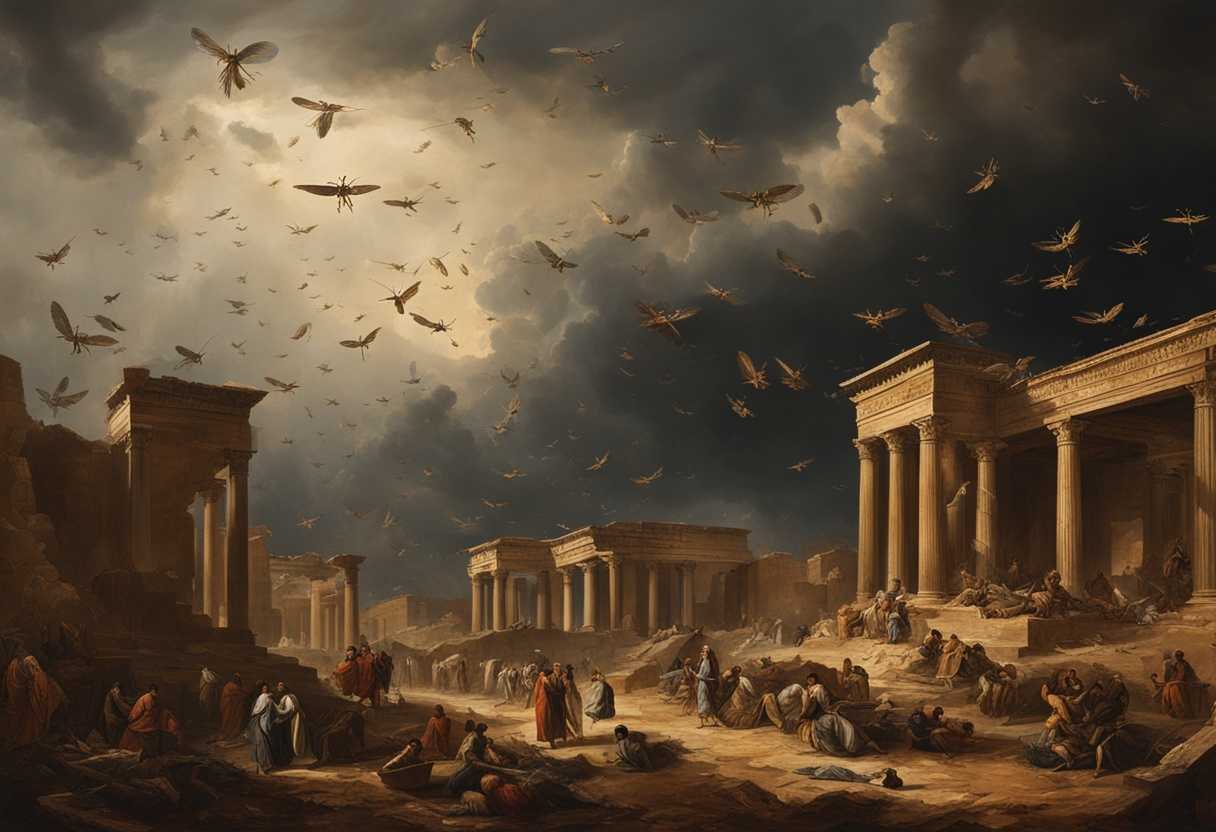
Setting the Scene for Exodus 10:12
In Exodus chapter 10, we find Moses and Aaron standing before Pharaoh in the grand throne room of the Egyptian palace. The room is adorned with intricate hieroglyphics and golden decorations, reflecting the wealth and power of the Pharaoh. Pharaoh, seated on his ornate throne, is surrounded by his advisors and court officials, all dressed in luxurious garments.
Moses, with his staff in hand, and Aaron, his brother, are there to deliver a message from the God of the Israelites. They have already performed several miracles, including turning the Nile River into blood and bringing forth swarms of locusts, in an attempt to convince Pharaoh to release the Israelites from slavery. However, Pharaoh’s heart remains hardened, and he refuses to let the people go.
As Moses speaks the words of warning from God, the tension in the room is palpable. The air is thick with anticipation as everyone waits to see how Pharaoh will respond to this latest plague. The scene is charged with drama and significance, as the fate of an entire nation hangs in the balance.
What is Exodus 10:12 about?
God sent a series of plagues upon Egypt to compel Pharaoh to release the Israelites from slavery, culminating in this verse from the book of Exodus. The plague of locusts was one of the devastating events that befell the land, destroying crops and causing widespread devastation. Moses calls upon God to end this plague, and we witness the power of prayer and the intervention of a higher power to bring relief and protection to the people.
Have you ever felt overwhelmed by challenges or difficulties in your life? This verse reminds us that we can always turn to God for help and guidance, even in the midst of chaos and destruction. We can seek solace and support through prayer and faith, just as Moses called upon God to bring an end to the plague of locusts. It serves as a powerful reminder of the importance of faith, perseverance, and the belief that divine intervention can bring about positive change in the face of adversity.
Understanding what Exodus 10:12 really means
In the narrative of the ten plagues in Exodus, we come across the verse Exodus 10:12, which marks the introduction of the eighth plague – the plague of locusts. This plague, like the others, was a demonstration of God’s power and a means to compel Pharaoh to release the Israelites from slavery. The imagery of locusts in ancient Egypt was one of complete devastation, as these insects would consume all vegetation, leading to famine and economic ruin. When Moses is instructed to “stretch out [his] hand over the land of Egypt,” it symbolizes divine intervention, with Moses being the conduit through which God’s power is manifested.
The phrase “That they may come up upon the land of Egypt, and eat every herb of the land” underscores the totality of the destruction brought by the locusts. This complete consumption symbolizes the completeness of God’s judgment upon Egypt. The devastation caused by the locusts was not merely physical but also carried spiritual and symbolic weight, showcasing God’s authority over all creation. In Joel 2:25, we find a promise of restoration after the devastation caused by locusts, offering hope and redemption, highlighting God’s ability to bring renewal even after times of great loss.
Revelation 9:3 draws a parallel to the plagues in Egypt, using locusts as a symbol of judgment in the end times. This connection between the plagues in Exodus and the future judgment in Revelation emphasizes the continuity of God’s justice throughout history. The story of the plagues, including the plague of locusts, serves as a reminder of God’s power and justice, showing that He is actively involved in the affairs of humanity. This narrative challenges us to trust in God’s timing and His ability to intervene in seemingly hopeless situations, just as He did for the Israelites in Egypt.
An anecdote of a farmer facing a devastating drought, only to experience abundant harvest after trusting in God’s provision, mirrors the biblical promise of restoration. This story illustrates the importance of faith in God’s ability to bring about change and renewal, even in the midst of despair. The application of Exodus 10:12 urges us to recognize God’s power and sovereignty, encouraging us to remain steadfast in our faith during trials. Just as the Israelites had to trust in God’s plan during the plagues, we are called to have faith that God is in control of our circumstances and can bring about transformation in His time.
By reflecting on Exodus 10:12 and its broader biblical context, we find reassurance in God’s sovereignty and His commitment to justice and restoration. This verse prompts us to ponder on the implications of God’s power in our lives and to trust in His ability to bring about redemption and renewal, even in the face of overwhelming challenges.
How does our pride hinder our ability to repent?
Our pride can hinder our ability to repent by making us resistant to the idea of admitting our mistakes and shortcomings. When we are filled with pride, we may struggle to humble ourselves before God and ask for forgiveness. Pride can lead us to believe that we are always right and that we do not need to seek repentance or guidance from God.
Additionally, pride can blind us to the ways in which we have strayed from God’s path. It can prevent us from seeing our faults and acknowledging the need to change our ways. Instead of seeing repentance as a necessary step towards reconciliation with God, pride can cause us to view it as a sign of weakness or failure, further distancing us from the path to forgiveness and spiritual growth. Our pride can ultimately become a barrier that prevents us from fully embracing repentance and experiencing the grace and mercy of God. We open ourselves up to the transformative power of repentance and strengthen our relationship with God by letting go of our pride and humbling ourselves before Him.
Application
Unlock the barriers in your heart, just like the Pharaoh did in Exodus 10:12. Embrace obedience as your key to abundant blessings and miraculous opportunities. Are you ready to break free from resistance and step into a future filled with divine alignment and favor?

Reverend Michael Johnson is an experienced Church Minister with a profound expertise in spirituality and guidance. With a serene presence and a compassionate heart, he has faithfully served his congregation for over 20 years, leading them on a spiritual journey towards inner peace and enlightenment. Reverend Johnson’s extensive knowledge of religious philosophies and profound understanding of human nature have made him a trusted confidant and mentor to many, as he seamlessly weaves his profound wisdom into life teachings. Reverend Johnson’s calming demeanor and empathetic nature continue to uplift and heal souls, nurturing a sense of unity and tranquility within his community.