
Exodus 10:3 is about God’s intention to display His power and authority over the Egyptian pharaoh through the plagues in order to bring about the liberation of the Israelites from slavery.
3 So Moses and Aaron went in to Pharaoh and said to him, “Thus says the Lord, the God of the Hebrews, ‘How long will you refuse to humble yourself before me? Let my people go, that they may serve me.
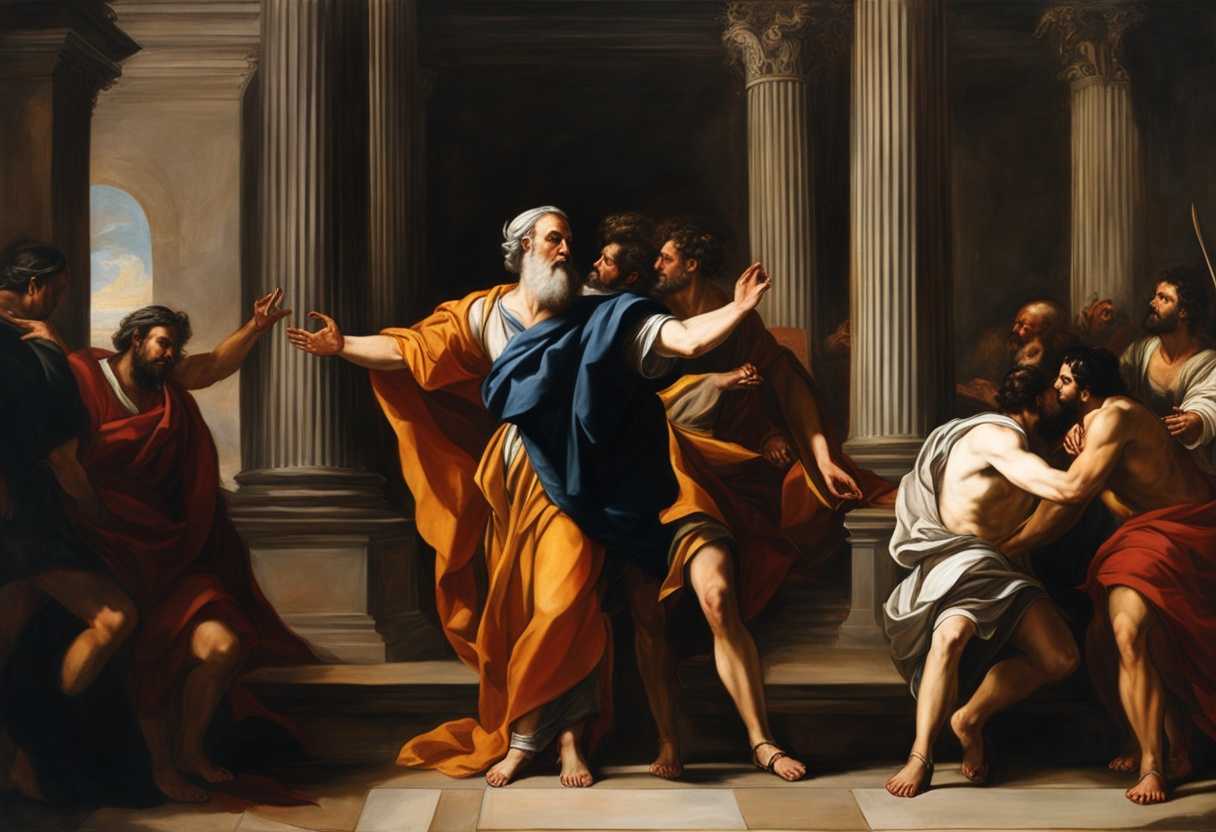
Setting the Scene for Exodus 10:3
In Exodus chapter 10, we find Moses and Aaron standing before Pharaoh in the grand throne room of the Egyptian palace. The room is adorned with intricate hieroglyphics and golden decorations, reflecting the wealth and power of the Pharaoh. The air is heavy with incense, and the flickering torches cast a warm glow over the scene.
Moses, a humble and weathered man, stands tall with his staff in hand, a symbol of his authority from God. Aaron, his brother, stands beside him, ready to speak on behalf of Moses as his spokesperson. Pharaoh, adorned in regal attire and a crown, sits upon his throne with an air of arrogance and defiance.
The tension in the room is palpable as Moses and Aaron once again implore Pharaoh to let the Israelites go. Despite witnessing the devastating plagues that have befallen Egypt, Pharaoh remains stubborn and refuses to release the Israelites from slavery. The stage is set for another confrontation between the power of God and the pride of Pharaoh, a battle that will ultimately lead to the liberation of the Israelites from their bondage.
What is Exodus 10:3 about?
This verse speaks to a powerful example of God’s sovereignty and how he works in mysterious ways to fulfill his divine plan. God demonstrated his supreme authority over even the most stubborn of rulers by hardening Pharaoh’s heart. This action allowed for a dramatic display of his power through the plagues upon Egypt, ultimately leading to the release and deliverance of the Israelites from slavery.
Through this verse, we are reminded of God’s ability to use even the most challenging situations for his greater purpose. It prompts us to reflect on the ways in which God may be working in our own lives, even when circumstances seem difficult or confusing. God set the stage for a miraculous deliverance that would leave a lasting impact on both the Israelites and future generations by allowing Pharaoh’s heart to harden. So, as we encounter obstacles or setbacks, let us trust in the bigger picture that God is orchestrating, knowing that ultimately, his plans are for our good and his glory.
Understanding what Exodus 10:3 really means
In the narrative of Exodus, we find Moses and Aaron standing before Pharaoh, demanding the release of the Israelites. The verse in question, Exodus 10:3, is a pivotal moment in this confrontation, where God questions Pharaoh’s refusal to humble himself. The context of this verse is within the series of plagues sent by God to demonstrate His power and demand the liberation of His people. It serves as a direct challenge to Pharaoh’s pride and defiance.
The phrase “How long will you refuse to humble yourself before me?” encapsulates the core message of humility and submission to God’s authority. It showcases God’s patience and mercy, offering Pharaoh numerous chances to change his ways. The demand to “Let my people go, so that they may worship me” emphasizes the purpose of liberation – to enable the Israelites to freely worship and serve God. It highlights the intrinsic value God places on worship and the freedom to practice faith without hindrance.
Drawing parallels from other biblical passages, such as James 4:10 and 2 Chronicles 7:14, we see a consistent theme of humility leading to divine favor and intervention. These verses reinforce the idea that humility before God is not only a virtue but a pathway to experiencing God’s grace and blessings. The call to humility is not confined to a specific time or culture; it resonates across generations and is relevant to people of all backgrounds.
In a world that often exalts pride and self-reliance, the message of Exodus 10:3 challenges us to acknowledge our dependence on God. It prompts us to reflect on our attitudes towards authority and submission, urging us to embrace humility as a transformative virtue. The anecdote of a successful individual facing a crisis underscores how humility can pave the way for divine assistance and personal growth. By humbling ourselves before God, we open the door to His guidance, blessings, and a deeper sense of purpose.
In conclusion, Exodus 10:3 serves as a poignant reminder of the essential role of humility in our relationship with God. It beckons us to examine our hearts, identify areas where pride may hinder our connection with God, and choose humility as a pathway to spiritual growth. Through humility, we not only align ourselves with God’s will but also experience the true freedom that comes from worshiping and serving Him wholeheartedly.
How can we humble ourselves before God?
We can humble ourselves before God by acknowledging His sovereignty and recognizing our dependence on Him. This entails submitting our will to His, recognizing His power and authority over all things. Humility involves viewing ourselves in light of God’s greatness and understanding that we are in need of His guidance and grace.
Another way to humble ourselves before God is by confessing our sins and weaknesses. We demonstrate humility and a desire for spiritual growth by acknowledging our imperfections and seeking forgiveness for our wrongdoings. This act of contrition allows us to approach God with a repentant heart, seeking His mercy and grace.
Additionally, we can humble ourselves before God by cultivating a spirit of gratitude and praise. We demonstrate humility by expressing thankfulness for His blessings and acknowledging His goodness in our lives, recognizing that all good things come from Him. Gratitude fosters a humble heart that is focused on God’s provision and mercy, leading us to worship Him with reverence and adoration.
Application
Let’s cleanse our hearts and prioritize our connection with God above all else. It’s time to realign ourselves and show unwavering dedication to His purpose. Are you ready to release all obstacles that stand in the way of your faith and completely dedicate yourself to His divine plan?

Reverend Michael Johnson is an experienced Church Minister with a profound expertise in spirituality and guidance. With a serene presence and a compassionate heart, he has faithfully served his congregation for over 20 years, leading them on a spiritual journey towards inner peace and enlightenment. Reverend Johnson’s extensive knowledge of religious philosophies and profound understanding of human nature have made him a trusted confidant and mentor to many, as he seamlessly weaves his profound wisdom into life teachings. Reverend Johnson’s calming demeanor and empathetic nature continue to uplift and heal souls, nurturing a sense of unity and tranquility within his community.