
Exodus 12:1-12 is about the establishment of the Passover festival, symbolizing the Israelites’ liberation from slavery in Egypt and God’s protection over them during their exodus journey.
1 The Lord said to Moses and Aaron in the land of Egypt,
2 “This month shall be for you the beginning of months. It shall be the first month of the year for you.
3 Tell all the congregation of Israel that on the tenth day of this month every man shall take a lamb according to their fathers’ houses, a lamb for a household.
4 And if the household is too small for a lamb, then he and his nearest neighbor shall take according to the number of persons; according to what each can eat you shall make your count for the lamb.
5 Your lamb shall be without blemish, a male a year old.
6 and you shall keep it until the fourteenth day of this month, when the whole assembly of the congregation of Israel shall kill their lambs at twilight.
7 Then they shall take some of the blood and put it on the two doorposts and the lintel of the houses in which they eat it.
8 They shall eat the flesh that night, roasted on the fire; with unleavened bread and bitter herbs they shall eat it.
9 Do not eat any of it raw or boiled in water, but roasted, its head with its legs and its inner parts.
10 And you shall let none of it remain until the morning; anything that remains until the morning you shall burn.
11 In this manner you shall eat it: with your belt fastened, your sandals on your feet, and your staff in your hand. And you shall eat it in haste. It is the Lord’s Passover.
12 For I will pass through the land of Egypt that night, and I will strike all the firstborn in the land of Egypt, both man and beast; and on all the gods of Egypt I will execute judgments: I am the Lord.
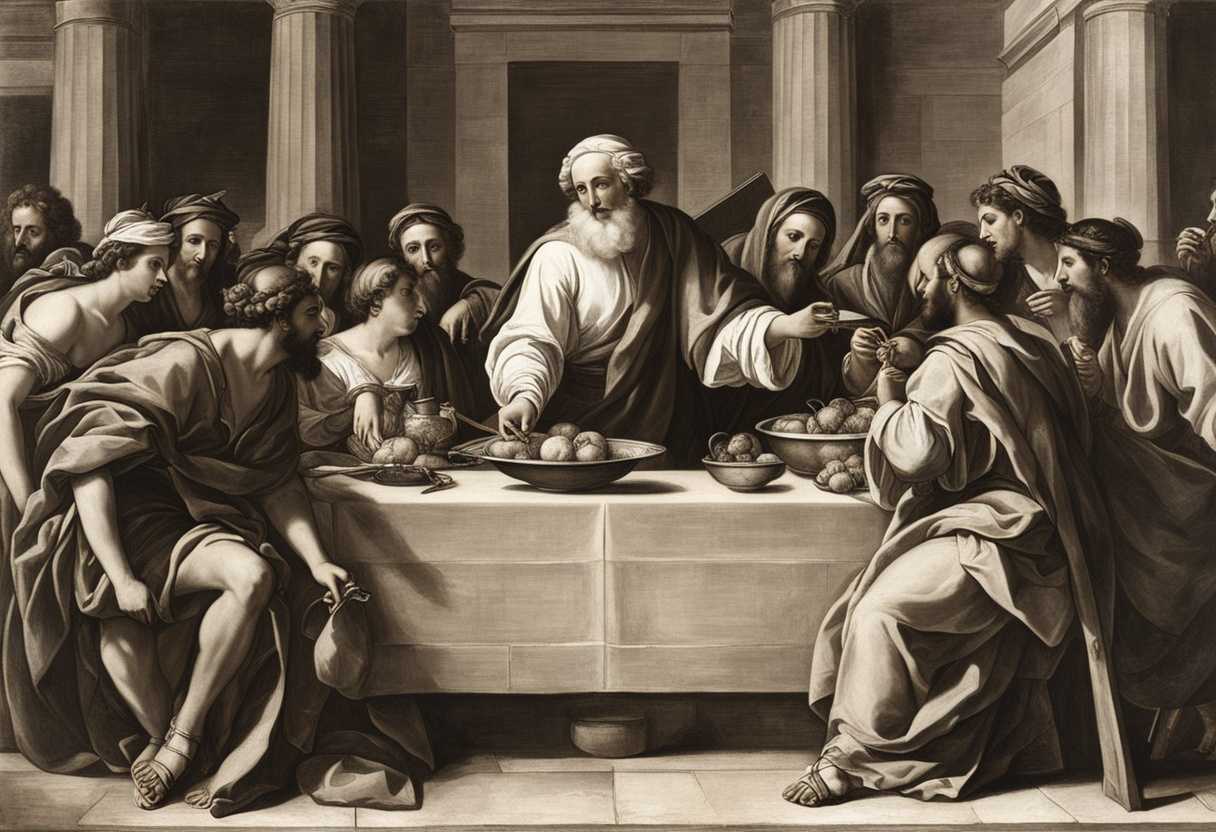
Setting the Scene for Exodus 12:1-12
The scene in Exodus 12:1-12 takes place in the land of Egypt, specifically in the Israelite community as they prepare for their departure from slavery. The main characters in this scene are Moses, Aaron, and the Israelites. They have been enslaved in Egypt for generations and have cried out to God for deliverance. Now, as the final plague approaches, Moses and Aaron are instructed by God to prepare the Israelites for their exodus by observing the Passover.
The surroundings are tense and filled with anticipation as the Israelites follow Moses and Aaron’s instructions to select a lamb without blemish, slaughter it, and mark their doorposts with its blood. This act signifies their faith and obedience to God’s command to protect them from the angel of death that will pass through Egypt that night. The scene is one of urgency and faith as the Israelites gather in their homes, dressed and ready to leave at a moment’s notice, while also partaking in the Passover meal that will become a lasting ordinance for generations to come.
As the night falls, the Israelites huddle in their homes, the sound of their prayers and the smell of roasted lamb filling the air. The scene is one of unity and trust in God’s promise of deliverance, as they await the final plague that will lead to their freedom from bondage. The atmosphere is charged with a mix of fear and hope, as the Israelites cling to their faith in God’s protection and provision, knowing that their liberation is at hand.
What is Exodus 12:1-12 about?
Isn’t it fascinating how rituals and traditions can serve as powerful reminders of our history and faith? God establishes the Passover as a special commemoration of the Israelites’ liberation from slavery in Egypt in this verse. This annual observance was meant not only to honor their deliverance but also to reinforce their connection to God and each other as a community.
Imagine being part of a people who endured generations of oppression and then witnessed miraculous liberation! The Passover was a way for the Israelites to never forget what God had done for them and to pass down this pivotal story to future generations. It was a tangible way for them to express gratitude, faith, and unity, while also looking forward to the promise of freedom and redemption. We, as teachers and leaders, can draw inspiration from this verse to create meaningful rituals and traditions that help our communities remember important moments, values, and lessons. Let’s reflect on the significance of these practices in nurturing a sense of identity, belonging, and spiritual connection.
Understanding what Exodus 12:1-12 really means
In the narrative of the Israelites’ exodus from Egypt, we encounter a significant event—the institution of the Passover. This momentous occasion symbolizes deliverance and underscores God’s unwavering faithfulness to His people. As we delve into Exodus 12:1-12, we are greeted with divine instruction as the Lord speaks to Moses and Aaron in Egypt, setting the stage for a transformative experience for the Israelites.
The declaration that “This month is to be for you the first month, the first month of your year” signifies not just a change in the calendar but a profound new beginning for the Israelites. It marks a fresh start, a chance to leave behind the bondage of the past and embrace the promise of a brighter future. The directive to “Take a lamb for each family” carries deep symbolism, highlighting the importance of sacrifice and the communal aspect of worship within the family unit.
One of the most poignant aspects of this passage is the imagery of the blood serving as a sign on the houses, ensuring protection when the Lord passes over. This act of faith and obedience, marking the doorposts with the blood of the lamb, demonstrates the power of trust in God’s promises. It serves as a poignant reminder of the significance of faith and the rewards of obedience in the face of adversity.
Drawing parallels to other biblical passages, we see the seamless connection between the Passover lamb and Jesus Christ. John 1:29 proclaims Jesus as the “Lamb of God,” emphasizing His sacrificial role in redeeming humanity. 1 Corinthians 5:7 reinforces this idea, portraying Christ as the ultimate Passover lamb whose sacrifice brings salvation. Hebrews 11:28 underscores the crucial role of faith in the Passover narrative, highlighting the importance of trust in God’s protection.
The relevance of this ancient account extends to our lives today, urging us to embody faith and obedience in our daily walk. Just as the Israelites trusted in God’s deliverance, we are called to rely on His guidance and provision. The theme of new beginnings resonates with anyone seeking transformation and renewal, reminding us of God’s promise of a fresh start. Moreover, the emphasis on community and family in the Passover observance underscores the vital role of relationships in our spiritual journey.
Consider a family facing challenges akin to the Israelites in Egypt, feeling trapped and seeking divine intervention. Through prayer and unity, they experience a “Passover” moment, sensing God’s protection and provision, leading them to a new chapter in their lives. This anecdote mirrors the timeless message of Exodus 12:1-12, emphasizing God’s deliverance, the significance of faith and obedience, and the power of community and new beginnings. It prompts us to reflect on our own journey, seeking God’s guidance and protection as we navigate life’s uncertainties.
How can we approach God’s commands with faith?
We can approach God’s commands with faith by trusting in His wisdom and understanding that His instructions are for our own good. We can remember that God’s commands are meant to lead us towards righteousness, protection, and blessings. Therefore, when we follow His commands with faith, we can rest assured that He will guide us through every step of the way.
Having faith in God’s commands also means acknowledging His sovereignty and authority over our lives. We demonstrate our trust in His perfect plan for us by submitting to His instructions with a humble and obedient heart. When we approach God’s commands with faith, we show our willingness to surrender our will to His, knowing that His ways are higher and greater than our own. Approaching God’s commands with faith ultimately requires a deep dependence on His grace and a firm belief in His promises. We can experience the peace, joy, and fulfillment that come from following the will of our loving and faithful God as we put our trust in Him and walk in obedience to His commands.
Application
Are you willing to follow God’s guidance as the Israelites followed His instructions? Just as they prepared for their journey to the promised land, are you ready to make the necessary changes in your own life? Let this passage serve as a powerful reminder to take action and align yourself with God’s plan. Will you seize this moment to wholeheartedly embrace His calling today?

Reverend Michael Johnson is an experienced Church Minister with a profound expertise in spirituality and guidance. With a serene presence and a compassionate heart, he has faithfully served his congregation for over 20 years, leading them on a spiritual journey towards inner peace and enlightenment. Reverend Johnson’s extensive knowledge of religious philosophies and profound understanding of human nature have made him a trusted confidant and mentor to many, as he seamlessly weaves his profound wisdom into life teachings. Reverend Johnson’s calming demeanor and empathetic nature continue to uplift and heal souls, nurturing a sense of unity and tranquility within his community.