
Exodus 12:14 is about remembering the significance of the Passover feast as a perpetual memorial of God’s deliverance and faithfulness to the Israelites.
14 “This day shall be for you a memorial day, and you shall keep it as a feast to the Lord; throughout your generations, as a statute forever, you shall keep it as a feast.”
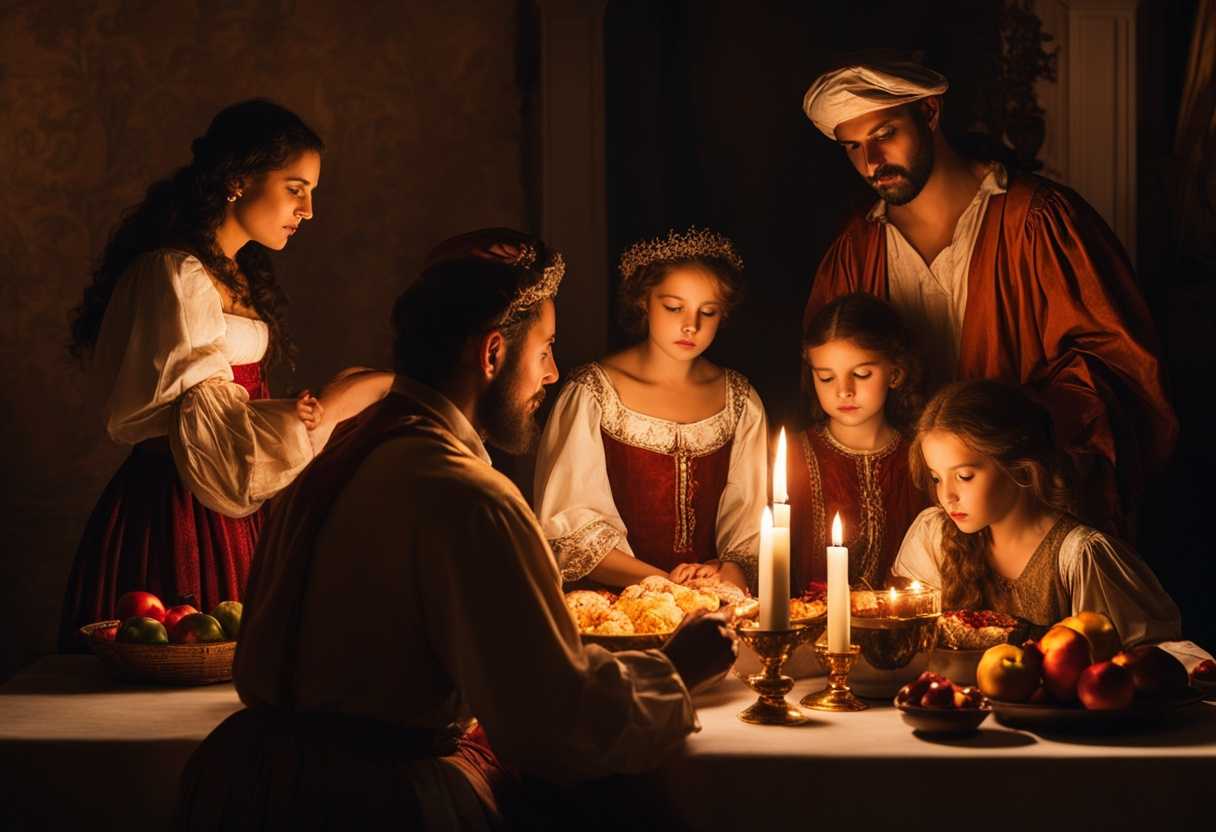
Setting the Scene for Exodus 12:14
The scene in Exodus 12:14 takes place in the land of Egypt, specifically in the homes of the Israelites who have been enslaved by the Egyptians. The Israelites have been instructed by Moses, who is a prominent figure in this scene, to prepare for the Passover. The atmosphere is tense as the Israelites follow Moses’ guidance to slaughter a lamb without blemish and mark their doorposts with its blood. This act is crucial as it signifies their obedience to God’s command and serves as a sign for the Angel of Death to pass over their homes during the final plague on Egypt.
The Israelites, including families and individuals of all ages, are gathered inside their homes, anxiously awaiting the events that will unfold. The flickering light from oil lamps illuminates the room, casting shadows on the faces of those present. The smell of roasted lamb fills the air as they partake in the Passover meal, dressed in their traveling clothes with staffs in hand, ready to embark on the journey to freedom that lies ahead. The sound of prayers and hymns being sung softly in anticipation of the miraculous deliverance they are about to experience creates a sense of unity and faith among the Israelites in this pivotal moment in their history.
What is Exodus 12:14 about?
Think about the significance of Passover – a time when God delivered the Israelites from slavery in Egypt. It is a powerful reminder of God’s faithfulness and mercy towards His people. We are called to remember this incredible act of deliverance and to give thanks for God’s intervention in our lives by celebrating Passover as a lasting ordinance.
This verse prompts us to reflect on the ways in which God has delivered us from our own “Egypt” – whether it be sin, struggles, or challenges. It encourages us to celebrate and acknowledge God’s presence and guidance in our lives. We observe Passover as a lasting ordinance to remind ourselves to be grateful for all that God has done for us and to hold onto the hope that He will continue to deliver us in times of need. Isn’t it amazing how God’s deliverance can inspire us to trust Him more deeply and to live a life of gratitude and faith?
Understanding what Exodus 12:14 really means
In Exodus 12:14, we encounter a profound directive that resonates through the annals of Israel’s history and continues to hold relevance for us today. This verse is nestled within the narrative of the Passover, a momentous event marking the climax of God’s deliverance of the Israelites from Egyptian bondage. It serves as a poignant reminder of God’s faithfulness and the imperative to commemorate His mighty acts.
“This day shall be for you a memorial day,” encapsulates the essence of remembrance and reflection on God’s intervention in the lives of His people. The call to remember is not merely a passive acknowledgment but a deliberate act of honoring and cherishing the divine interventions that have shaped their existence. It prompts us to ponder on our own lives: What moments of deliverance and provision do we need to memorialize to cultivate gratitude and faithfulness?
The injunction to “keep it as a feast to the Lord” underscores the celebratory aspect of remembrance. It signifies that our acknowledgment of God’s faithfulness should not be somber but joyous, marked by worship and festivity. How can we infuse our remembrance with celebration, turning moments of reflection into acts of joyful worship and thanksgiving?
“Throughout your generations, as a statute forever,” emphasizes the enduring nature of this commemoration. The passing down of traditions and stories from one generation to the next ensures that the memory of God’s faithfulness remains vibrant and relevant. How can we actively engage in passing on the stories of God’s goodness to ensure that future generations continue to be inspired by His works?
In a contemporary context, the concept of a “memorial day” extends beyond historical events to encompass personal and communal milestones. Just as the Israelites were called to remember their deliverance, we are prompted to reflect on our own journeys and the ways in which God has intervened in our lives. How can we establish traditions and practices that commemorate these pivotal moments, fostering a sense of continuity and identity within our families and communities?
Consider the analogy of a family gathering annually to celebrate a significant triumph—a tradition that strengthens their bonds and reinforces their shared history. Similarly, the observance of the Passover among the Israelites served to unite them in remembrance of their collective journey and God’s unwavering faithfulness. How can communal celebrations and traditions fortify our faith and sense of belonging, anchoring us in the narrative of God’s providence?
As we reflect on Exodus 12:14 and its implications for our lives, let us contemplate the ways in which we can cultivate a culture of remembrance and celebration. By honoring the milestones of our past, we not only express gratitude for God’s faithfulness but also lay a foundation for future generations to build upon. May we heed the call to remember, celebrate, and pass on the stories of God’s goodness, ensuring that His works endure through the annals of time.
In what ways do we remember God’s deliverance?
We remember God’s deliverance by observing the Passover, a celebration that commemorates the Israelites’ deliverance from slavery in Egypt. The Passover meal is a reminder of God’s faithfulness and protection, as the blood of the lamb on the doorposts spared the Israelites from the final plague that led to their freedom. We acknowledge and appreciate God’s deliverance in our lives by keeping this feast annually.
Furthermore, God instructed the Israelites to tell their children about the significance of the Passover and their deliverance from Egypt. Each generation would continue to remember and pass down the story of God’s faithfulness and deliverance. We ensure that the memory of God’s deliverance remains alive and relevant in our lives, fostering faith and gratitude in our hearts by sharing these testimonies with the next generation.
Additionally, the act of partaking in the Passover meal serves as a symbol of remembrance and thanksgiving for God’s intervention and salvation. We reflect on God’s mighty acts of deliverance and reaffirm our trust in His power to rescue us from bondage and bring us into freedom as we participate in this tradition. This act of remembrance strengthens our faith and renews our gratitude for God’s ongoing protection and provision in our lives.
Application
Celebrate the Passover as a way to honor how God has freed you from the struggles and challenges in your life. Don’t let it be just a ritual, but a time to express gratitude for all the blessings you have received. How will you show your appreciation to the Almighty for the love and mercy He has shown you every day?

Reverend Michael Johnson is an experienced Church Minister with a profound expertise in spirituality and guidance. With a serene presence and a compassionate heart, he has faithfully served his congregation for over 20 years, leading them on a spiritual journey towards inner peace and enlightenment. Reverend Johnson’s extensive knowledge of religious philosophies and profound understanding of human nature have made him a trusted confidant and mentor to many, as he seamlessly weaves his profound wisdom into life teachings. Reverend Johnson’s calming demeanor and empathetic nature continue to uplift and heal souls, nurturing a sense of unity and tranquility within his community.