
22 Take a bunch of hyssop and dip it in the blood that is in the basin, and touch the lintel and the two doorposts with the blood that is in the basin. None of you shall go out of the door of his house until the morning.
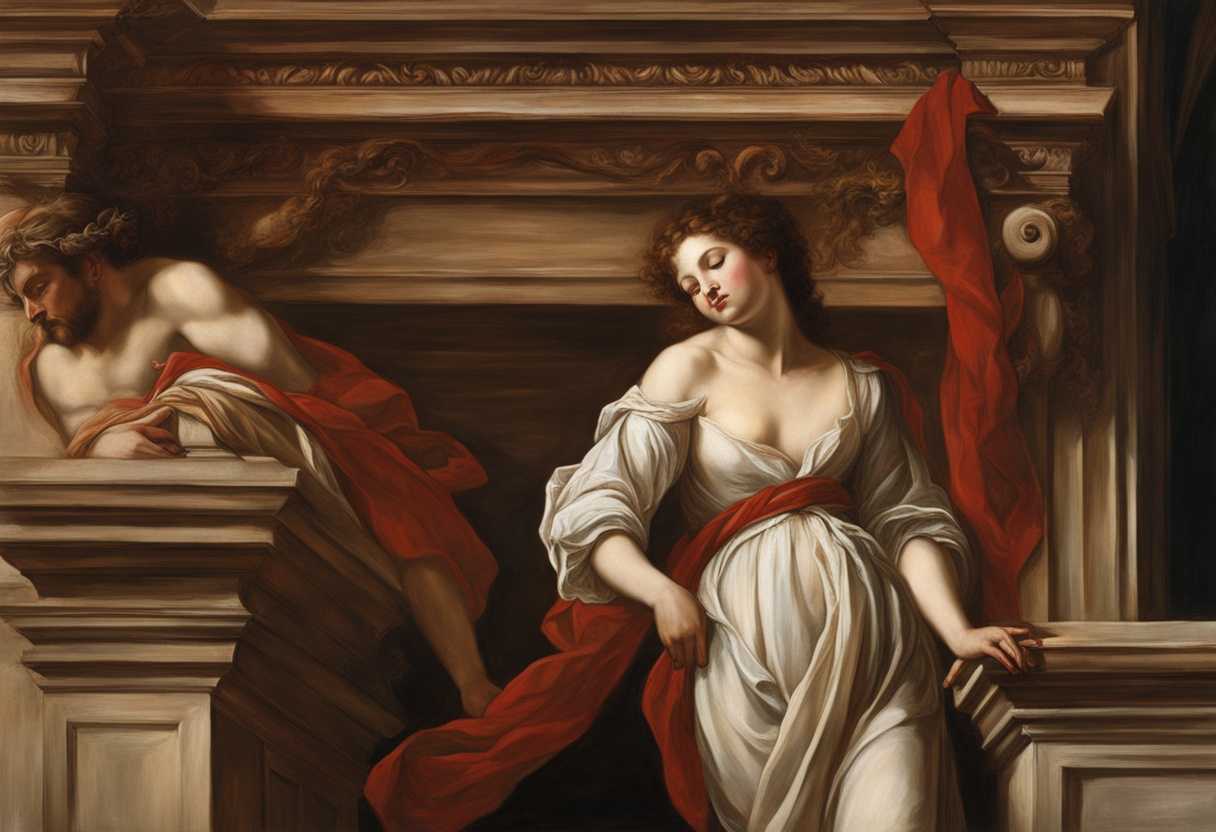
Setting the Scene for Exodus 12:22
In Exodus chapter 12, we find the Israelites in the land of Egypt, preparing to leave after enduring years of slavery. The scene is set on the eve of their departure, as instructed by Moses and Aaron. The Israelites have just completed the final meal of the Passover, where they sacrificed a lamb and marked their doorposts with its blood to protect their firstborn from the final plague that would strike Egypt.
Among the Israelites gathered are families huddled together, their faces a mix of fear and anticipation. Children cling to their parents, sensing the gravity of the moment. Elders recount the stories of their ancestors and the promises of deliverance from the Lord. The air is thick with tension and excitement as they await the signal to begin their journey to freedom.
Moses and Aaron move among the people, their voices strong and reassuring as they give final instructions for the night. The flickering light of torches illuminates the scene, casting long shadows on the faces of the weary but hopeful Israelites. As they stand on the threshold of a new beginning, the sound of hurried footsteps and whispered prayers fills the night, a poignant reminder of the faith and courage that has brought them to this pivotal moment in their history.
What is Exodus 12:22 about?
Moses conveys to the Israelites the importance of faith and obedience in the face of impending danger in this verse. They were demonstrating their trust in God’s promise of protection by marking their doorposts with the blood of the lamb. This act symbolized their willingness to follow divine guidance, even if it seemed unconventional or illogical. It required them to take a leap of faith and trust in the power and faithfulness of God to deliver them from harm.
Have you ever found yourself in a situation where you had to trust in something greater than yourself, even when it seemed risky or uncertain? The Israelites’ act of marking their doorposts with the lamb’s blood serves as a powerful reminder of the importance of faith and obedience in times of trial. It challenges us to reflect on our own beliefs and convictions, and consider whether we are willing to trust in something beyond our understanding. Just like the Israelites, sometimes we may need to take bold steps of faith, trusting that God’s protection and guidance will see us through whatever challenges we may face.
Understanding what Exodus 12:22 really means
Let’s structure our commentary on Exodus 12:22 by breaking it down into several key segments: Context and Background, Detailed Analysis of Key Phrases, Cross-Referencing Other Biblical Passages, Modern Relevance, and Concluding Thoughts.
Context and Background
Exodus 12:22 is part of a larger narrative describing the first Passover, an event of profound significance in the history of the Israelites. The verse instructs the Israelites on specific steps to take to ensure their safety during the final plague in Egypt—the death of the firstborn. We better appreciate the gravity of the actions described by understanding this historical and cultural backdrop.
Detailed Analysis of Key Phrases
One phrase in this verse that stands out is “take a bunch of hyssop,” which refers to the plant used to apply the blood of the sacrificial lamb to the doorframes. Hyssop is symbolic in various scriptures, often associated with purification and cleansing (Psalm 51:7). Another critical segment is “none of you shall go out of the door of his house until morning.” This directive signifies a total reliance on God for protection and a willingness to obey His commandments fully.
Cross-Referencing Other Biblical Passages
The symbolism of hyssop appears again in John 19:29, where it is used at Jesus’ crucifixion. This connection illuminates the idea that Christ’s sacrifice is the fulfillment of the Passover lamb. Additionally, Hebrews 11:28 talks about the faith of Moses in instituting the Passover, highlighting the importance of faith and obedience in following God’s commands.
Modern Relevance
So, what does Exodus 12:22 mean for us today? It serves as a powerful reminder of God’s provision and protection. God’s guidance encourages us to trust, even when the steps He asks us to take seem unusual or challenging in contemporary terms. Think about moments in your life when following divine instructions required stepping out in faith, much like the Israelites had to do on that fateful night. A family caught in a severe storm huddled together in the safest part of their home. Even as the wind howls and their world shakes, they stay put, trusting both in the sanctuary of their home and the God who is their ultimate shelter. This modern scenario mirrors the Israelites’ experience, where following God’s specific instructions leads to their preservation. Exodus 12:22 is a profound reminder of the importance of obedience, faith, and the tangible actions that reflect our trust in God. Like the Israelites, we are called to follow divine guidance with the assurance that God’s plans, however strange they may seem, are ultimately for our good. As we read this verse today, let us be reminded of the ever-present invitation to trust, obey, and find refuge in Him. Let’s delve deeper into these reflections and discuss how we can better trust in God’s protection in our daily lives.
How can we demonstrate faith and obedience?
To demonstrate faith and obedience as described in Exodus 12:22, one must follow the instructions given with diligence and trust in the guidance provided. This involves having belief in the words spoken and carrying out the actions required without hesitation or doubt. Faith in this context means believing in something unseen or unproven, yet following through with actions that align with that belief.
Obedience, on the other hand, is the act of complying with the commands or instructions given, even when they may seem challenging or unclear. It involves submitting one’s will to the authority of the one giving the directives, knowing that obedience is a way of showing respect and trust. Individuals can demonstrate their commitment to following the guidance given to them, even in times of uncertainty or difficulty, by combining faith and obedience. A willingness to trust in the unseen and to faithfully carry out the instructions given, regardless of any doubts or fears that may arise, ultimately requires demonstrating faith and obedience as outlined in Exodus 12:22. It is an act of surrendering one’s own desires and judgments in favor of following the will of a higher power, with the belief that doing so will lead to greater blessings and fulfillment in the end.
Application
Think of life’s challenges as a marathon. Following God’s instructions in Exodus 12:22 is like wearing the right shoes and staying on course. Embrace obedience to His guidance, just like you would trust a mentor at work. Reflect on how you can apply this principle daily to align with God’s will. Are you ready to take action and live out your faith today?

Reverend Michael Johnson is an experienced Church Minister with a profound expertise in spirituality and guidance. With a serene presence and a compassionate heart, he has faithfully served his congregation for over 20 years, leading them on a spiritual journey towards inner peace and enlightenment. Reverend Johnson’s extensive knowledge of religious philosophies and profound understanding of human nature have made him a trusted confidant and mentor to many, as he seamlessly weaves his profound wisdom into life teachings. Reverend Johnson’s calming demeanor and empathetic nature continue to uplift and heal souls, nurturing a sense of unity and tranquility within his community.