
Exodus 12:3-11 is about the ritual of observing the Passover feast, symbolizing the Israelites’ protection from the final plague and their deliverance from slavery in Egypt.
3 Tell all the congregation of Israel that on the tenth day of this month every man shall take a lamb according to their fathers’ houses, a lamb for a household.
4 And if the household is too small for a lamb, then he and his nearest neighbor shall take according to the number of persons; according to what each can eat you shall make your count for the lamb.
5 Your lamb shall be without blemish, a male a year old.
6 and you shall keep it until the fourteenth day of this month, when the whole assembly of the congregation of Israel shall kill their lambs at twilight.
7 Then they shall take some of the blood and put it on the two doorposts and the lintel of the houses in which they eat it.
8 They shall eat the flesh that night, roasted on the fire; with unleavened bread and bitter herbs they shall eat it.
9 Do not eat any of it raw or boiled in water, but roasted, its head with its legs and its inner parts.
10 And you shall let none of it remain until the morning; anything that remains until the morning you shall burn.
11 In this manner you shall eat it: with your belt fastened, your sandals on your feet, and your staff in your hand. And you shall eat it in haste. It is the Lord’s Passover.
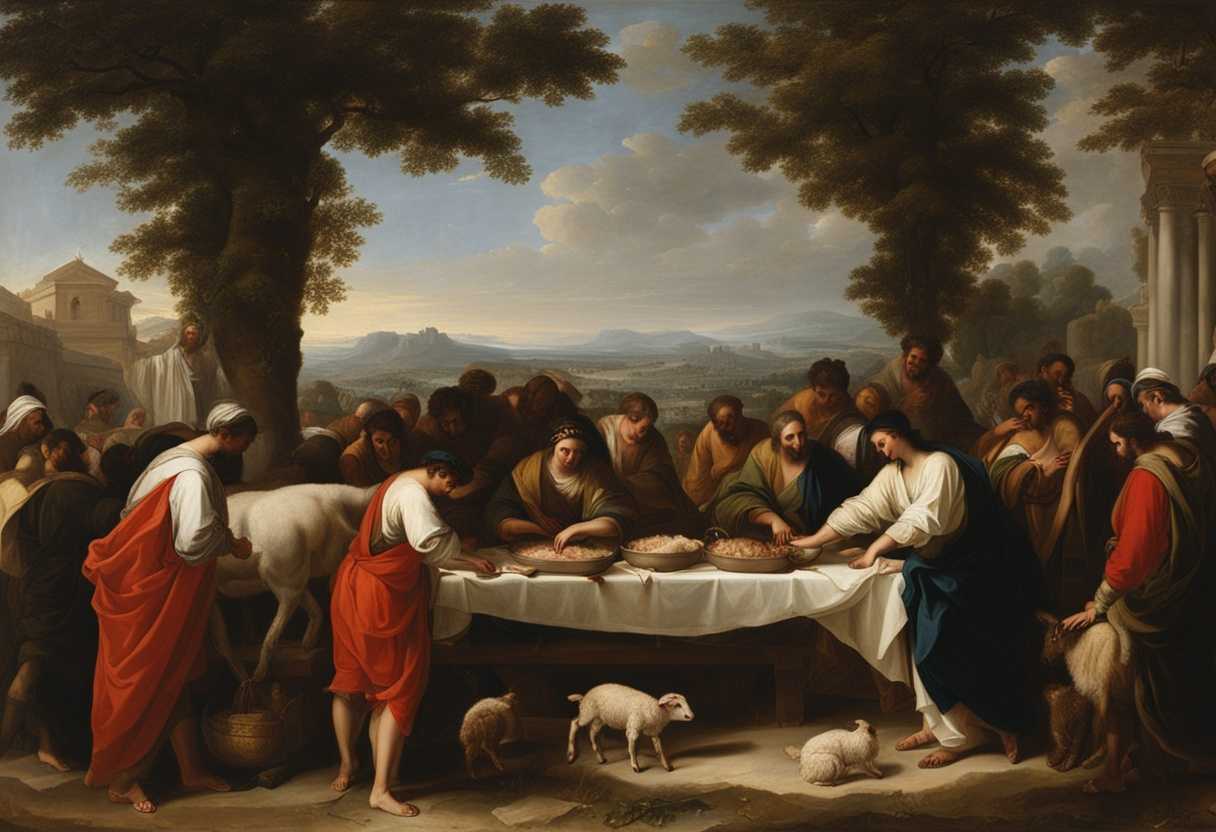
Setting the Scene for Exodus 12:3-11
The scene in Exodus 12:3-11 takes place in the land of Egypt, specifically in the homes of the Israelites who have been enslaved by the Egyptians. The main characters in this scene are Moses, Aaron, and the Israelite families. The Israelites have been in bondage for generations, and after witnessing the power of God through the plagues sent upon Egypt, they are now preparing for their deliverance.
Moses and Aaron have been instructed by God to prepare the Israelites for their departure from Egypt. They are to select a lamb for each household on the 10th day of the month and keep it until the 14th day. On the evening of the 14th day, they are to slaughter the lamb and mark their doorposts with its blood as a sign for the Lord to pass over their homes and spare them from the final plague – the death of the firstborn.
The Israelites are gathered in their homes, following the instructions given to them by Moses and Aaron. They are roasting the lamb over a fire, eating it with bitter herbs and unleavened bread, and preparing to leave Egypt at a moment’s notice. The atmosphere is tense with anticipation and fear, but also with a sense of hope and faith in the promises of God. This scene marks a pivotal moment in the history of the Israelites as they prepare to embark on their journey to freedom and the fulfillment of God’s covenant with them.
What is Exodus 12:3-11 about?
The verse describes the Passover meal as a symbolic ritual that commemorates and celebrates God’s deliverance and protection of the Israelites. The Passover meal is a significant tradition in the Jewish faith, reminding the believers of the miraculous events of the Exodus when God delivered the Israelites from slavery in Egypt.
Through the Passover meal, God’s faithful followers are encouraged to reflect on His saving power and faithfulness in times of hardship. It serves as a reminder of God’s continual presence and protection in the lives of His people. This verse emphasizes the importance of following the instructions for the Passover meal to honor God’s deliverance and to pass down the tradition to future generations. We reflect on this verse, pondering the deeper significance of the Passover meal in our own lives. What are the ways in which we can recognize and appreciate God’s deliverance and protection in our personal journey? How can we incorporate rituals and traditions that remind us of God’s faithfulness and encourage us to trust in His providence? We cultivate a deeper sense of gratitude and faith in God’s saving grace by following the instructions for the Passover meal, participating in a meaningful tradition.
Understanding what Exodus 12:3-11 really means
In the passage from Exodus 12:3-11, we delve into the intricate instructions given by God to Moses and Aaron for the first Passover. This significant event marked the final plague in Egypt, leading to the liberation of the Israelites from slavery. The meticulous details of selecting a lamb, preparing it, and consuming it in a specific manner were not merely rituals but profound symbols of obedience, purity, and deliverance.
“On the tenth day of this month every man shall take a lamb,” sets the tone for preparation and obedience to God’s command. The act of choosing “a lamb for a household” underscores the communal aspect of worship, highlighting the importance of family unity in faith practices. The requirement for the lamb to be “without blemish, a male a year old” symbolizes purity and perfection, foreshadowing Christ as the ultimate unblemished sacrifice for humanity’s sins.
The directive to “keep it until the fourteenth day” signifies a period of anticipation and readiness, mirroring the waiting period before Christ’s sacrificial act. The command to “roast it with fire; with unleavened bread and bitter herbs” symbolizes purification, haste, and the bitterness of slavery, urging the Israelites to remember their past while looking towards their future deliverance. “Eat it in haste; it is the Lord’s Passover” emphasizes the urgency and readiness required for the imminent liberation.
The connections between the Passover lamb in Exodus and Christ in the New Testament are profound. John the Baptist’s proclamation of Jesus as “the Lamb of God” in John 1:29 solidifies the link between the sacrificial lamb and Christ’s redemptive work. Paul’s reference to Christ as “our Passover lamb” in 1 Corinthians 5:7 and the depiction of Christ’s purity and perfection in Hebrews 9:14 further emphasize the fulfillment of the Passover in Jesus.
Today, the passage resonates with themes of spiritual readiness, community, and sacrifice. Just as the Israelites had to be prepared for their deliverance, we are called to be spiritually vigilant for Christ’s return. The emphasis on a lamb for each household underscores the significance of family and community in our faith journey. The foreshadowing of Christ’s sacrifice reminds us of the cost of our redemption and the necessity of living lives marked by gratitude and obedience.
In reflecting on Exodus 12:3-11, we are prompted to consider our own state of readiness and the value we place on our faith community. Like a family meticulously preparing for a joyous event, we are called to prepare our hearts and lives for the ultimate celebration of Christ’s return. This passage serves as a poignant reminder of Christ’s sacrificial love, urging us to live in anticipation of His coming and to appreciate the redemption we have received through His ultimate sacrifice.
How can we prepare our hearts for spiritual freedom?
To prepare our hearts for spiritual freedom, we can start by reflecting on the significance of the Passover event as outlined in Exodus 12:3-11. The Passover serves as a powerful reminder of God’s faithfulness and deliverance. It symbolizes the liberation of Israel from bondage and oppression, marking a new beginning for the people. We can cultivate a deeper awareness of God’s redemptive power and transformative work in our lives by acknowledging and internalizing this biblical account. We can engage in spiritual practices that promote a sense of liberation and renewal within us. This may involve regularly seeking forgiveness, letting go of past hurts and burdens, and striving to live a life aligned with God’s will. Through prayer, meditation, and studying scripture, we can open our hearts to the freedom that comes from a close relationship with God. We can strengthen our faith and live more fully into the freedom that God offers us by actively participating in rituals that remind us of our spiritual freedom in Christ. Preparing our hearts for spiritual freedom ultimately requires us to be willing to surrender to God’s guidance and trust in His plan for our lives. We can cultivate a spirit of gratitude and humility, recognizing that our freedom comes from God’s grace alone. We can experience the true freedom that comes from being in a loving and intimate relationship with our Creator as we strive to walk in faith and obedience.
Application
Let us channel the unwavering commitment of the Israelites in our walk with God. Embrace obedience and faith with the same zeal as they did during the Passover. Just as they followed God’s word, let us too, without reservation, heed His guidance in our daily lives. May this ancient tale inspire us to trust in His wisdom and adhere to His teachings wholeheartedly. Will you stand firm in faith and obedience, walking in the footsteps of those who came before us?

Reverend Michael Johnson is an experienced Church Minister with a profound expertise in spirituality and guidance. With a serene presence and a compassionate heart, he has faithfully served his congregation for over 20 years, leading them on a spiritual journey towards inner peace and enlightenment. Reverend Johnson’s extensive knowledge of religious philosophies and profound understanding of human nature have made him a trusted confidant and mentor to many, as he seamlessly weaves his profound wisdom into life teachings. Reverend Johnson’s calming demeanor and empathetic nature continue to uplift and heal souls, nurturing a sense of unity and tranquility within his community.