
Exodus 12:3-13 is about the importance of the Passover ritual as a symbol of salvation and deliverance for the Israelites, showing the need for obedience and faith in God’s protection.
3 Tell all the congregation of Israel that on the tenth day of this month every man shall take a lamb according to their fathers’ houses, a lamb for a household.
4 And if the household is too small for a lamb, then he and his nearest neighbor shall take according to the number of persons; according to what each can eat you shall make your count for the lamb.
5 Your lamb shall be without blemish, a male a year old.
6 and you shall keep it until the fourteenth day of this month, when the whole assembly of the congregation of Israel shall kill their lambs at twilight.
7 Then they shall take some of the blood and put it on the two doorposts and the lintel of the houses in which they eat it.
8 They shall eat the flesh that night, roasted on the fire; with unleavened bread and bitter herbs they shall eat it.
9 Do not eat any of it raw or boiled in water, but roasted, its head with its legs and its inner parts.
10 And you shall let none of it remain until the morning; anything that remains until the morning you shall burn.
11 In this manner you shall eat it: with your belt fastened, your sandals on your feet, and your staff in your hand. And you shall eat it in haste. It is the Lord’s Passover.
12 For I will pass through the land of Egypt that night, and I will strike all the firstborn in the land of Egypt, both man and beast; and on all the gods of Egypt I will execute judgments: I am the Lord.
13 The blood shall be a sign for you, on the houses where you are. And when I see the blood, I will pass over you, and no plague will befall you to destroy you when I strike the land of Egypt.
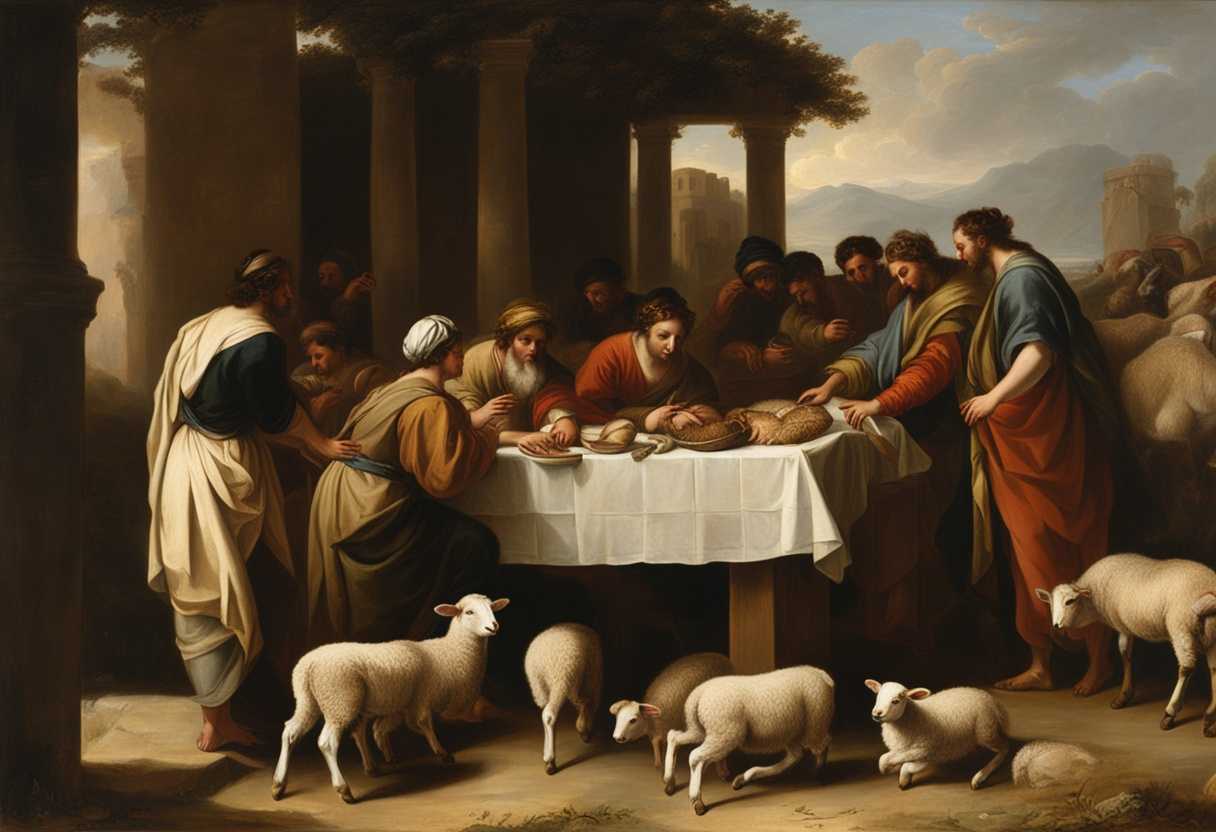
Setting the Scene for Exodus 12:3-13
In Exodus chapter 12, we find the scene set in the land of Egypt during the time of the Israelites’ captivity. The main characters in this scene are Moses, Aaron, and the Israelites. They have been enslaved by the Egyptians for many years, enduring harsh labor and oppression. However, the time has come for their liberation as God has instructed Moses and Aaron to lead the Israelites out of Egypt.
The surroundings are filled with a sense of anticipation and urgency as Moses and Aaron relay God’s instructions to the Israelites. They are to prepare for their departure by selecting a lamb without blemish, slaughtering it, and marking their doorposts with its blood. This act will serve as a sign for the Lord to pass over their homes during the final plague that will strike Egypt – the death of the firstborn. The Israelites follow these instructions meticulously, knowing that their obedience will lead to their deliverance from bondage and the beginning of their journey to the Promised Land.
As the night falls, the scene is tense with the sound of wailing echoing through the land as the firstborn of Egypt are struck down. Meanwhile, the Israelites huddle in their homes, protected by the blood of the lamb, ready to embark on their exodus from Egypt. This pivotal moment marks the beginning of a new chapter in their history, as they prepare to follow Moses and Aaron into the wilderness towards the freedom that God has promised them.
What is Exodus 12:3-13 about?
This verse is describing the Passover instructions given to the Israelites before they departed from Egypt. The sacrifice of a lamb symbolizes the protection and deliverance provided by God during the final plague in Egypt. They signified their faith and obedience to God’s command by marking the doorposts with the blood of the lamb, ensuring that the angel of death would pass over their households. Eating unleavened bread was a way to remember the haste with which they had to leave Egypt, as there was no time for the bread to rise.
Imagine the scene: the Israelites following these instructions amidst the chaos of the final plague, placing their trust in God’s plan for their deliverance. The Passover becomes a powerful and symbolic ritual that not only commemorates their liberation from bondage but also serves as a reminder of God’s faithfulness and protection. Through these actions, the Israelites were reaffirming their covenant with God and acknowledging His sovereignty over their lives.
So, as we reflect on this verse, let’s ponder the significance of these ancient rituals. What does it mean for us in our lives today to trust in God’s protection and provision? How can we apply the lessons of faith, obedience, and remembrance from the Passover instructions to our own journey of faith? We too may find hope and assurance in the sacrifice of Jesus Christ, who became the ultimate Passover Lamb for all who believe, just as the Israelites looked to the blood of the lamb for salvation.
Understanding what Exodus 12:3-13 really means
In the narrative of the first Passover, as recorded in Exodus 12:3-13, we witness a crucial moment in the history of the Israelites. God, through Moses and Aaron, provides specific instructions for the preparation that would lead to their deliverance from Egypt. Each man is tasked with taking a lamb for his family, emphasizing individual and family responsibility in faith and obedience to God’s commands. This act symbolizes the importance of personal commitment to God’s plan for salvation and protection.
The significance of the blood of the lamb cannot be overstated in this passage. It serves as a sign on the houses of the Israelites, ensuring that when God sees the blood, He will pass over them, sparing them from the impending plague. This act of protection and salvation through the blood of the lamb foreshadows the sacrificial death of Jesus Christ in the New Testament, highlighting the continuity of God’s redemptive plan throughout history.
The assurance given in Exodus 12:3-13 that “no destructive plague will touch you when I strike Egypt” underscores God’s power to shield His people from judgment and calamity. This promise of divine protection resonates throughout the Bible, demonstrating God’s faithfulness to those who trust in Him. The passage not only showcases God’s deliverance in a specific historical context but also reveals His enduring nature as a protector and savior for all time.
The connection between the Passover lamb and Jesus Christ is further emphasized in related biblical passages. John 1:29 proclaims Jesus as the “Lamb of God, who takes away the sin of the world,” highlighting His sacrificial role in atoning for humanity’s sins. Paul’s words in 1 Corinthians 5:7 explicitly identify Christ as “our Passover lamb,” solidifying the link between the Old Testament ritual and the ultimate sacrifice of Jesus on the cross. These verses illuminate the profound theological significance of the Passover event and its fulfillment in the person of Jesus Christ.
For contemporary believers, the message of Exodus 12:3-13 remains relevant and impactful. It serves as a poignant reminder of the importance of faith, obedience, and the assurance of God’s protection in the midst of trials. Just as the Israelites trusted in God’s promise of deliverance, modern readers are encouraged to place their faith in God’s unfailing love and providence. The passage prompts reflection on the power of God’s saving grace and the necessity of responding to His call with unwavering faith.
In conclusion, Exodus 12:3-13 encapsulates profound themes of faith, obedience, and divine protection within the context of the first Passover. It bridges the Old Testament practice of sacrificial lamb with the New Testament revelation of Jesus as the ultimate atoning sacrifice. As we contemplate this passage, we are reminded of the enduring truth that God is our protector and deliverer, calling us to trust in His promises and walk in faith, knowing that He is faithful to save those who seek Him.
How can we apply the blood of the lamb?
The blood of the lamb was a symbol of protection and redemption for the Israelites in ancient Egypt. They were obeying God’s instructions and demonstrating their faith and trust in Him by applying the blood of the lamb on their doorposts. This act of obedience and faith differentiated the households of the Israelites from those of the Egyptians, who did not apply the blood and thus experienced the loss of their firstborns during the final plague. Jesus Christ, who is often referred to as the “Lamb of God” in the New Testament, can also be seen as foreshadowing the ultimate sacrifice by applying the blood of the lamb in a broader sense. The blood of Jesus provides forgiveness and salvation for all who believe in Him, just as the blood of the lamb in Exodus provided protection and redemption for the Israelites. We are redeemed from the power of sin and death by accepting Jesus as our sacrificial lamb and applying His blood to our lives through faith. Applying the blood of the lamb ultimately involves recognizing the need for a sacrifice to atone for our sins and protect us from judgment. It is a symbolic act of trust in God’s provision for forgiveness and salvation. We are called to trust in the blood of Jesus for our spiritual protection and eternal life, just as the Israelites trusted in the blood of the lamb for their physical protection.
Application
Let’s take a moment to think about Exodus 12:3-13. It serves as a powerful reminder of the value of obedience and faith in God’s guidance. Like the Israelites during Passover, we too must be willing to follow God’s direction with unwavering trust. It’s time to assess our actions against God’s teachings – are we truly living in line with His purpose for us? Can we find the courage to stay faithful and obedient, even when challenges come our way? Let’s take a step closer to God by embracing obedience and trust in His divine plan. Are you ready to walk the path of faith with conviction?

Reverend Michael Johnson is an experienced Church Minister with a profound expertise in spirituality and guidance. With a serene presence and a compassionate heart, he has faithfully served his congregation for over 20 years, leading them on a spiritual journey towards inner peace and enlightenment. Reverend Johnson’s extensive knowledge of religious philosophies and profound understanding of human nature have made him a trusted confidant and mentor to many, as he seamlessly weaves his profound wisdom into life teachings. Reverend Johnson’s calming demeanor and empathetic nature continue to uplift and heal souls, nurturing a sense of unity and tranquility within his community.