
Exodus 12:3-6 is about the detailed instructions given by God to the Israelites for the selection, preparation, and sacrifice of the Passover lamb, symbolizing the necessity of a sacrificial atonement for redemption and deliverance from sin and judgment.
3 Tell all the congregation of Israel that on the tenth day of this month every man shall take a lamb according to their fathers’ houses, a lamb for a household.
4 And if the household is too small for a lamb, then he and his nearest neighbor shall take according to the number of persons; according to what each can eat you shall make your count for the lamb.
5 Your lamb shall be without blemish, a male a year old.
6 and you shall keep it until the fourteenth day of this month, when the whole assembly of the congregation of Israel shall kill their lambs at twilight.
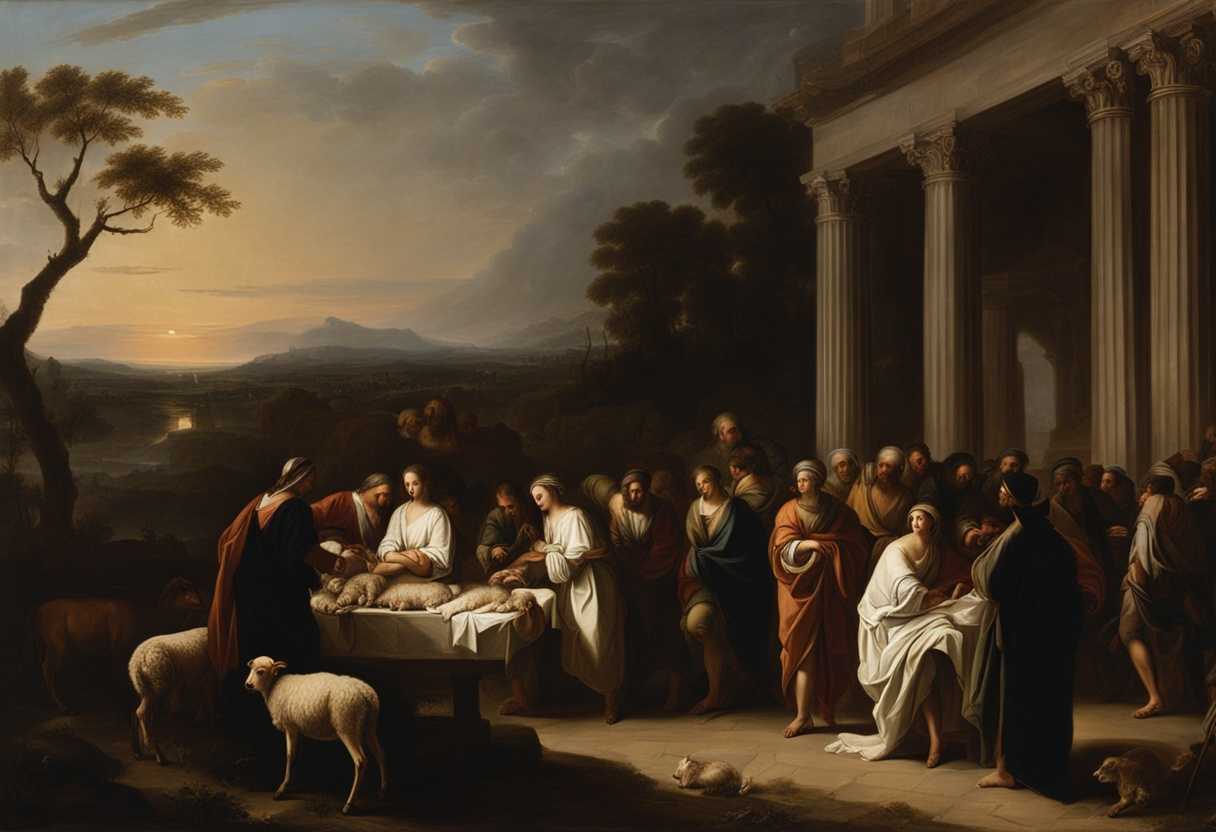
Setting the Scene for Exodus 12:3-6
In Exodus chapter 12, we find Moses and Aaron in the land of Egypt, standing before Pharaoh. The scene is tense as they deliver a message from God, demanding the release of the Israelites from their enslavement. Pharaoh, stubborn and defiant, refuses to let the people go, despite the warnings of impending plagues.
Surrounded by the opulence of the royal court, Moses and Aaron stand as representatives of the oppressed Israelites, their simple garments a stark contrast to the elaborate attire of Pharaoh and his officials. The air is heavy with anticipation as the stage is set for the final showdown between the power of God and the pride of Pharaoh.
As the conversation unfolds, the tension mounts, setting the stage for the dramatic events that will follow. The fate of an entire nation hangs in the balance as the clash between divine authority and human arrogance reaches its climax in this pivotal moment in the biblical narrative.
What is Exodus 12:3-6 about?
The verse outlines the instructions for selecting and preparing the Passover lamb for the Israelites. The Passover lamb was a significant and sacred aspect of the Passover celebration, symbolizing the Israelites’ deliverance from slavery in Egypt. The Israelites were reminded of their dependence on God for protection and deliverance by following these instructions.
The selection process was meticulous, requiring the Israelites to choose a lamb without blemish, signifying purity and perfection. This act of selecting the perfect lamb reflected the Israelites’ commitment to offering their best to God. The process of sacrifice and preparation served as a tangible expression of their faith and obedience to God’s commandments. The Israelites were not only participating in a religious ritual but also deepening their connection to God and their identity as His chosen people by following these instructions. The act of selecting and preparing the Passover lamb was a profound and symbolic gesture of faith, gratitude, and dedication to their relationship with God. It served as a constant reminder of God’s faithfulness and protection, strengthening the bond between the Israelites and their Creator.
Understanding what Exodus 12:3-6 really means
In Exodus 12:3-6, we delve into a pivotal moment in the history of the Israelites, as God instructs Moses and Aaron on the observance of the first Passover. This passage serves as a beacon of hope, marking the beginning of the Israelites’ liberation from the oppressive grip of Egyptian slavery. The detailed instructions given by God underscore the significance of obedience and meticulous preparation in the unfolding of His divine plan.
The specificity of the timing, with the directive to select a lamb on the tenth day of the month, highlights the importance of divine timing and readiness in God’s redemptive work. Each man’s responsibility to take a lamb for his family symbolizes sacrifice and provision, foreshadowing the ultimate sacrifice of Jesus Christ as the Lamb of God. The requirement for the lamb to be without defect signifies purity and perfection, mirroring the sinlessness of Christ and emphasizing the need for an unblemished sacrifice.
As we connect this passage to other biblical references, such as John 1:29 and 1 Corinthians 5:7, we see a seamless thread weaving through Scripture, linking Jesus Christ to the sacrificial lamb of the Passover. The imagery of the lamb led to slaughter in Isaiah 53:7 further solidifies this connection, emphasizing the profound symbolism and typology at play.
Today, the message of Exodus 12:3-6 resonates with believers, urging us to embrace a life marked by preparation, obedience, and reflection on the sacrificial love of Christ. Just as the Israelites meticulously cared for the lamb until the appointed time, we are called to nurture our spiritual lives, ensuring we are without blemish before God. The concept of the sacrificial lamb serves as a poignant reminder of the cost of redemption and the depths of God’s unfailing love for humanity.
Consider a family diligently preparing for a momentous occasion like a wedding, meticulously planning every detail to ensure perfection. This analogy mirrors the Israelites’ preparation for the Passover, highlighting the importance of spiritual readiness and attentiveness to God’s guidance in our lives. Just as the family’s preparations culminate in a joyous celebration, our spiritual preparedness leads to a deeper communion with God and a profound appreciation of His redemptive work in our lives.
In conclusion, Exodus 12:3-6 beckons us to embrace a life characterized by obedience, readiness, and contemplation of the sacrificial love of Jesus Christ. By internalizing these principles and applying them to our spiritual journey, we can cultivate a deeper faith, a more intentional walk with God, and a profound appreciation for the ultimate sacrifice that secures our redemption.
How do we willingly offer what is precious to God?
We can willingly offer what is precious to God by carefully selecting and setting it apart for Him. We can present to God our best and most valuable possessions, talents, and time, just as the Israelites were instructed to choose a lamb without blemish for their sacrifice. We demonstrate our reverence and devotion to Him by giving Him what is prized and honorable in our lives.
Furthermore, willingly offering what is precious to God involves a sacrificial attitude. We must be willing to part with things that are dear to us, just as the Israelites had to give up their choicest lamb for the Passover sacrifice. This sacrificial act of surrendering what we hold dear allows us to show our trust in God and acknowledge His worthiness above all else.
Additionally, we can offer what is precious to God with a spirit of obedience and faith. We should obey God’s commands and trust in His wisdom and goodness as the Israelites followed the instructions given for the Passover sacrifice. We demonstrate our faith and commitment to His plan and purposes by willingly submitting to His will and offering what is valuable to Him.
Application
Reflect on the story of Exodus and the power of the Passover – a symbol of deliverance and protection. Apply these lessons to your life by being faithful and obedient to His commands. Strengthen your bond with the Divine, embracing His guidance. Will you choose to walk the path of faith and obedience today?

Reverend Michael Johnson is an experienced Church Minister with a profound expertise in spirituality and guidance. With a serene presence and a compassionate heart, he has faithfully served his congregation for over 20 years, leading them on a spiritual journey towards inner peace and enlightenment. Reverend Johnson’s extensive knowledge of religious philosophies and profound understanding of human nature have made him a trusted confidant and mentor to many, as he seamlessly weaves his profound wisdom into life teachings. Reverend Johnson’s calming demeanor and empathetic nature continue to uplift and heal souls, nurturing a sense of unity and tranquility within his community.