
31 Then he summoned Moses and Aaron by night and said, “Up, go out from among my people, both you and the people of Israel; and go, serve the Lord, as you have said.
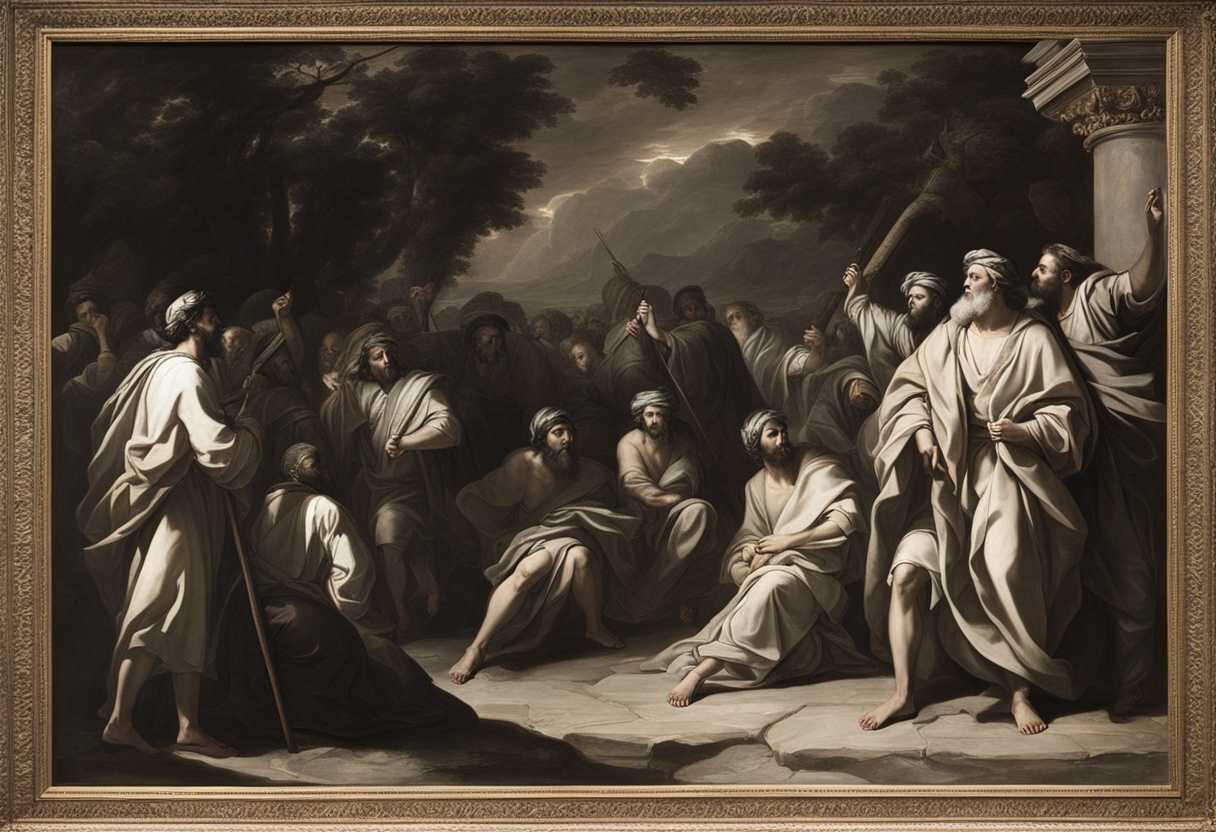
Setting the Scene for Exodus 12:31
In Exodus 12:31, we find Pharaoh summoning Moses and Aaron in the middle of the night. The scene is set in the royal palace of Egypt, a grand structure adorned with intricate hieroglyphics and towering columns. Pharaoh, the proud and stubborn ruler of Egypt, is seated on his ornate throne, his face contorted with a mix of anger and fear. His advisors and courtiers stand around him, their expressions a mix of curiosity and apprehension.
Moses and Aaron, the chosen messengers of the God of Israel, stand before Pharaoh, their faces illuminated by the flickering torches that line the chamber. They have just witnessed the final plague – the death of the firstborn throughout the land of Egypt. The air is heavy with tension as Pharaoh, his voice laced with defeat, finally gives in to the demands of the Israelites to let them go. The weight of centuries of slavery and oppression hangs in the air as the fate of an entire nation hangs in the balance.
What is Exodus 12:31 about?
Ah, what a moment of liberation and triumph this verse captures! After enduring nine devastating plagues sent by the hand of God, Pharaoh at last relents and grants the Israelites permission to leave Egypt. This pivotal moment in the Exodus narrative marks the culmination of a long and arduous struggle for freedom and serves as a testament to the power of faith and perseverance.
Imagine the relief and joy felt by the Israelites as they received the news that they were finally free from the oppressive rule of Pharaoh. The fulfillment of God’s promise and the deliverance of His people from bondage showcase His faithfulness and sovereignty. This verse reminds us of the importance of trusting in God’s timing and remaining steadfast in our faith, even when faced with seemingly insurmountable obstacles. Let it serve as a beacon of hope and encouragement, urging us to never lose faith in the face of adversity, for just as the Israelites were delivered from Egypt, so too can we find liberation from our own trials and tribulations.
Understanding what Exodus 12:31 really means
Structure for the Commentary:
- Verse Introduction and Context
- Historical and Cultural Background
- Detailed Breakdown of Key Phrases
- Cross-References and Thematic Connections
- Relevance to Today’s Readers
- Anecdote to Illustrate the Point
- Conclusion and Reflective Questions
1. Verse Introduction and Context
The verse from Exodus 12:31 marks a pivotal moment in the narrative of the Israelites’ exodus from Egypt. This passage highlights Pharaoh’s final concession after the devastating tenth plague. The urgency and finality of Pharaoh’s command underscore a dramatic turning point in the Exodus story.
2. Historical and Cultural Background
Understanding the historical context is crucial. The Israelites had been in bondage in Egypt for approximately 400 years. God sent Moses to lead them to freedom, demanding Pharaoh to “Let my people go.” Several plagues later, Pharaoh’s heart remained hardened until the death of the firstborns, a tragic event that compelled him to release the Israelites.
3. Detailed Breakdown of Key Phrases
Pharaoh’s directive to Moses in this verse includes significant phrases such as “Up, leave my people,” which conveys an immediate urgency and desperation. It reflects his recognition of God’s immense power and his submission, at least temporarily. This moment reveals a dramatic shift from defiance to acquiescence, signifying a broken spirit and the acknowledgment of God’s sovereignty.
4. Cross-References and Thematic Connections
To deepen our understanding, let’s look at related passages. God promises Moses in Exodus 6:1 that Pharaoh will drive the Israelites out of Egypt with a strong hand. This prophecy is fulfilled in the verse we’re discussing. Additionally, the theme of liberation is echoed in the New Testament, such as in Galatians 5:1 where Paul speaks about the freedom Christ brings, emphasizing that we should stand firm and not be burdened again by a yoke of slavery.
5. Relevance to Today’s Readers
Today, many experience situations that feel like bondage, whether they’re emotional struggles, unhealthy environments, or unjust circumstances. This verse reminds us of God’s power to deliver us from oppression and lead us into freedom. It calls us to recognize moments where we can break free from whatever holds us captive and trust in divine intervention.
6. Anecdote to Illustrate the Point
Let me share a story about a woman named Sarah. Trapped in a toxic work environment, she felt as though she had no way out. Inspired by the story of Exodus, Sarah prayed for guidance and courage. One day, an unexpected job offer came her way, allowing her to leave that oppressive situation. Just like the Israelites, Sarah found liberation and a new beginning, reinforcing the timeless relevance of Exodus 12:31.
**7. Reflect on this verse as you consider the areas in your life where you may feel trapped or oppressed. What is God calling you to leave behind? How can you trust in His promise of deliverance and guidance towards freedom? May this verse encourage you to seek and embrace the liberation that God offers, trusting in His perfect timing and plan. A God who hears the cries of the oppressed and acts decisively to deliver them is seen in this powerful narrative. Today, He continues to be our source of liberation and hope.
How can we show gratitude for God’s protection?
We can show gratitude for God’s protection by acknowledging His power and sovereignty in our lives. When we recognize that God has protected us from harm, we can express our thankfulness through prayer, praise, and acts of service. We humble ourselves and show our dependence on Him by acknowledging God’s role in our protection.
Additionally, we can show gratitude for God’s protection by living a life that reflects His goodness. This includes following His commandments, showing love and compassion to others, and being a positive influence in the world. Through our actions, we can demonstrate our appreciation for God’s protection and honor Him in all that we do. Recognizing His presence in our lives, giving thanks for His provision, and living in a way that reflects our appreciation for His care are all involved in showing gratitude for God’s protection. By honoring God, we not only deepen our relationship with Him but also experience His blessings in abundance.
Application
Imagine you’re in the middle of a crucial work deadline or tending to a family emergency—there’s no room for delay. In Exodus 12:31, Pharaoh didn’t wait; he acted immediately, summoning Moses and Aaron in the dead of night. This is your call to action. When God prompts you, don’t hesitate. Seize the moment with urgency, just as you would in the pivotal moments of your life. Are you prepared to move swiftly when God calls on you?

Reverend Michael Johnson is an experienced Church Minister with a profound expertise in spirituality and guidance. With a serene presence and a compassionate heart, he has faithfully served his congregation for over 20 years, leading them on a spiritual journey towards inner peace and enlightenment. Reverend Johnson’s extensive knowledge of religious philosophies and profound understanding of human nature have made him a trusted confidant and mentor to many, as he seamlessly weaves his profound wisdom into life teachings. Reverend Johnson’s calming demeanor and empathetic nature continue to uplift and heal souls, nurturing a sense of unity and tranquility within his community.