
1 Then Moses and the people of Israel sang this song to the Lord, saying, “I will sing to the Lord, for he has triumphed gloriously; the horse and his rider he has thrown into the sea.
2 The Lord is my strength and my song,
and he has become my salvation;
this is my God, and I will praise him,
my father’s God, and I will exalt him.
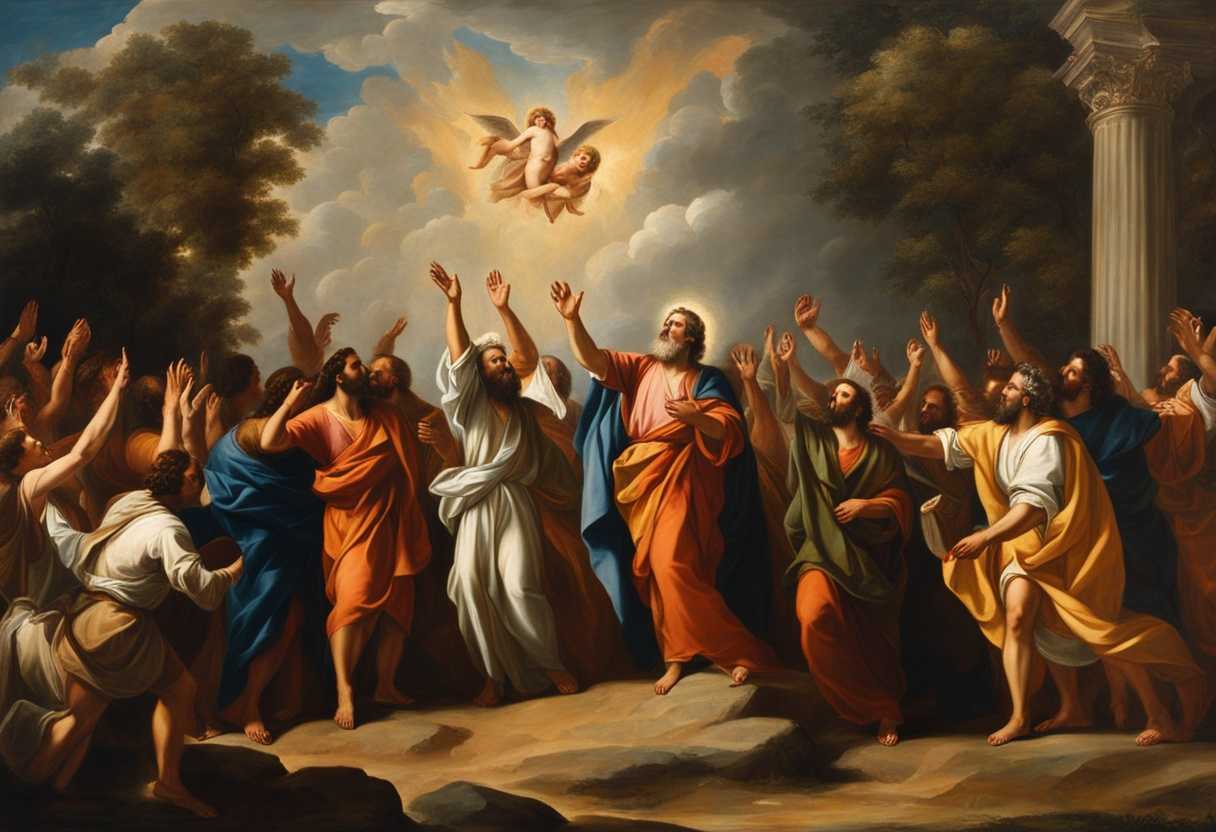
Setting the Scene for Exodus 15:1-2
The scene in Exodus 15:1-2 takes place shortly after the Israelites have crossed the Red Sea on dry ground, escaping from the pursuing Egyptian army. The Israelites, led by Moses, Miriam, and Aaron, find themselves on the other side of the sea, witnessing the miraculous deliverance that God has provided for them. The atmosphere is one of awe, gratitude, and jubilation as they realize they have been saved from the hands of their oppressors.
Moses, the great leader of the Israelites, stands at the forefront, his face reflecting the divine encounter he has just experienced. Miriam, his sister, takes up a timbrel and leads the women in joyful dancing and singing, praising God for His mighty deeds. Aaron, the high priest, joins in the chorus of thanksgiving, his voice blending with the multitude of voices raised in worship.
The surroundings are awe-inspiring, with the vast expanse of the Red Sea behind them, now calm and still after having been miraculously parted. The sun sets in the distance, casting a golden glow over the scene, adding to the sense of wonder and gratitude that fills the air. The Israelites, a mixed multitude of men, women, and children, stand together as a community, united in their shared experience of God’s deliverance and protection.
What is Exodus 15:1-2 about?
The Israelites praise God for the deliverance from their enemies in Exodus 15:1-2. This passage serves as a powerful reminder of God’s faithfulness and protection over His people. The Israelites had just experienced the miraculous crossing of the Red Sea, where God had saved them from the pursuing Egyptian army. Their response was to burst into a song of praise and gratitude to acknowledge God’s mighty power and intervention on their behalf.
Have you ever experienced a moment where you felt overwhelmed by challenges or adversaries, only to have God step in and deliver you from those situations? Just like the Israelites, we can also reflect on God’s faithfulness in our own lives and offer Him our heartfelt praise and thanksgiving. This passage encourages us to acknowledge God’s sovereignty and to trust in His ability to rescue us from any situation we may face. It serves as a powerful reminder that no enemy or obstacle is too great for our God to overcome. Let us sing praises to our mighty and victorious God with the Israelites!
Understanding what Exodus 15:1-2 really means
Structure for Commentary:
- Introduction and Context: Briefly introduce the passage and establish its historical and literary context.
- Verse Breakdown: Break down the verse into meaningful phrases and explain each in detail.
- Cross-References: Connect the meanings to other passages in the Bible that reinforce or expand the understanding.
- Relevance Today: Discuss why the passage is relevant to contemporary readers, connecting it with modern life.
- Practical Application: Provide concrete ways the key themes can be applied in daily life.
- Anecdote for Illustration: Share a short, relatable story to illustrate the verse’s application in a real-world scenario.
- Conclusion and Reflection: Summarize the main lessons and pose reflective questions for further contemplation.
Commentary:
Introduction and Context:
The passage from Exodus 15:1-2 is a song of praise sung by Moses and the Israelites after their miraculous escape from Egypt through the Red Sea. This moment marks a significant event where God’s deliverance is vividly remembered. We can gain a deeper appreciation for the meanings and implications of these words by understanding the emotional and spiritual context behind them.
Verse Breakdown:
The phrase “I will sing to the Lord, for he has triumphed gloriously” carries a profound sense of gratitude and accomplishment. Singing in the Bible often symbolizes a response to God’s magnificent acts (Psalms 98:1). Here, Moses and the Israelites express their thankfulness for God’s intervention.
“The horse and his rider he has thrown into the sea” vividly recalls the defeat of the Egyptian army. This victory was not just a military win but a divine act of salvation, emphasizing God’s power over human and nature’s forces (Psalm 136:15).
“The Lord is my strength and my song, and he has become my salvation” encapsulates personal and communal faith. Strength in this context is both physical and spiritual support, suggesting that reliance on God brings resilience. The idea that He is their song implies that their joy and identity are rooted in Him. Salvation here is not only immediate rescue but eternal deliverance.
Cross-References:
This theme resonates with Psalm 18:1-2, where David declares God as his strength, rock, and fortress. Similarly, Isaiah 12:2 speaks of God being our salvation, trust, and strength, reflecting the continuity of this sentiment throughout the Scriptures. These passages collectively underscore God’s consistent role as a protector and savior. Various forms of “enslavement” confront people in contemporary life, ranging from personal struggles to societal pressures. This passage encourages us to recognize God’s deliverance in our lives. Whether overcoming addiction, financial crisis, or emotional turmoil, finding gratitude in God’s interventions helps us see beyond immediate troubles.
Practical Application:
One concrete way to apply the key themes is through regular acts of worship and remembrance. Creating a habit of reflection—perhaps through journaling instances of God’s faithfulness in your life—can foster a strong sense of gratitude and dependence on Him. Additionally, sharing these testimonies with others can build communal strength and encouragement. The story of a family going through a difficult financial period is worth considering as an illustration. At their lowest, they prayed and sought divine intervention. Miraculously, help came through unexpected sources: a community fundraiser, a long-lost relative, and even reductions in their debts. They devoted time each week to sing praises and recount how God saw them through in their relief and gratitude. This family experienced firsthand that God indeed becomes “our strength and salvation” in dire situations. God’s unparalleled ability to save and strengthen His people is celebrated in Exodus 15:1-2. Reflect on times when you felt rescued or rejuvenated by divine help. How can you incorporate expressions of gratitude in your daily life? The same God who triumphed gloriously for the Israelites stands ready to be your strength and song today as you consider these questions.
May these words inspire you to recognize and celebrate God’s deliverance in every chapter of your life.
What does it mean to praise God wholeheartedly?
Praising God wholeheartedly means to declare and acknowledge His greatness, power, and deliverance without reservation or doubt. It involves expressing gratitude and adoration for His wondrous works and faithfulness. We surrender ourselves completely to His sovereignty and acknowledge His rightful place as the ultimate source of blessing and salvation in our lives by praising God with all our hearts. This level of wholehearted praise stems from a deep reverence and love for Him, which in turn fosters a sense of joy and peace in our hearts.
When we praise God wholeheartedly, we are not just going through the motions or using empty words. Rather, our praise is sincere, genuine, and rooted in a profound understanding of God’s character and His actions on our behalf. It is a reflection of our faith and trust in Him, recognizing His goodness and mercy even in the midst of challenges and trials. By praising God wholeheartedly, we align our hearts with His will, allowing His presence to dwell richly within us and bring about transformation in our lives.
Application
Just like celebrating a job promotion or a family milestone, let’s take a moment to praise the Lord for our triumphs. Think about Moses and the Israelites—they sang out in gratitude. Can we do the same? Can we lift our voices in thanks for every victory and deliverance in our lives? Let’s commit to worship and gratitude every day. Will you join me in making praise a part of your daily routine?

Reverend Michael Johnson is an experienced Church Minister with a profound expertise in spirituality and guidance. With a serene presence and a compassionate heart, he has faithfully served his congregation for over 20 years, leading them on a spiritual journey towards inner peace and enlightenment. Reverend Johnson’s extensive knowledge of religious philosophies and profound understanding of human nature have made him a trusted confidant and mentor to many, as he seamlessly weaves his profound wisdom into life teachings. Reverend Johnson’s calming demeanor and empathetic nature continue to uplift and heal souls, nurturing a sense of unity and tranquility within his community.