
Exodus 16:1-5 is about the Israelites grumbling against Moses and Aaron in the wilderness, revealing the testing of their faith and dependence on the Lord for sustenance.
1 They set out from Elim, and all the congregation of the people of Israel came to the wilderness of Sin, which is between Elim and Sinai, on the fifteenth day of the second month after they had departed from the land of Egypt.
2 And the whole congregation of the people of Israel grumbled against Moses and Aaron in the wilderness,
3 and the people of Israel said to them, “Would that we had died by the hand of the Lord in the land of Egypt, when we sat by the meat pots and ate bread to the full, for you have brought us out into this wilderness to kill this whole assembly with hunger.”
4 Then the Lord said to Moses, “Behold, I am about to rain bread from heaven for you, and the people shall go out and gather a day’s portion every day, that I may test them, whether they will walk in my law or not.
5 On the sixth day they shall prepare what they bring in, and it will be twice as much as they gather daily.”
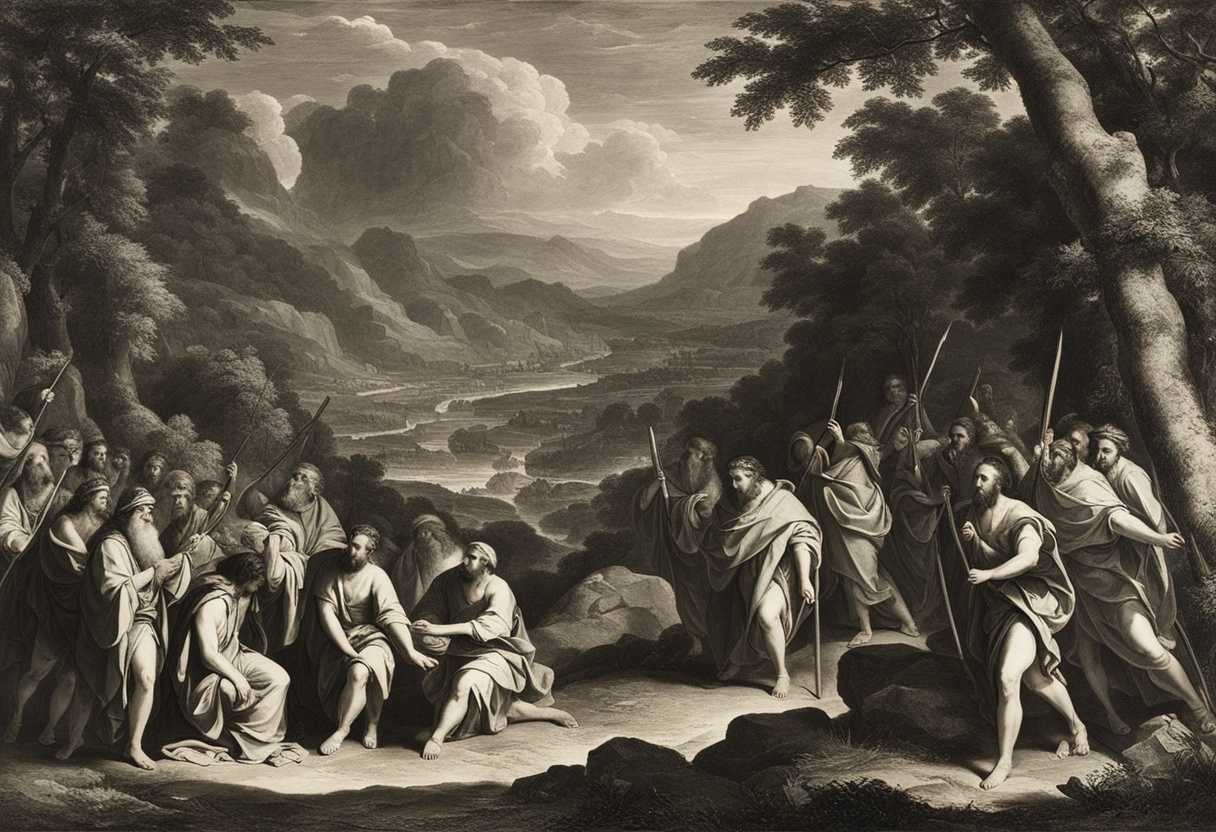
Setting the Scene for Exodus 16:1-5
The scene in Exodus 16:1-5 takes place in the wilderness of Sin, shortly after the Israelites have been liberated from slavery in Egypt. The Israelites, led by Moses and Aaron, have been journeying through the desert, following the guidance of God. However, they soon find themselves facing a new challenge – the lack of food. As hunger sets in among the people, they begin to grumble and complain to Moses and Aaron about their situation.
Moses, in turn, brings their concerns before God, who promises to provide for them. The next morning, the Israelites wake up to find the ground covered with a mysterious substance called manna, which God has provided as their daily sustenance. This miraculous provision of food in the barren wilderness serves as a powerful reminder of God’s faithfulness and care for His people, even in the most challenging circumstances.
The scene is set against the backdrop of the vast and desolate wilderness of Sin, with the Israelites gathered around Moses and Aaron, their leaders. The atmosphere is one of uncertainty and desperation, as the people grapple with their newfound freedom and the harsh realities of their journey. Yet, amidst the barren landscape, God’s provision of manna stands as a beacon of hope and a tangible expression of His love for His people.
What is Exodus 16:1-5 about?
God provides manna in the wilderness to the Israelites, showcasing powerful imagery in this verse. The manna symbolizes God’s provision and sustenance for His people even in the most desolate of places. God reminds Israel of His ever-present care and the importance of trusting in Him by testing their obedience and faith through this act.
Imagine being in the wilderness, with no visible means of sustenance, and suddenly seeing manna fall from the sky. How would you react? Would you trust in God’s plan and provision or would you doubt and question His ways? Through this verse, we are reminded of the importance of obedience and faith in God, especially in times of trial and uncertainty. Just like the Israelites, we too are tested in our journey through life, and it is our response to these tests that ultimately shape our relationship with God. Let us reflect on this verse and ask ourselves if we truly rely on God’s provision and trust in His plan for us, even when we are in the wilderness of uncertainty.
Understanding what Exodus 16:1-5 really means
The Israelites, fresh from their deliverance from slavery in Egypt, found themselves in the challenging terrain of the Desert of Sin. This transition marked a shift from comfort to testing, a journey from familiarity to reliance on God’s provision. In the midst of their physical and spiritual struggles, hunger gnawed at them, and doubt crept into their hearts regarding God’s faithfulness.
As they wandered through the desert, the whole community grumbled against Moses and Aaron, showcasing the all-too-human tendency to complain when faced with adversity. However, in response to their cries, God made a promise to rain down bread from heaven, a divine provision that symbolized His care and sustenance for His people. This act was not just about satisfying their physical hunger but also about teaching them a deeper lesson in daily dependence on God.
The command for the people to gather enough manna for each day highlighted the principle of daily reliance on God’s provision. By instructing them to only gather what they needed for that day, God was teaching them to trust Him for their daily sustenance, rather than hoarding out of fear or relying solely on their own resources. Additionally, the directive to gather twice as much on the sixth day, in preparation for the Sabbath, introduced the concept of rest and trust in God’s continued provision.
In connecting this narrative to other biblical passages, we see a consistent theme of dependence on God for our daily needs. Just as the Israelites received manna each day, the Lord’s Prayer in Matthew 6:11 echoes this sentiment of seeking daily provision from God. Furthermore, Jesus’ identification of Himself as the “bread of life” in John 6:31-35 links the manna in the wilderness to His role in providing spiritual sustenance for believers.
Today, this passage serves as a poignant reminder for us to cultivate a spirit of dependence on God in a world that often glorifies self-sufficiency. It challenges us to practice gratitude and trust in God’s provision, even when faced with challenging circumstances. The principle of the Sabbath rest encourages us to incorporate moments of reflection and trust in God’s ongoing care amidst the busyness of our lives.
Consider a family in financial turmoil receiving an unexpected gift just in time to meet their immediate needs. This experience mirrors the lesson the Israelites learned in the wilderness – to trust in God’s daily provision and to be grateful for the blessings they receive. In conclusion, the story in Exodus 16 teaches us about God’s faithfulness, the significance of daily reliance on Him, and the peace that comes from knowing that He is always with us, providing for our needs.
What does it mean to truly trust God?
Truly trusting God means having complete confidence in His provision and guidance, even when things may seem uncertain or difficult. It involves surrendering our worries and fears, and instead relying on His faithfulness and promises. God reassures the Israelites in the verse from Exodus that He will provide for their every need, asking them to trust in His plan and provision.
Trusting God means placing our full reliance on Him, believing that He knows what is best for us even when we may not understand the journey ahead. It involves acknowledging His sovereignty and wisdom, even in times of struggle or testing. The Israelites were called to trust in God’s plan for their deliverance and sustenance, teaching us to have faith in His ability to care for us in all circumstances.
Trusting God also means being patient and obedient, allowing Him to work in His timing and in His way. It involves a deepening of our relationship with Him, as we lean on His strength and grace to see us through challenges. We too are called to trust in His goodness and care for us in all areas of our lives, just as the Israelites were called to trust in God’s provision in the wilderness.
Application
In the hustle and bustle of our daily lives, we often forget to pause and appreciate the ways in which we are provided for, just like the Israelites. Let’s take a moment to reflect on God’s faithfulness and provision, guiding us through our own modern wilderness. Don’t let the noise of doubt and fear drown out the whispers of trust and faith in our hearts. Are you willing to step into the unknown, guided by the unwavering hand of divine provision?

Reverend Michael Johnson is an experienced Church Minister with a profound expertise in spirituality and guidance. With a serene presence and a compassionate heart, he has faithfully served his congregation for over 20 years, leading them on a spiritual journey towards inner peace and enlightenment. Reverend Johnson’s extensive knowledge of religious philosophies and profound understanding of human nature have made him a trusted confidant and mentor to many, as he seamlessly weaves his profound wisdom into life teachings. Reverend Johnson’s calming demeanor and empathetic nature continue to uplift and heal souls, nurturing a sense of unity and tranquility within his community.