
Exodus 18:1-12 is about the importance of seeking wise counsel and delegating responsibilities in order to prevent burnout and maintain effective leadership.
1 Jethro, the priest of Midian, Moses’ father-in-law, heard of all that God had done for Moses and for Israel his people, how the Lord had brought Israel out of Egypt.
2 Now Jethro, Moses’ father-in-law, had taken Zipporah, Moses’ wife, after he had sent her home,
3 Moses went out to meet his father-in-law and bowed down and kissed him. They asked each other of their welfare and went into the tent.
4 And the name of the other was Eliezer, for he said, “The God of my father was my help, and delivered me from the sword of Pharaoh.”
5 Jethro, Moses’ father-in-law, came with his sons and his wife to Moses in the wilderness where he was encamped at the mountain of God.
6 He had said to Moses, “I, your father-in-law Jethro, am coming to you with your wife and her two sons with her.”
7 Then Moses went out to meet his father-in-law and bowed down and kissed him. And they asked each other of their welfare and went into the tent.
8 Then Moses told his father-in-law all that the Lord had done to Pharaoh and to the Egyptians for Israel’s sake, all the hardship that had come upon them in the way, and how the Lord had delivered them.
9 Jethro rejoiced for all the good that the Lord had done to Israel, in that he had delivered them out of the hand of the Egyptians.
10 Jethro said, “Blessed be the Lord, who has delivered you out of the hand of the Egyptians and out of the hand of Pharaoh and has delivered the people from under the hand of the Egyptians.
11 Now I know that the Lord is greater than all gods, because in this affair they dealt arrogantly with the people.
12 And Jethro, Moses’ father-in-law, brought a burnt offering and sacrifices to God; and Aaron came with all the elders of Israel to eat bread with Moses’ father-in-law before God.
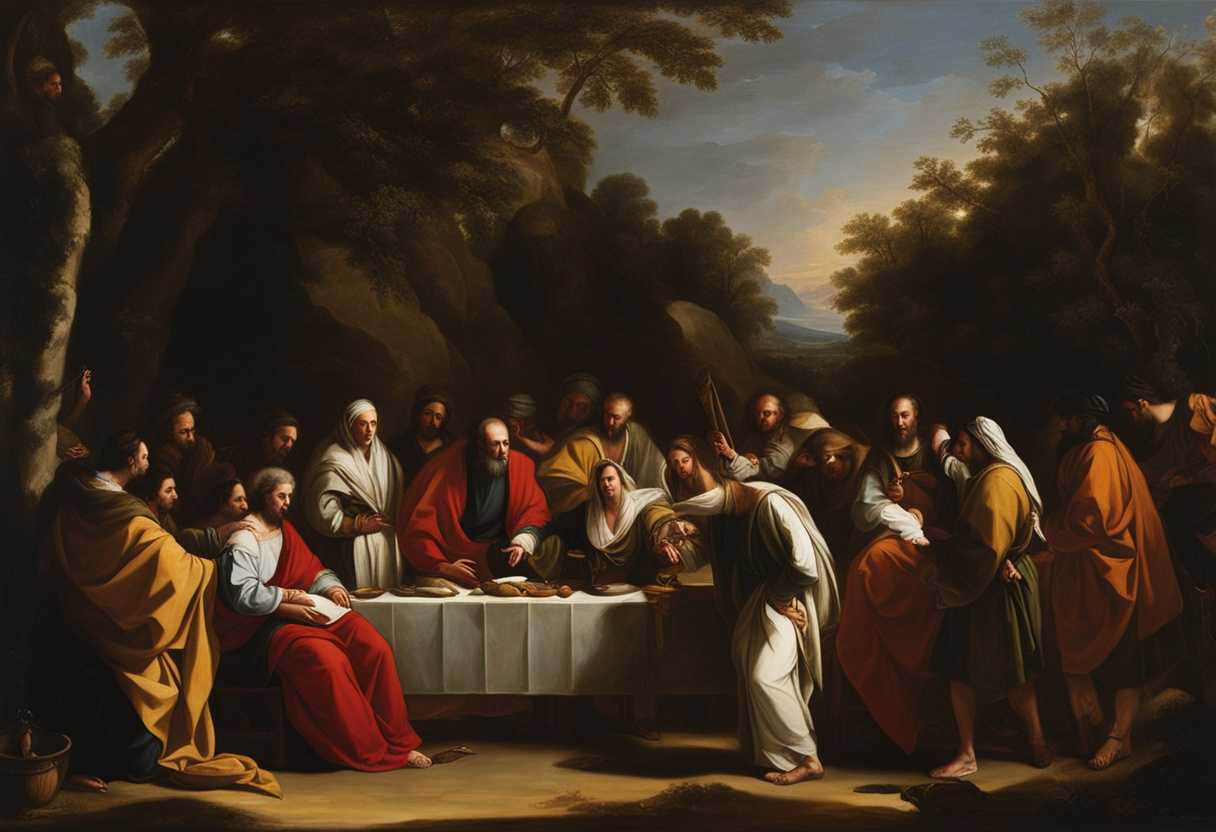
Setting the Scene for Exodus 18:1-12
In Exodus chapter 18, we find Moses, the leader of the Israelites, in the wilderness with the people of Israel after their escape from Egypt. Jethro, Moses’ father-in-law, hears about all that God has done for the Israelites and decides to visit Moses. Jethro brings Moses’ wife, Zipporah, and their two sons, Gershom and Eliezer, with him on the journey to meet Moses.
As Jethro arrives, Moses goes out to meet him, and they exchange greetings. Jethro observes Moses as he sits all day judging the people, listening to their disputes, and providing them with guidance according to God’s laws. Jethro sees that this task is too much for Moses to handle alone and advises him to appoint capable leaders to help him judge the people. Jethro’s wisdom and counsel are well received by Moses, and he follows his advice, delegating responsibilities to others to share the burden of leadership.
The scene is set in the vast wilderness, with the Israelite camp stretching out in the distance. The dusty ground is scattered with tents and campfires, and the sound of children playing and animals grazing fills the air. As the sun sets, Moses, Jethro, and the rest of the Israelites gather around a crackling fire, sharing stories and wisdom, grateful for the guidance and support they have received.
What is Exodus 18:1-12 about?
This verse is significant as it demonstrates the importance of effective leadership and delegation. Jethro, who was Moses’ father-in-law, noticed that Moses was taking on too much responsibility and bearing a heavy burden trying to manage everything by himself. Through his advice on delegation, Jethro showed Moses the value of distributing tasks among capable individuals to lighten the load and ensure smoother operations. You understand the challenges of taking on too much and feeling overwhelmed with responsibilities as a teacher. Jethro’s wisdom serves as a reminder to reflect on your leadership style and consider how you can empower others to take on tasks and share the weight of your workload. You can foster teamwork, build trust, and allow room for growth and development within your team by delegating effectively. So, take a moment to ponder: Are there areas where you can delegate tasks to others to make your work more manageable and create a more efficient and collaborative environment?
Understanding what Exodus 18:1-12 really means
In Exodus 18:1-12, we witness a significant moment in the narrative of the Israelites in the wilderness. Jethro, the priest of Midian and Moses’ father-in-law, pays a visit to Moses after hearing about the miraculous events orchestrated by God for the Israelites. This encounter between Jethro and Moses holds profound implications that resonate beyond the pages of the Bible.
Jethro’s title as the priest of Midian is noteworthy, as it highlights his spiritual role and wisdom, despite not being an Israelite. His visit underscores the importance of sharing testimonies of God’s work, as he had “heard of all that God had done.” This phrase emphasizes the widespread impact of God’s miracles and the power of spreading the news of His deeds.
Upon meeting Moses, Jethro’s response is one of reverence and acknowledgment of God’s power: “Blessed be the Lord.” This simple yet profound declaration showcases Jethro’s recognition of God’s sovereignty and serves as a reminder of the universal nature of worship and praise. His subsequent statement, “Now I know that the Lord is greater than all gods,” encapsulates a powerful confession of faith, acknowledging God’s supremacy over all other deities.
The themes present in this passage resonate throughout the Bible, reinforcing the idea of God’s unique power in delivering His people, as seen in Deuteronomy 4:34. Psalm 96:3 calls for declaring God’s glory among the nations, mirroring Jethro’s acknowledgment of God’s deeds. Acts 10:34-35 further emphasizes the impartiality of God, echoing Jethro’s recognition of God’s greatness transcending cultural and religious boundaries.
The relevance of this passage extends to modern-day contexts, encouraging interfaith respect and dialogue. Jethro and Moses exemplify mutual respect and acknowledgment of God’s work, inspiring readers to engage in respectful conversations with those of different faith backgrounds. Additionally, the importance of sharing testimonies and acknowledging God’s work in our lives is highlighted, fostering unity and shared faith among believers.
Imagine a scenario where a person from a different faith background witnesses a miraculous event in a Christian friend’s life. This encounter leads to a deep conversation about faith, miracles, and the power of prayer, strengthening their bond and mutual respect. Such interactions mirror the respect and dialogue exemplified by Jethro and Moses, showcasing the transformative power of sharing testimonies and acknowledging God’s work.
In conclusion, Exodus 18:1-12 serves as a timeless reminder of the universal recognition of God’s greatness and the importance of sharing testimonies of His deeds. By reflecting on the themes and phrases present in this passage, readers can gain a deeper understanding of its significance and application to their lives today.
How can we share our burdens as a community?
Sharing our burdens as a community involves offering help and support to one another during times of need. We too can lean on each other for support, just as Moses received guidance and assistance from his father-in-law Jethro. When we come together to help shoulder each other’s burdens, we create a network of care and compassion within our community. We not only receive the help we need but also allow for deeper connections to form among community members by being willing to share our burdens with others. This mutual support builds trust, strengthens relationships, and fosters a sense of belonging and unity within the community. When we open up and allow ourselves to be vulnerable with others, we create a space where everyone feels valued and supported. Reaching out to our community for help in times of hardship or struggle not only lightens our load but also enables us to experience the love and grace of God through the hands and hearts of those around us. When we come together to share our burdens, we embody the principles of empathy, compassion, and kindness that are central to living out our faith as a community.
Application
Let’s take a page from Jethro’s book and reach out with kindness to those who could use a helping hand. Just as we navigate our daily duties at work and cherish our loved ones at home, let’s also make a deliberate effort to support those around us who may be struggling. How will you choose to be a beacon of hope in someone’s life today?

Reverend Michael Johnson is an experienced Church Minister with a profound expertise in spirituality and guidance. With a serene presence and a compassionate heart, he has faithfully served his congregation for over 20 years, leading them on a spiritual journey towards inner peace and enlightenment. Reverend Johnson’s extensive knowledge of religious philosophies and profound understanding of human nature have made him a trusted confidant and mentor to many, as he seamlessly weaves his profound wisdom into life teachings. Reverend Johnson’s calming demeanor and empathetic nature continue to uplift and heal souls, nurturing a sense of unity and tranquility within his community.