
Exodus 18:17-18 is about Moses being overwhelmed by the task of judging the Israelites alone and his father-in-law Jethro advising him to delegate responsibilities to others to effectively lead and govern the people.
17 Moses’ father-in-law said to him, “What you are doing is not good.
18 You and the people with you will certainly wear yourselves out, for the thing is too heavy for you. You are not able to do it alone.
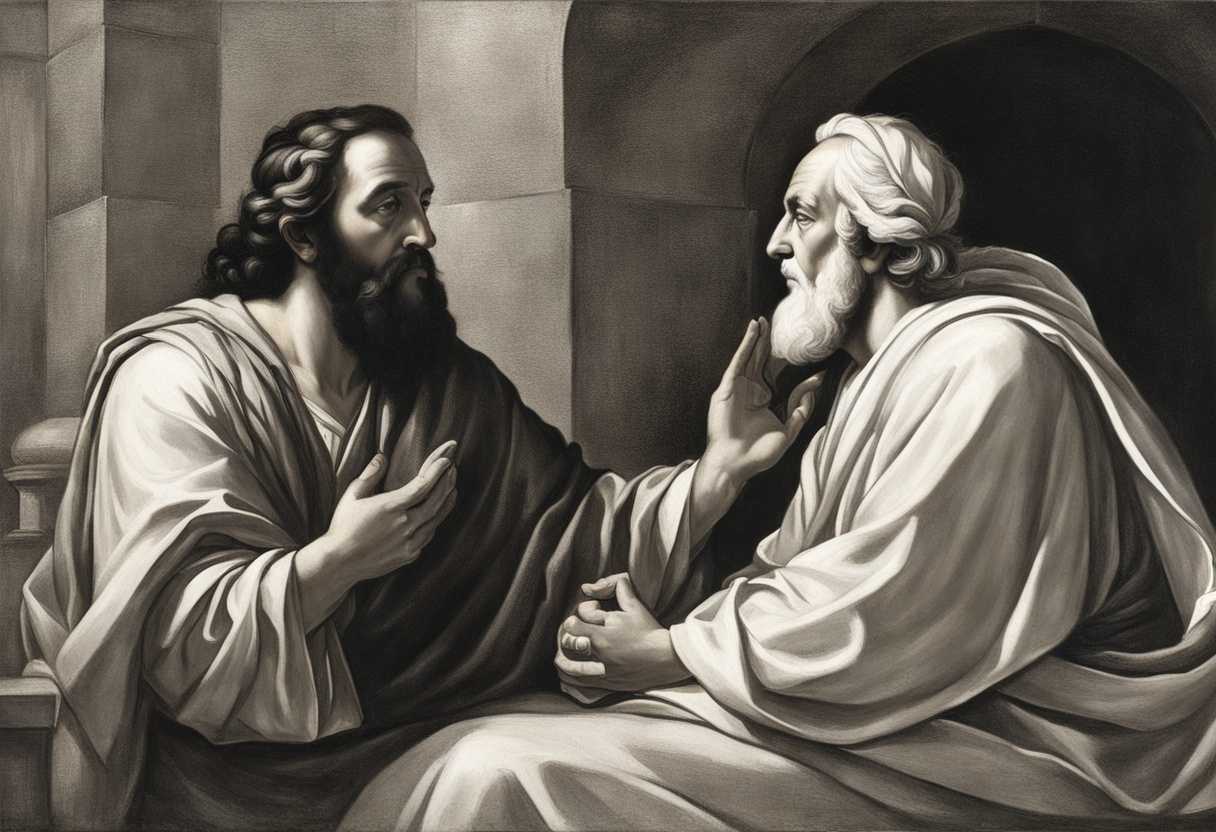
Setting the Scene for Exodus 18:17-18
The scene in Exodus 18:17-18 takes place in the wilderness, where the Israelites are encamped after their escape from Egypt. Moses is the central figure in this scenario, serving as the leader and judge of the people. Jethro, Moses’ father-in-law, has come to visit him in the wilderness, bringing Moses’ wife Zipporah and their two sons, Gershom and Eliezer, with him.
Jethro observes Moses from morning until evening, witnessing the long lines of people waiting to seek judgment and guidance from him. Concerned about the toll this is taking on Moses, Jethro advises him to appoint capable leaders to assist in judging the people, delegating smaller matters to them while reserving the more difficult cases for himself. This advice from Jethro ultimately helps Moses to better manage his responsibilities and prevent burnout.
The surroundings are described as the vast wilderness where the Israelites are encamped, with tents and makeshift shelters dotting the landscape. The scene is bustling with activity as people come and go, seeking guidance and judgment from Moses. The atmosphere is one of both reverence for Moses’ wisdom and leadership, as well as a sense of overwhelm at the sheer volume of people needing his attention. Jethro’s arrival brings a moment of respite and wisdom, offering a solution to help ease the burden on Moses and ensure the smooth functioning of the community.
What is Exodus 18:17-18 about?
This verse teaches us an important lesson in leadership and self-care. Moses’ father-in-law, Jethro, observes that Moses is working tirelessly, trying to handle all the responsibilities of leading the Israelites on his own. Jethro advises Moses to delegate certain tasks to capable individuals, thereby lightening his own load and preventing burnout. This wisdom emphasizes the importance of effective delegation, teamwork, and recognizing one’s limits.
Imagine carrying the weight of the world on your shoulders – that’s what Moses must have felt like before Jethro’s advice. Moses prevents burnout and empowers those around him to contribute their skills and talents to the community by spreading out the workload and entrusting others with responsibilities. This verse serves as a reminder that it’s okay to ask for help and that effective leadership involves knowing when to delegate and trust others to share the burden.
So, dear reader, reflect on this verse and consider how it applies to your own life. Are you shouldering too much on your own? Is there a way for you to delegate tasks and collaborate with others to achieve your goals more effectively? True strength lies in remembering when to seek support and work together towards a common purpose.
Understanding what Exodus 18:17-18 really means
In Exodus 18:17-18, we witness a pivotal moment where Jethro, Moses’ father-in-law, offers sage advice to the overburdened leader. Jethro’s words, “What you are doing is not good,” serve as a wake-up call, urging Moses to reassess his approach to leadership. This phrase resonates with a timeless truth: the necessity of recognizing when our current methods are unsustainable or ineffective. It prompts us to reflect on our own lives and consider areas where we may be persisting in practices that are ultimately detrimental.
The poignant warning, “You and these people who come to you will only wear yourselves out,” underscores the detrimental effects of shouldering burdens alone. It highlights the physical and emotional toll that overcommitment can take, not just on the leader but also on those they seek to serve. This cautionary tale serves as a poignant reminder of the dangers of burnout and the importance of seeking balance in our responsibilities.
Drawing parallels to Acts 6:1-4 and Numbers 11:14-17, we find further reinforcement of the principle of shared leadership and delegation. Just as the apostles appointed deacons to assist in their ministry, and Moses was instructed to appoint elders to share his burden, we are reminded of the wisdom in distributing responsibilities to prevent exhaustion and foster efficiency. These biblical passages offer practical insights that remain relevant in various aspects of our lives today.
In our modern world, the significance of delegation and shared responsibility cannot be overstated. Whether in professional endeavors, familial duties, or community engagements, the practice of entrusting tasks to others is essential for maintaining well-being and effectiveness. Overworking not only leads to burnout but also diminishes our capacity to fulfill our roles adequately and impacts our health and relationships negatively.
Consider the analogy of a small business owner attempting to manage every facet of their enterprise single-handedly. Initially feasible, this approach eventually results in a decline in work quality and personal welfare. By delegating responsibilities and seeking support, they can focus on strategic decisions and cultivate a healthier work-life balance. This anecdote serves as a tangible illustration of the benefits of shared leadership and the perils of shouldering burdens alone.
As we reflect on Exodus 18:17-18 and its implications for our lives, we are prompted to evaluate our own workload and consider areas where we may be overextending ourselves. Are there tasks we can delegate to alleviate our burden and enhance our well-being? By seeking counsel and wisdom from others, as Moses did from Jethro, we can discover more sustainable ways to manage our responsibilities and lead more balanced, effective lives.
In conclusion, the wisdom encapsulated in these verses urges us to acknowledge our limitations and embrace the value of community and shared responsibility. By applying these principles to our lives, we can cultivate a more harmonious, productive, and fulfilling existence. Let us heed the timeless counsel of Exodus 18:17-18 and strive for a balanced approach to leadership and life.
How can we effectively serve God and others?
We can effectively serve God and others by humbly seeking guidance and wisdom from those who are more experienced and knowledgeable. We can also benefit from the insights of wise and godly individuals in our lives, just as Moses received advice from his father-in-law Jethro in Exodus 18. We can better discern God’s will and serve others in a way that is pleasing to Him by being open to learning and receiving counsel.
Furthermore, delegation is an important aspect of effective service. Jethro advised Moses to delegate responsibilities among capable and trustworthy individuals, as seen in Exodus 18. We can work more efficiently and make a greater impact in serving both God and those around us by empowering others to contribute their skills and talents. We can cultivate a spirit of teamwork and mutual support in carrying out God’s work by recognizing and utilizing the abilities of others.
Lastly, maintaining a spirit of humility and a heart of service is essential in effectively serving God and others. We should approach our service with a mindset of humility, seeking to serve with a genuine heart of love and compassion, just as Jethro’s advice to Moses helped him to better fulfill his role as a leader. We can demonstrate God’s love and bring glory to His name through our actions by putting the needs of others before our own and serving with a Christ-like attitude.
Application
Just as in our digital work teams or family units, we must learn to delegate wisely and seek guidance from those with valuable insights. Embrace the lesson of shared leadership and teamwork from Exodus 18:17-18, and empower others to lighten your load, promoting harmony and productivity in your daily endeavors. Imagine a world where everyone plays their part effectively, and support each other for success. How will you start implementing these principles in your life today?

Reverend Michael Johnson is an experienced Church Minister with a profound expertise in spirituality and guidance. With a serene presence and a compassionate heart, he has faithfully served his congregation for over 20 years, leading them on a spiritual journey towards inner peace and enlightenment. Reverend Johnson’s extensive knowledge of religious philosophies and profound understanding of human nature have made him a trusted confidant and mentor to many, as he seamlessly weaves his profound wisdom into life teachings. Reverend Johnson’s calming demeanor and empathetic nature continue to uplift and heal souls, nurturing a sense of unity and tranquility within his community.