
Exodus 19:16-25 is about the awe-inspiring presence of God descending upon Mount Sinai in fire, smoke, and a loud trumpet blast, as a symbol of His holiness and power, emphasizing the need for the Israelites to approach Him with reverence and obedience.
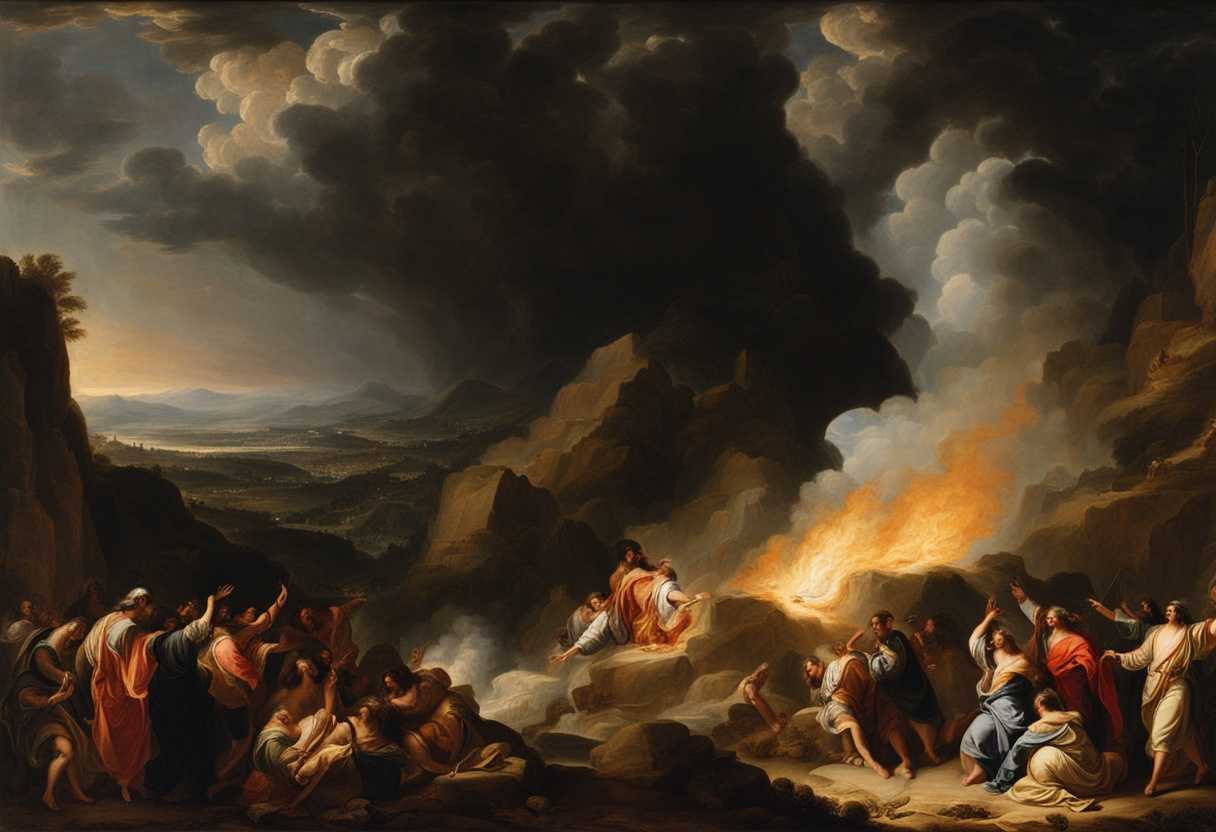
16 On the morning of the third day there were thunders and lightnings and a thick cloud on the mountain and a very loud trumpet blast, so that all the people in the camp trembled.
17 Then Moses brought the people out of the camp to meet God, and they took their stand at the foot of the mountain.
18 Now Mount Sinai was wrapped in smoke because the Lord had descended on it in fire. The smoke of it went up like the smoke of a kiln, and the whole mountain trembled greatly.
19 As the sound of the trumpet grew louder and louder, Moses spoke, and God answered him in thunder.
20 The Lord came down on Mount Sinai, to the top of the mountain.
21 And the Lord said to Moses, “Go down and warn the people, lest they break through to the Lord to look and many of them perish.
22 Also let the priests who come near to the Lord consecrate themselves, lest the Lord break out against them.”
23 Then Moses said to the Lord, “The people cannot come up to Mount Sinai, for you yourself warned us, saying, ‘Set limits around the mountain and consecrate it.’”
24 And the Lord said to him, “Go down, and come up bringing Aaron with you. But do not let the priests and the people break through to come up to the Lord, lest he break out against them.”
25 So Moses went down to the people and told them.
Setting the Scene for Exodus 19:16-25
In Exodus 19:16-25, the scene is set at the foot of Mount Sinai, where the Israelites have been camped after their escape from Egypt. The mountain is shrouded in a thick cloud, with thunder and lightning flashing, and a loud trumpet blast echoing throughout the area. The ground trembles as if in the presence of a great and powerful force.
Moses, the leader of the Israelites, has been called by God to ascend the mountain to receive the Ten Commandments. He is accompanied by Joshua, his assistant, who waits at the base of the mountain. The rest of the Israelites are instructed to stay back and not touch the mountain, for it has been declared holy by God.
As Moses ascends the mountain, he encounters the glory of the Lord in a thick cloud, and God speaks to him, giving him the commandments and instructions for the people. The scene is filled with awe and reverence, as the Israelites witness the power and majesty of God displayed on the mountain.
What is Exodus 19:16-25 about?
Think about the power and majesty of a thunderstorm – the booming thunder, the bright flashes of lightning, and the dark, ominous clouds swirling above. These natural phenomena are used in the Bible to symbolize the awe-inspiring presence of God. When God appears on Mount Sinai in the form of thunder, lightning, and a thick cloud, it signifies His immense power and sovereignty. The presence of God demands our reverence and respect, just as a thunderstorm captures our attention and forces us to acknowledge it.
Imagine being at the foot of Mount Sinai, witnessing this spectacular display of God’s majesty. The thunder reverberating in your chest, the lightning illuminating the dark sky, and the dense cloud enveloping the mountain – all serving as a reminder of God’s greatness and authority. This imagery serves to underscore the holiness and otherness of God, encouraging us to approach Him with humility and awe. It is a powerful reminder of the transcendence of God and His unfathomable nature.
Understanding what Exodus 19:16-25 really means
The events at Mount Sinai described in Exodus 19:16-25 paint a vivid picture of the awe-inspiring presence of God as He prepares to give the Ten Commandments to Moses and the Israelites. Thunder, lightning, and a thick cloud enveloping the mountain symbolize the power and majesty of God, evoking both fear and reverence in the hearts of the people. The very loud trumpet blast serves as a call to attention, signaling the importance of the moment and the need for spiritual and physical preparation. As the whole mountain trembles violently, it underscores the overwhelming presence of God and the gravity of the covenant being established.
In the midst of this divine theophany, the LORD descends to the top of Mount Sinai, demonstrating His willingness to come down and interact with His people. The command to set limits around the mountain highlights the holiness of God and the necessity for the Israelites to approach Him with caution and respect. This passage not only showcases God’s power and majesty but also reveals His desire for a relationship with His people, despite His transcendence and holiness.
Hebrews 12:18-21, Deuteronomy 4:11-12, and Psalm 97:4-5 provide additional insights into the fear and awe experienced at Mount Sinai, emphasizing God’s powerful presence and dominion over creation. These passages serve as reflections on the significance of encountering the Almighty and the reverence required in His presence. Today, amidst a world that often trivializes the sacred, this narrative reminds us of the importance of approaching God with awe and reverence, preparing our hearts and minds for encounters with the Divine in worship, prayer, and daily life.
Consider a time when you prepared to meet someone important, feeling a mix of excitement and nervousness. The Israelites at Mount Sinai experienced a similar anticipation, but on a grander scale as they readied themselves to meet the Creator of the universe. This anecdote illustrates the gravity and privilege of approaching God with utmost reverence and humility, urging us to approach Him with a prepared heart and a sense of awe.
In conclusion, Exodus 19:16-25 serves as a poignant reminder of God’s holiness and the reverence we should hold in His presence. It prompts us to prepare ourselves spiritually and recognize the profound privilege of having a relationship with the Almighty. By delving into this passage and related scriptures, we can deepen our understanding of God’s majesty and love, fostering a deeper connection with the One who descended to meet His people at Mount Sinai.
How can we approach God with reverence and awe?
Approaching God with reverence and awe requires us to recognize His holiness and power. The passage from Exodus describes how the presence of God descended on Mount Sinai in a thick cloud with thunder and lightning, showing His supreme authority and majesty. This display was designed to instill reverence in the Israelites, emphasizing the need to approach God with a sense of fear and respect.
When we approach God with reverence and awe, we acknowledge His sovereignty and recognize our own unworthiness. We are called to prepare our hearts and minds before approaching God in prayer or worship, just as the Israelites were instructed to consecrate themselves and not come near the mountain. We show reverence and awe in our attitude towards God by humbling ourselves before Him and recognizing His greatness. Approaching God with reverence and awe ultimately involves understanding the magnitude of His nature and the privilege we have to come before Him. We honor His holiness and acknowledge our dependence on Him by approaching Him with a sense of fear and respect. We cultivate a deeper relationship with God built on respect and adoration for who He is by doing so.
Application
Harness the power of the divine in your daily interactions. Like a dedicated employee following the guidelines at work, honor God’s commands with unwavering obedience. Let the thunder of your determination and the lightning of your faith guide your actions. Just as a family relies on unity and respect, uphold God’s holiness with reverence and humility. How will you choose to honor God’s power in your life today?

Reverend Michael Johnson is an experienced Church Minister with a profound expertise in spirituality and guidance. With a serene presence and a compassionate heart, he has faithfully served his congregation for over 20 years, leading them on a spiritual journey towards inner peace and enlightenment. Reverend Johnson’s extensive knowledge of religious philosophies and profound understanding of human nature have made him a trusted confidant and mentor to many, as he seamlessly weaves his profound wisdom into life teachings. Reverend Johnson’s calming demeanor and empathetic nature continue to uplift and heal souls, nurturing a sense of unity and tranquility within his community.