
Exodus 19:8 is about the Israelites’ affirmation of their commitment to obey God’s commandments, symbolizing their acceptance of the covenant that establishes them as His chosen people.
8 All the people answered together and said, “All that the Lord has spoken we will do.” And Moses reported the words of the people to the Lord.
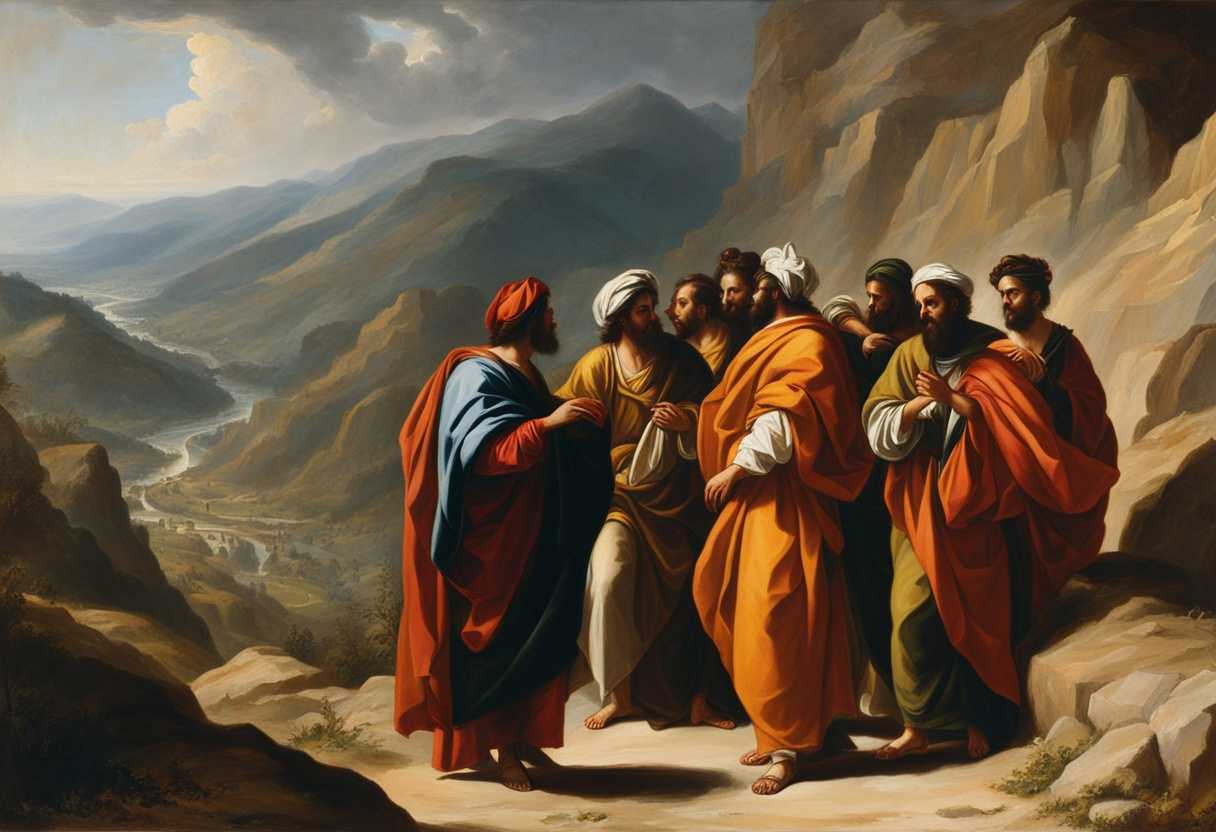
Setting the Scene for Exodus 19:8
The scene unfolds at the foot of Mount Sinai, a majestic and imposing mountain that towers over the arid landscape of the Sinai Peninsula. The air is thick with anticipation as the Israelites, a multitude of men, women, and children, gather in a vast encampment. They have journeyed through the wilderness, escaping the bondage of Egypt, and now stand on the brink of a monumental covenant with their God. The mountain looms above them, shrouded in clouds and smoke, a physical manifestation of divine presence. The sound of thunder rumbles in the distance, and flashes of lightning illuminate the darkened sky, creating an atmosphere charged with both fear and reverence.
At the forefront of this gathering is Moses, the chosen leader and mediator between God and His people. He has ascended the mountain to receive instructions from God, having been called to this sacred place after leading the Israelites out of Egypt. His face bears the marks of weariness and determination, reflecting the weight of his responsibility. Beside him stands Aaron, his brother and spokesperson, who shares in the leadership burden. The people, filled with a mix of excitement and trepidation, await Moses’ return, eager to hear the words that will define their identity as a nation and their relationship with the Almighty.
As the Israelites encircle the base of the mountain, they are surrounded by the stark beauty of the desert landscape. The ground is dry and dusty, with sparse vegetation struggling to survive in the harsh environment. Yet, amidst this desolation, there is a palpable sense of hope and purpose. The people have witnessed miraculous signs—the parting of the Red Sea, the provision of manna, and the water from the rock—and they are now ready to commit themselves to a covenant with God. With hearts united, they collectively respond to Moses’ call, declaring their willingness to obey the commands that will soon be revealed, marking a pivotal moment in their journey toward becoming a holy nation.
What is Exodus 19:8 about?
The Israelites affirm their relationship with God in this verse. They are not merely acknowledging His sovereignty; instead, they are actively committing to a covenant that requires both faith and action. What does it mean to affirm such a covenant? To truly engage with God’s commands is to understand our role in a larger narrative—a story that intertwines divine authority and human responsibility. Are we prepared to reflect on our own commitments and how they shape our daily lives in the present?
The Israelites’ willingness to obey speaks volumes about their understanding of trust and loyalty. They are choosing to follow a path that not only requires obedience but also deepens their identity as a community united under God’s guidance. Have you ever considered how our own promises can dictate the trajectory of our lives? The Israelites showed us that obedience is not merely a checklist of rules; it’s a heartfelt dedication to living out the values and truths they embrace. How can we find similar opportunities to reaffirm our commitments—whether to God, to each other, or to the principles we hold dear in our own journeys? The essence of this verse invites us to explore what it means to be dedicated, to be unified, and to acknowledge that our choices resonate beyond our immediate circumstances.
Understanding what Exodus 19:8 really means
Exodus 19:8 captures a pivotal moment in the journey of the Israelites as they approach Mount Sinai, where they are about to receive the Ten Commandments. This verse is not merely a historical account; it serves as a profound declaration of commitment between God and His people. The Israelites respond to Moses, saying, “All that the Lord has spoken we will do.” This statement encapsulates the essence of a covenant relationship, highlighting their willingness to obey God’s commands.
The theme of covenant is central to understanding this passage. A covenant is more than a contract; it is a sacred agreement that binds two parties in mutual commitment. In this case, the Israelites are affirming their role as God’s chosen people, agreeing to uphold His laws in exchange for His guidance and protection. This mutual commitment is foundational for their identity as a nation and their relationship with God. Have you ever considered the weight of such a promise?
Moreover, the collective response of the people underscores the importance of unity in faith. When they say, “The people answered together,” it reflects a communal decision to follow God. This is not an individualistic journey; rather, it emphasizes that faith thrives in community. Just as the Israelites stood together in their commitment, we too are called to support one another in our spiritual journeys. How often do we gather as a community to reaffirm our commitments to God and to each other?
Looking at related passages, such as Deuteronomy 5:27-29 and Joshua 24:24, we see a consistent pattern of the Israelites reaffirming their dedication to God. These moments serve as reminders of the blessings that come from obedience. In the New Testament, Paul echoes this call in Romans 12:1-2, urging believers to present their lives as living sacrifices. This continuity across scripture highlights the timeless nature of God’s call to obedience and the transformative power it holds.
In today’s world, where distractions abound and loyalties are often tested, the call to obedience remains as relevant as ever. Many struggle with commitments in various aspects of life, whether in relationships, work, or faith. Exodus 19:8 serves as a reminder that true fulfillment comes from aligning our lives with God’s will. Are we willing to prioritize our commitments to God amidst the noise of daily life?
To illustrate this, consider a young couple preparing for marriage. Their vows are not mere words; they represent a commitment that shapes their daily choices and actions. Similarly, when we say “yes” to God, we enter into a relationship that requires us to actively choose His ways over our own desires. This commitment is not always easy, but it is essential for a life of purpose and fulfillment.
In conclusion, Exodus 19:8 invites us to reflect on our own commitments to God. Are we ready to echo the Israelites’ pledge of obedience? Just as they affirmed their willingness to follow God’s commands, we too are called to respond to His invitation with open hearts. Embracing this commitment leads us to a deeper understanding of His plans for our lives, guiding us toward true life and purpose. What will your response be?
Are we truly committed to following God’s commands?
The essence of true commitment to following God’s commands involves a readiness to embrace His will and a collective determination to align our lives with His guidance. This commitment is reflected in the willingness of the people to respond affirmatively to God’s call, demonstrating a recognition of His authority and the importance of obedience. When one genuinely affirms their intent to follow divine laws, it indicates a deep relational understanding that transcends mere obligation. Such commitment indicates that individuals understand the broader implications of these commands not only for their own lives but for the community at large. Individuals contribute to building a society rooted in principles that promote justice, mercy, and spiritual growth by agreeing to live according to God’s statutes. There is a recognition that following these commands can lead to a fulfilling and meaningful life, foster strong community bonds, and ultimately draw individuals closer to God.
Therefore, true commitment is not just about outward compliance; it involves an inward transformation and a conscious choice to prioritize divine principles in daily life. It serves as a reminder that our actions should reflect our intentions, and our resolve to follow these commands lays the foundation for a life enriched both spiritually and communally. This deep-seated commitment ultimately manifests through our daily choices, attitudes, and interactions with others, embodying a living testament to our faith and dedication.
Application
Think of your faith like a job—you wouldn’t show up without commitment. Just like the Israelites declared their loyalty, you have promises to keep. Look at your daily life: are your actions lining up with what you promised God? Today’s the day to take stock and show your devotion. Maybe it’s a call to a loved one, or doing an act of kindness at work—let that be your commitment in motion. What will you choose to do today to honor your promises?

Reverend Michael Johnson is an experienced Church Minister with a profound expertise in spirituality and guidance. With a serene presence and a compassionate heart, he has faithfully served his congregation for over 20 years, leading them on a spiritual journey towards inner peace and enlightenment. Reverend Johnson’s extensive knowledge of religious philosophies and profound understanding of human nature have made him a trusted confidant and mentor to many, as he seamlessly weaves his profound wisdom into life teachings. Reverend Johnson’s calming demeanor and empathetic nature continue to uplift and heal souls, nurturing a sense of unity and tranquility within his community.