
Exodus 1:6-14 is about the oppression and affliction of the Israelites by the Egyptians, illustrating the theme of unjust suffering and the perseverance of God’s chosen people in the face of hardship.
6 Then Joseph died, and all his brothers and all that generation.
7 But the people of Israel were fruitful and increased greatly; they multiplied and grew exceedingly strong, so that the land was filled with them.
8 Now there arose a new king over Egypt, who did not know Joseph.
9 And he said to his people, “Behold, the people of Israel are too many and too mighty for us.
10 Come, let us deal shrewdly with them, lest they multiply, and, if war breaks out, they join our enemies and fight against us and escape from the land.”
11 Therefore they set taskmasters over them to afflict them with heavy burdens.
12 But the more they were oppressed, the more they multiplied and the more they spread abroad. And the Egyptians were in dread of the people of Israel.
13 So they ruthlessly made the people of Israel work as slaves.
14 and made their lives bitter with hard service, in mortar and brick, and in all kinds of work in the field. In all their work they ruthlessly made them work as slaves.
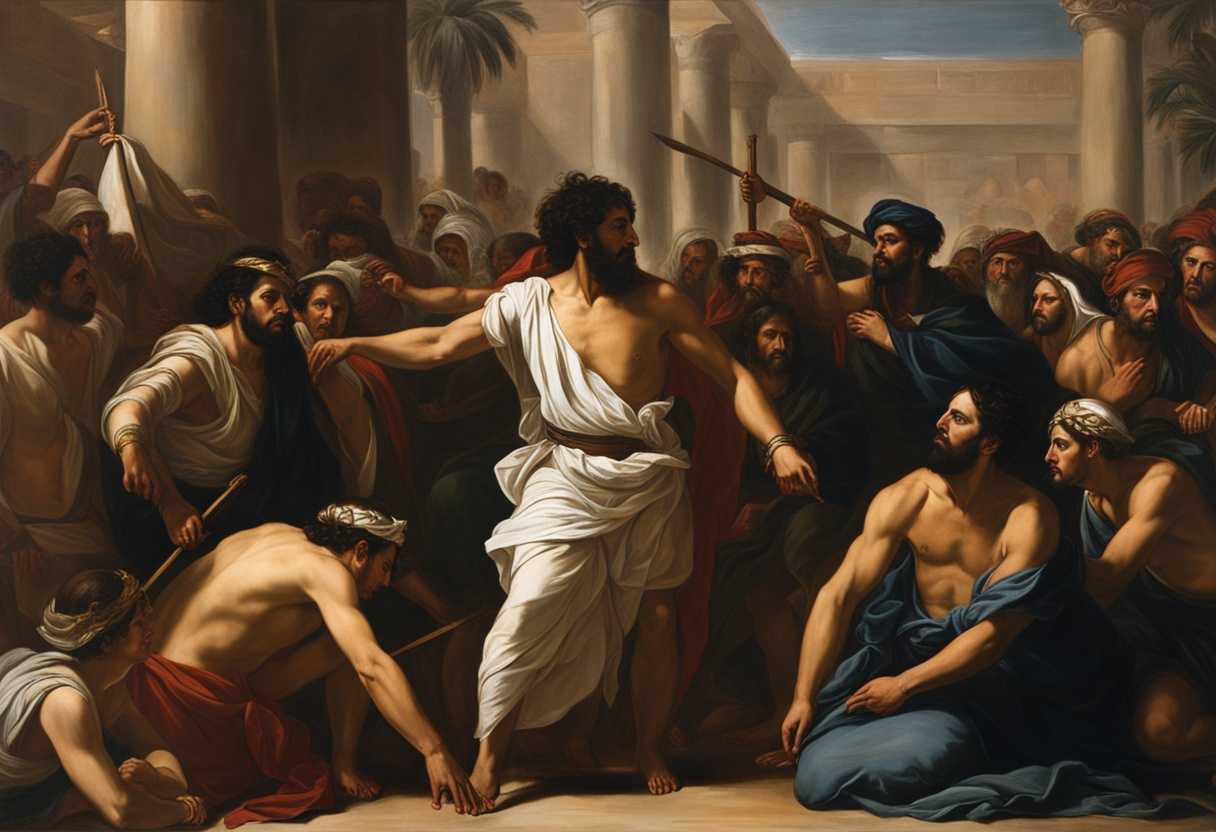
Setting the Scene for Exodus 1:6-14
In Exodus chapter 1, we find the scene set in the land of Egypt during a time when the Israelites had multiplied greatly and had become a powerful nation within the country. Pharaoh, the ruler of Egypt, had become concerned about the growing number of Israelites and feared that they might become a threat to his kingdom. In response to this fear, Pharaoh decided to oppress the Israelites by imposing harsh labor upon them, forcing them to work as slaves in order to weaken and control them.
Within this oppressive environment, we find the Israelites, who had once enjoyed favor and prosperity in Egypt, now toiling under the heavy burden of slavery. The scene is filled with the sounds of labor and the cries of the oppressed as they struggle to meet the demands of their taskmasters. Despite the harsh conditions, the Israelites continued to multiply and thrive, much to the dismay of Pharaoh, who only intensified his efforts to subjugate them.
In the midst of this tumultuous time, we see the resilience and faith of the Israelites as they cling to their identity and hope for deliverance. The stage is set for the unfolding of a powerful narrative of liberation and redemption, as God’s plan for His people begins to take shape amidst the trials and tribulations of their circumstances.
What is Exodus 1:6-14 about?
The verse shows a stark contrast between Pharaoh’s oppressive power and the courageous defiance of the midwives. Pharaoh’s fear of the Israelites’ growing population leads him to issue a cruel decree to kill all newborn male babies. The midwives, however, choose to prioritize their fear of God over their fear of Pharaoh. They refuse to carry out his orders and instead allow the male babies to live, ensuring the continued survival and growth of the Israelite community.
This verse illustrates the power of faith and moral courage in the face of tyranny and oppression. It shows that even in the most oppressive circumstances, individuals can choose to stand up for what is right and just. The midwives’ actions not only saved lives but also set an example of resistance against injustice, inspiring others to uphold their values and beliefs even in the most challenging circumstances. We reflect on this verse and consider our own values and beliefs, thinking about how we can embody the same courage and moral conviction in the face of adversity. How can we draw inspiration from the midwives’ actions to stand up against injustice and oppression in our own lives? What values do we hold dear that we are willing to defend, even when faced with powerful forces that seek to suppress them?
Understanding what Exodus 1:6-14 really means
The passage in Exodus 1:6-14 paints a vivid picture of the Israelites’ plight in Egypt after the passing of Joseph and his brothers. As the Israelites multiplied greatly, a new Pharaoh, ignorant of Joseph’s legacy, rose to power and viewed the growing population with suspicion. This led to the Israelites being subjected to harsh slavery, toiling under oppressive conditions in construction and agriculture. The narrative captures a pivotal moment in the history of the Israelites, marking the beginning of their suffering and endurance under the weight of oppression.
“The Israelites were fruitful and multiplied greatly and became exceedingly numerous,” a phrase that not only reflects the physical growth of the Israelites but also symbolizes God’s faithfulness in fulfilling His promise to Abraham. Despite the adverse circumstances, God’s blessing continued to manifest through the increasing numbers of His chosen people. The arrival of a new king in Egypt, indifferent to Joseph’s contributions, signaled a shift in power dynamics and a turning point for the Israelites as they faced escalating hardships under the new regime.
“They put slave masters over them to oppress them with forced labor,” encapsulates the cruel reality of the Israelites’ situation, highlighting the brutality of their enslavement. However, amidst the oppression, a remarkable resilience emerged within the Israelites. “The more they were oppressed, the more they multiplied and spread,” showcases God’s protective hand over His people, ensuring their growth and perseverance even in the face of adversity. This resilience serves as a testament to the unwavering faith and trust the Israelites placed in God’s promises.
Drawing parallels to contemporary times, the narrative in Exodus 1:6-14 resonates with individuals facing challenges and hardships today. Just as the Israelites endured suffering but continued to thrive under God’s providence, believers are encouraged to remain steadfast in their faith, trusting in God’s plan and timing. The story serves as a poignant reminder of God’s faithfulness and His ability to bring about deliverance and blessings even in the midst of trials.
In reflecting on this passage, we find a source of hope and strength in knowing that God sees our struggles and works on our behalf. Like the Israelites, who ultimately found liberation and redemption, we can take solace in the assurance that God’s plans for us are good, even when circumstances seem bleak. By internalizing the lessons from Exodus 1:6-14, we are reminded of God’s enduring presence in our lives and His promise to lead us to a place of abundance and fulfillment.
Consider a modern-day scenario where an individual faces adversity at work but perseveres with integrity and faith. Despite the challenges, their dedication is eventually recognized, leading to unexpected opportunities and blessings. This narrative mirrors the Israelites’ experience, illustrating how steadfast faith and resilience can pave the way for divine intervention and blessings. Just as the Israelites found favor and growth amidst oppression, individuals today can find inspiration to navigate their trials with unwavering trust in God’s faithfulness and provision.
In conclusion, the passage in Exodus 1:6-14 serves as a poignant reminder of God’s unwavering commitment to His people throughout history. It stands as a testament to His faithfulness, even in the darkest of times, and offers a beacon of hope for believers facing trials and tribulations. By embracing the narrative of the Israelites’ endurance and eventual deliverance, we are encouraged to trust in God’s promises, knowing that He is working behind the scenes to bring about our redemption and blessings.
How can we resist cultural influences to oppress others?
We can resist cultural influences that oppress others by understanding the value of each individual as created in the image of God. When we recognize the inherent dignity and worth of every person, we are more likely to stand up against any form of discrimination or mistreatment. This perspective helps us to see beyond cultural norms that marginalize or oppress certain groups and instead advocate for equality and justice for all.
Furthermore, we can resist cultural influences of oppression by actively challenging societal structures and practices that perpetuate injustice. This may involve speaking out against discrimination, advocating for policy changes, or supporting marginalized communities in tangible ways. We can help to create a more inclusive and equitable society where all individuals are treated with fairness and respect by taking a stand against injustice. We can resist cultural influences that seek to oppress others by keeping our focus on living out the values of love, compassion, and justice. Through our actions and attitudes, we can strive to create a more just and compassionate world where all individuals can experience the fullness of their humanity without fear of discrimination or mistreatment.
Application
Friend, as you navigate the demands of work, family, and personal growth, remember that your strength lies not only in yourself but in a greater power guiding your path. Embrace the challenges before you with resolve and courage, just as the Israelites faced their struggles in Egypt with unwavering faith. Allow this ancient story to inspire you to trust in a higher purpose and find solace in the knowledge that you are never alone in your tribulations. Will you choose to face your own trials with the same conviction and resilience today?

Reverend Michael Johnson is an experienced Church Minister with a profound expertise in spirituality and guidance. With a serene presence and a compassionate heart, he has faithfully served his congregation for over 20 years, leading them on a spiritual journey towards inner peace and enlightenment. Reverend Johnson’s extensive knowledge of religious philosophies and profound understanding of human nature have made him a trusted confidant and mentor to many, as he seamlessly weaves his profound wisdom into life teachings. Reverend Johnson’s calming demeanor and empathetic nature continue to uplift and heal souls, nurturing a sense of unity and tranquility within his community.