
Exodus 20:1-21 is about God’s establishment of the Ten Commandments as moral guidelines for His people, emphasizing the importance of worshiping and obeying Him, honoring family relationships, and treating others with respect and fairness.
1 And God spoke all these words, saying,
2 “I am the Lord your God, who brought you out of the land of Egypt, out of the house of slavery.
3 “You shall have no other gods before me.
4 “You shall not make for yourself a carved image, or any likeness of anything that is in heaven above, or that is in the earth beneath, or that is in the water under the earth.
5 You shall not bow down to them or serve them, for I the Lord your God am a jealous God, visiting the iniquity of the fathers on the children to the third and the fourth generation of those who hate me,
6 but showing steadfast love to thousands of those who love me and keep my commandments.
7 You shall not take the name of the Lord your God in vain, for the Lord will not hold him guiltless who takes his name in vain.
8 “Remember the Sabbath day, to keep it holy.
9 Six days you shall labor, and do all your work,
10 but the seventh day is a Sabbath to the Lord your God. On it you shall not do any work, you, or your son, or your daughter, your male servant, or your female servant, or your livestock, or the sojourner who is within your gates.
11 For in six days the Lord made heaven and earth, the sea, and all that is in them, and rested on the seventh day. Therefore the Lord blessed the Sabbath day and made it holy.
12 “Honor your father and your mother, that your days may be long in the land that the Lord your God is giving you.
13 “You shall not murder.”
14 “You shall not commit adultery.”
15 “You shall not steal.”
16 “You shall not bear false witness against your neighbor.”
17 “You shall not covet your neighbor’s house; you shall not covet your neighbor’s wife, or his male servant, or his female servant, or his ox, or his donkey, or anything that is your neighbor’s.”
18 Now when all the people saw the thunder and the flashes of lightning and the sound of the trumpet and the mountain smoking, the people were afraid and trembled, and they stood far off.
19 and said to Moses, “You speak to us, and we will listen; but do not let God speak to us, lest we die.”
20 Moses said to the people, “Do not fear, for God has come to test you, that the fear of him may be before you, that you may not sin.”
21 The people stood far off, while Moses drew near to the thick darkness where God was.
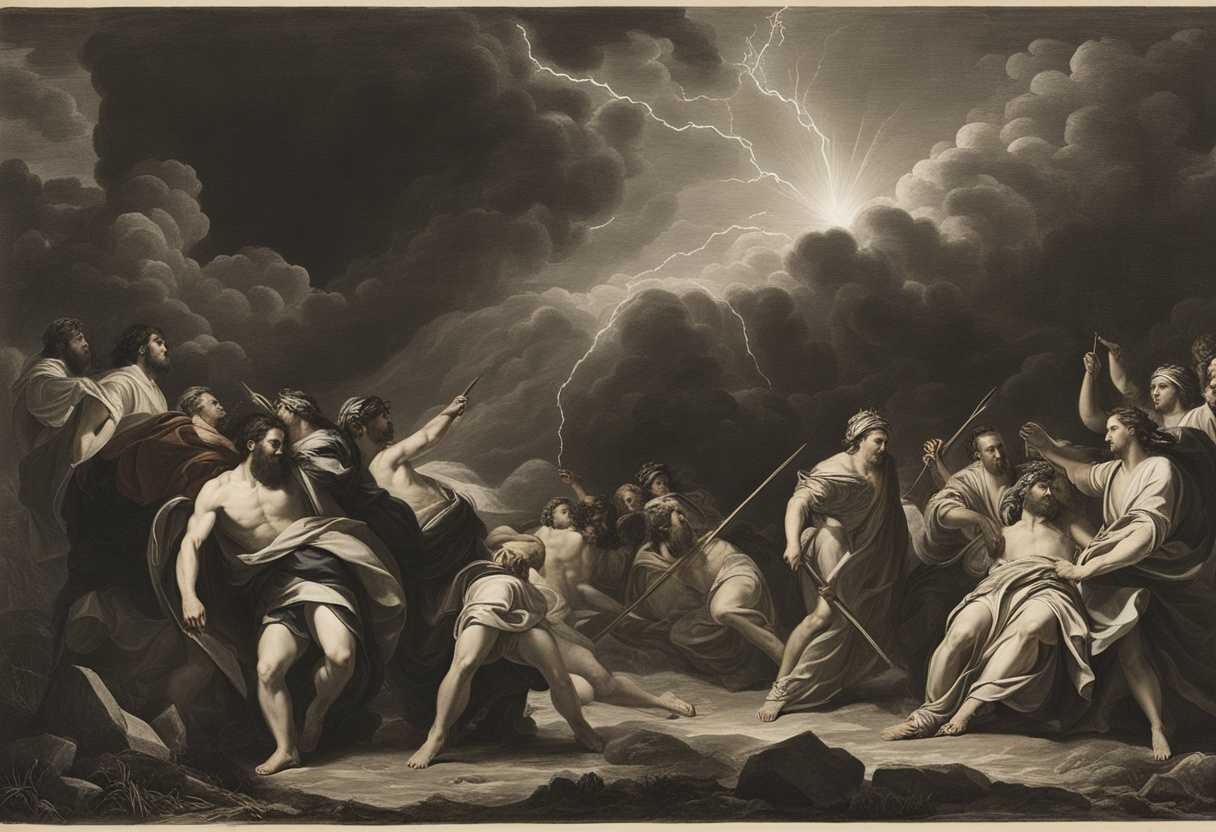
Setting the Scene for Exodus 20:1-21
The scene in Exodus 20:1-21 takes place at the foot of Mount Sinai, where the Israelites have just been led out of Egypt by Moses. The Israelites have been wandering in the wilderness and have now arrived at the mountain where God is going to give them the Ten Commandments. The atmosphere is charged with anticipation and awe as the people gather around the base of the mountain, eager to hear from God.
Moses, the leader of the Israelites, ascends the mountain to meet with God and receive the commandments. The people are instructed to stay back and not approach the mountain, as it is considered holy ground. As Moses receives the commandments from God, there is thunder, lightning, and a thick cloud covering the mountain, creating a sense of mystery and reverence among the people.
The Israelites, including prominent figures like Aaron and Miriam, stand at a distance, witnessing the powerful display of God’s presence on the mountain. The scene is one of divine revelation and the establishment of the moral code that will guide the Israelites in their journey towards the Promised Land. The Ten Commandments are given as a covenant between God and His people, setting the foundation for their relationship and defining the principles of righteousness and holiness.
What is Exodus 20:1-21 about?
Imagine standing at the foot of Mount Sinai, surrounded by the awe-inspiring presence of God as He delivers His divine laws to his chosen people through Moses. The Ten Commandments are not merely a list of rules to follow, but a sacred covenant between God and His people, outlining the principles of living a righteous and holy life. Each commandment serves as a moral compass, guiding us to honor God, respect others, and live with integrity and love. We reflect on the significance of the Commandments, reminding ourselves of our duty to uphold these timeless truths in our daily lives. They challenge us to prioritize our relationship with God above all else, to honor our parents, to respect the sanctity of life, and to reject behaviors such as stealing, lying, and coveting. Through these commandments, God calls us to lead lives that reflect His holiness and righteousness, setting us apart as a people devoted to Him. The Commandments are not meant to restrict us, but to lead us towards a life of fulfillment, peace, and harmony with God and others, as we ponder upon the profound wisdom and love behind them. We can experience the abundance of God’s blessings and live in alignment with His will by following these divine guidelines. May we cherish the Commandments as a precious gift from God, guiding us towards a life of righteousness, love, and grace.
Understanding what Exodus 20:1-21 really means
In Exodus 20:1-21, we encounter the foundational principles of Judeo-Christian ethics and morality encapsulated in the Ten Commandments. These commandments, given by God to Moses on Mount Sinai, serve as a guide for living a life that honors God and respects others. Let’s delve into a breakdown and commentary of some key verses to understand their significance in our lives today.
“I am the Lord your God, who brought you out of Egypt, out of the land of slavery.” This opening statement emphasizes God’s authority and the deliverance He provided to the Israelites. It serves as a reminder of God’s sovereignty and His redemptive power in our lives. This declaration is echoed in Deuteronomy 5:6-21, where the commandments are reiterated, emphasizing the enduring relevance of God’s deliverance throughout history.
“You shall have no other gods before me.” This commandment stresses the importance of monotheism and loyalty to God alone. It resonates with Jesus’ words in Matthew 22:37-38, highlighting the paramountcy of loving God with all our hearts. In today’s context, it warns against the subtle idols of our time, such as money, power, and technology, which can easily take precedence over our devotion to God.
“You shall not make for yourself an image…” This commandment prohibits idolatry and the worship of physical objects. It is a stark reminder of the folly of placing our trust in material possessions or worldly idols. Drawing from Isaiah 44:9-20, which ridicules the absurdity of idol worship, we are cautioned against the dangers of materialism and the worship of superficial symbols in our modern society.
“You shall not misuse the name of the Lord your God…” This command calls for reverence and respect for God’s name, reflecting the holiness of His character. Just as Jesus teaches in Matthew 6:9 through the Lord’s Prayer, this commandment reminds us to speak and act with integrity and honor towards God. It prompts us to uphold the sanctity of God’s name in our speech and conduct.
“Remember the Sabbath day by keeping it holy.” This commandment underscores the importance of rest and worship, as exemplified by God’s own rest on the seventh day of creation. Jesus reaffirms this principle in Mark 2:27, emphasizing that the Sabbath was made for the well-being of humanity. In our fast-paced world, observing a day of rest and spiritual rejuvenation remains crucial for maintaining balance and spiritual vitality.
The relevance of the Ten Commandments extends beyond ancient times; they provide timeless principles for ethical living and guide our relationships with both God and others. In a society marked by moral relativism, these commandments offer a clear moral compass to navigate the complexities of modern life. Reflecting on these commandments and applying them in our daily lives can lead to a deeper understanding of our responsibilities towards God and our fellow human beings.
Consider the story of an individual grappling with work-life balance who found solace and guidance by observing the Sabbath. By prioritizing rest and worship, they discovered a renewed sense of purpose and peace amidst life’s demands. This anecdote illustrates the practical impact of honoring God’s commandments in our personal struggles and triumphs.
In conclusion, the commandments laid out in Exodus 20:1-21 serve as a timeless guide for living a life that reflects God’s values of love, integrity, and respect. Let us heed the wisdom contained in these commandments, striving to uphold them in our daily interactions and decisions. May we find inspiration and strength in following these principles, leading us towards a life of righteousness and compassion towards others.
How can we honor God in all aspects of life?
We must first recognize His sovereignty and uniqueness in order to honor God in all aspects of life. This means acknowledging God as the one true God and giving Him the respect, reverence, and obedience that He deserves. We, as believers, are called to put God first in everything we do, seeking to bring glory and honor to Him through our actions, words, and choices.
To honor God in all aspects of life also means living in accordance with His commandments and teachings. We demonstrate our love and devotion to God by following His guidance and instructions. This includes showing kindness, generosity, and love towards others, as well as striving to live a life of integrity and faithfulness. When we align our lives with God’s will, we bear witness to His goodness and faithfulness in all that we do. Honoring God in all aspects of life ultimately requires continually seeking His guidance, trusting in His plan, and walking in obedience to His word. We can reflect His light and love to those around us, bringing glory to His name in everything we say and do by keeping God at the center of our lives and striving to live in a way that is pleasing to Him.
Application
Embrace the timeless wisdom of Exodus 20:1-21. Let these divine commandments be your compass in the bustling city of life. Just as a loyal employee follows the company’s rules diligently, let us honor God by embracing these teachings in every aspect of our lives. Like a caring parent, let these commandments guide our decisions and actions, shaping us into better versions of ourselves. Will you take up this sacred mission with unwavering resolve and faith?

Reverend Michael Johnson is an experienced Church Minister with a profound expertise in spirituality and guidance. With a serene presence and a compassionate heart, he has faithfully served his congregation for over 20 years, leading them on a spiritual journey towards inner peace and enlightenment. Reverend Johnson’s extensive knowledge of religious philosophies and profound understanding of human nature have made him a trusted confidant and mentor to many, as he seamlessly weaves his profound wisdom into life teachings. Reverend Johnson’s calming demeanor and empathetic nature continue to uplift and heal souls, nurturing a sense of unity and tranquility within his community.