
Exodus 20:1-4 is about the importance of exclusive worship of one true God and the prohibition against idolatry, emphasizing the significance of maintaining a spiritual connection with the Creator and avoiding the worship of false gods or idols.
1 And God spoke all these words, saying,
2 “I am the Lord your God, who brought you out of the land of Egypt, out of the house of slavery.
3 “You shall have no other gods before me.
4 “You shall not make for yourself a carved image, or any likeness of anything that is in heaven above, or that is in the earth beneath, or that is in the water under the earth.
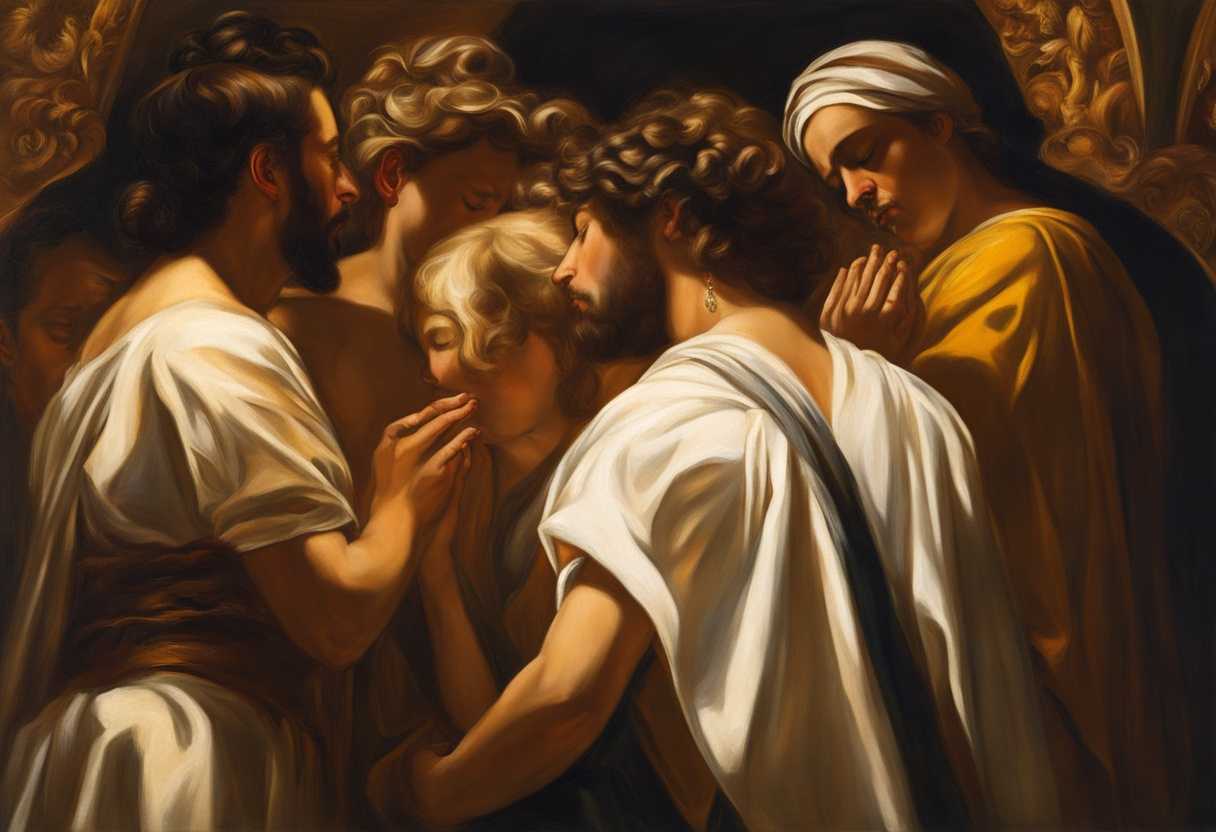
Setting the Scene for Exodus 20:1-4
The scene in Exodus 20:1-4 takes place at the foot of Mount Sinai, where the Israelites have just been led out of Egypt by Moses. The Israelites have been wandering in the wilderness for some time now, and they have finally arrived at the mountain where God is going to give them the Ten Commandments. The atmosphere is charged with anticipation and awe as the people gather around the base of the mountain, eager to hear from their God.
Moses, the leader chosen by God to deliver His message to the people, stands at the forefront, his face radiant from his encounters with the divine. The Israelites, a vast multitude of men, women, and children, are spread out before him, their eyes fixed on the mountain where God’s presence is about to descend. The air is still, the only sound being the murmurs of the people as they wait for the revelation that is about to unfold.
As the sun begins to set behind the mountain, a hush falls over the crowd, and Moses raises his hands to silence them. In that moment, the presence of God descends upon the mountain in a cloud of glory, and a voice thunders forth, proclaiming the Ten Commandments that will shape the moral and spiritual life of the Israelites for generations to come. The people listen in awe and fear, realizing the magnitude of the moment and the covenant they are entering into with their God.
What is Exodus 20:1-4 about?
God is emphasizing the importance of worshiping Him alone by giving the Ten Commandments to His people in this verse. God is setting these guidelines to make it clear that He is the central focus of their lives and that they should not worship any other gods or idols. This commandment serves as a reminder of God’s supreme authority and the need for His people to give Him the reverence and adoration He deserves. This verse prompts us to consider the significance of worshiping God alone in our own lives as we reflect on it. It challenges us to examine where our allegiances lie and whether we are putting anything or anyone above God in our hearts. God is inviting us to deepen our relationship with Him and to acknowledge His sovereignty in every aspect of our lives by emphasizing worship of Him alone. This verse ultimately calls us to honor and glorify God as the one true God, recognizing His divine presence and power in our lives.
Understanding what Exodus 20:1-4 really means
In Exodus 20:1-4, we delve into the foundational principles of moral and spiritual conduct as outlined in the Ten Commandments, a pivotal moment in the Judeo-Christian tradition. These divine directives were imparted by God to Moses on Mount Sinai, underscoring their significance and authority in guiding human behavior.
The opening phrase, “And God spoke all these words,” serves as a powerful declaration of the divine origin of the commandments, emphasizing their sacred nature and the direct communication between God and His people. This assertion is reiterated in Deuteronomy 5:22, reinforcing the notion that these words emanated from the Almighty Himself.
“I am the Lord your God, who brought you out of Egypt, out of the land of slavery,” establishes God’s identity and His intimate relationship with the Israelites. This proclamation serves as a poignant reminder of God’s deliverance and continuous care for His chosen people, a theme echoed in Leviticus 26:13.
The commandment, “You shall have no other gods before me,” unequivocally demands exclusive worship and allegiance to God, rejecting the worship of false deities and the allure of polytheism. Deuteronomy 6:14 further emphasizes the admonition against straying after other gods, highlighting the paramount importance of monotheistic devotion.
The prohibition against crafting physical representations of God in the form of idols, as stated in “You shall not make for yourself an image,” underscores the spiritual essence of worship and the futility of attempting to confine the divine to material constructs. This directive is echoed in Isaiah 44:9-20, which critiques the absurdity of idol-making and the emptiness of idolatrous practices.
In contemporary society, while physical idol worship may be less prevalent, modern forms of idolatry manifest in various ways, such as materialism, celebrity obsession, or the prioritization of personal desires over spiritual values. Reflecting on personal anecdotes, individuals may discover instances where worldly pursuits have taken precedence over their relationship with God, leading to a loss of balance and fulfillment.
Ultimately, Exodus 20:1-4 serves as a poignant reminder for individuals to evaluate their priorities, ensuring that their devotion to God remains steadfast and unwavering amidst the distractions and temptations of the world. By realigning one’s focus on spiritual truths and nurturing a deeper connection with the divine, individuals can experience a profound sense of purpose and fulfillment in their lives.
Are we prioritizing God above all idols?
Yes, the verse you mentioned reminds us of the importance of prioritizing God above all idols. It emphasizes the commandment to have no other gods before Him and to not make any idols to worship. We can avoid the temptation to worship anything else in His place by focusing on God as the ultimate authority and source of all we need.
Putting God first in our lives means acknowledging His supremacy and giving Him the reverence and worship that He deserves. When we prioritize God above all idols, we are showing our faith and loyalty to Him alone. This commitment helps us to stay focused on Him and not be swayed by the false promises or allure of other things that may distract us from our relationship with God. Constantly reminding ourselves to keep God at the center of our hearts is essential in a world where it is easy to get caught up in the pursuit of material possessions, fame, or power. We can advance in our faith journey and experience the peace and fulfillment that comes from surrendering to His will by following this commandment and prioritizing God above all idols.
Application
Let’s make room for the Divine in our lives, setting it above the noise of modern distractions. Just as we prioritize work or family, let’s give our attention to worship and meditation. Let’s stand strong against the idols pulling us away from spiritual growth. Can we dare to put God at the center of our modern-day lives?

Reverend Michael Johnson is an experienced Church Minister with a profound expertise in spirituality and guidance. With a serene presence and a compassionate heart, he has faithfully served his congregation for over 20 years, leading them on a spiritual journey towards inner peace and enlightenment. Reverend Johnson’s extensive knowledge of religious philosophies and profound understanding of human nature have made him a trusted confidant and mentor to many, as he seamlessly weaves his profound wisdom into life teachings. Reverend Johnson’s calming demeanor and empathetic nature continue to uplift and heal souls, nurturing a sense of unity and tranquility within his community.