
19 And said to Moses, “You speak to us, and we will listen; but do not let God speak to us, lest we die.”
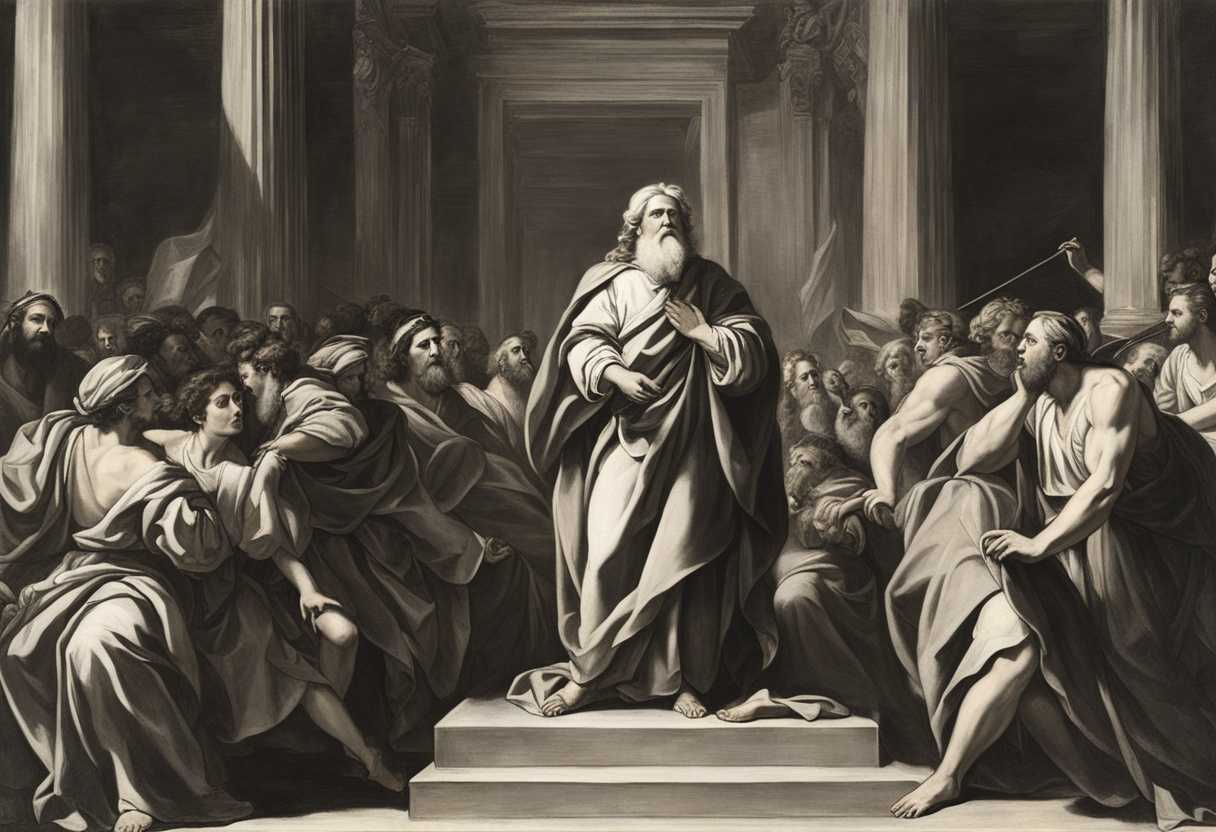
Setting the Scene for Exodus 20:19
In Exodus 20:19, we find the Israelites gathered at the foot of Mount Sinai after God had just given them the Ten Commandments. The scene is filled with awe and reverence as the people have witnessed thunder, lightning, a thick cloud covering the mountain, and the sound of a trumpet blast. The Israelites are trembling with fear at the powerful display of God’s presence.
Moses, the leader chosen by God to deliver His message to the people, stands before them, conveying the commandments that God has given. The people are overwhelmed by the experience and are filled with a sense of their own unworthiness in the presence of the Almighty. They plead with Moses to speak to God on their behalf, fearing that if God continues to speak directly to them, they will not survive.
The surroundings are solemn and majestic, with the mountain shrouded in a thick cloud and the sound of the trumpet echoing through the air. The Israelites are gathered in a vast assembly, their faces turned towards Moses as he communicates God’s words to them. The atmosphere is charged with the weight of the commandments they have just received, and the people are grappling with the enormity of the covenant they are entering into with God.
What is Exodus 20:19 about?
This verse highlights the deep respect and reverence the people had for God’s presence. The fear mentioned here is not a negative fear of punishment, but a profound awe and respect for God’s holiness and power. People recognized the magnitude of standing before the Almighty and recognized the need for a mediator like Moses to intercede on their behalf. This shows the humility and recognition of their own limitations in the face of the divine.
Imagine standing in the presence of something so holy and powerful that it overwhelms you with its majesty. This verse reminds us that there are moments when we may feel unworthy or too small to approach God directly. It teaches us the importance of having a mediator or intercessor, like Moses, who can bridge the gap between us and the divine. It also prompts us to reflect on our own attitudes towards God’s presence and how we approach Him in our lives.
Understanding what Exodus 20:19 really means
Structure of Commentary
- Introduction: Present the context of the verse.
- Analysis of Key Phrases: Break down important phrases for deeper insight.
- Cross-references: Relate to other Bible passages.
- Relevance Today: Explain how it applies to contemporary life.
- Anecdote: Provide a relatable story to illustrate the concepts.
- Reflection: Invite the reader to ponder personal application.
Commentary on Exodus 20:19
-
Introduction
Let’s start by setting the scene. This verse follows the giving of the Ten Commandments on Mount Sinai. The people of Israel are terrified by the thunder, lightning, and the sound of the trumpet that accompanies God’s voice. They turn to Moses and insist he speak to them instead of God directly, fearing they will die if they hear His voice. Isn’t it interesting how the grandeur of God’s presence inspires both awe and fear? -
Analysis of Key Phrases
The key phrase here is, “Speak to us yourself and we will listen. But do not have God speak to us or we will die.” This statement reflects a deep human instinct: the fear of the divine and a preference for an intermediary. The Israelites recognize Moses as their leader and are comfortable receiving God’s words through him. This fear highlights both their respect for God’s holiness and an awareness of their imperfection. What does it say about our relationship with the divine? -
Cross-references
To understand this better, let’s look at other passages. The Israelites in Deuteronomy 5:24-27 again express fear after hearing God’s voice. Additionally, in 1 Timothy 2:5, Paul emphasizes that “there is one God and one mediator between God and mankind, the man Christ Jesus.” Unlike the Israelites who had Moses, we have Jesus as our mediator, bridging the gap between humanity and the divine. -
Relevance Today
How does this verse resonate with us today? We often seek intermediaries in our modern world—whether in technology, leadership, or religion—to connect us with what is beyond our understanding or comfort zone. This verse encourages us to confront our fears and embrace the direct relationship God offers us through Jesus Christ. Are we willing to move beyond intermediaries to experience God more personally? -
Anecdote
Let me share a story. A friend of mine was afraid to pray out loud, feeling unworthy to speak directly to God. One day, in a moment of desperation, she did. She found an unexpected sense of peace and closeness to God that intermediaries had never provided. Like the Israelites, we might fear direct contact with the divine, but there is beauty and growth in that personal connection. -
Reflection
Let’s take a moment to reflect. Are there areas in your life where you rely too heavily on intermediaries? What steps can you take to encounter God more directly? Consider praying more freely, reading Scripture with an open heart, or seeking a deeper relationship with Jesus. Reflect on how this verse challenges and encourages you to grow in your faith. We uncover a rich message about fear, faith, and direct relationship with God by breaking down this verse, looking at related passages, and considering its modern-day relevance. May it inspire you to seek a deeper, more personal connection with Him.
How can we approach God with reverence and respect?
Approaching God with reverence and respect involves recognizing His holiness, greatness, and power. It means acknowledging our own unworthiness and humbling ourselves before Him. We show God the honor and respect that is due to His divine nature by approaching Him with reverence.
We can approach God with reverence by coming before Him with a heart full of awe and adoration. This includes being mindful of our words, thoughts, and actions when we are in His presence. It also involves listening to His guidance and following His commandments obediently. We show our submission to His will and our faith in His wisdom and righteousness by demonstrating reverence and respect towards God.
Application
Think of your life as a busy city, full of work meetings and family gatherings. Amid all the noise, there’s that quiet space reserved for reverence. Make time today to approach God with the respect He deserves. Speak and act in ways that honor Him. Deepen that connection—it’s like strengthening the bridge that holds your city together. How will you create that moment of reverence today?

Reverend Michael Johnson is an experienced Church Minister with a profound expertise in spirituality and guidance. With a serene presence and a compassionate heart, he has faithfully served his congregation for over 20 years, leading them on a spiritual journey towards inner peace and enlightenment. Reverend Johnson’s extensive knowledge of religious philosophies and profound understanding of human nature have made him a trusted confidant and mentor to many, as he seamlessly weaves his profound wisdom into life teachings. Reverend Johnson’s calming demeanor and empathetic nature continue to uplift and heal souls, nurturing a sense of unity and tranquility within his community.