
Exodus 20:22-26 is about God instructing the Israelites on how they should construct altars for worship, emphasizing the importance of simplicity and avoiding the use of tools to shape the stones, teaching them to approach Him with humility and reverence in all aspects of their worship.
22 And the Lord said to Moses, “Thus you shall say to the people of Israel: ‘You have seen for yourselves that I have talked with you from heaven.
23 You shall not make gods of silver to be with me, nor shall you make for yourselves gods of gold.
24 An altar of earth you shall make for me and sacrifice on it your burnt offerings and your peace offerings, your sheep and your oxen. In every place where I cause my name to be remembered I will come to you and bless you.
25 If you make me an altar of stone, you shall not build it of hewn stones, for if you wield your tool on it, you profane it.
26 And you shall not go up by steps to my altar, that your nakedness be not exposed on it.’
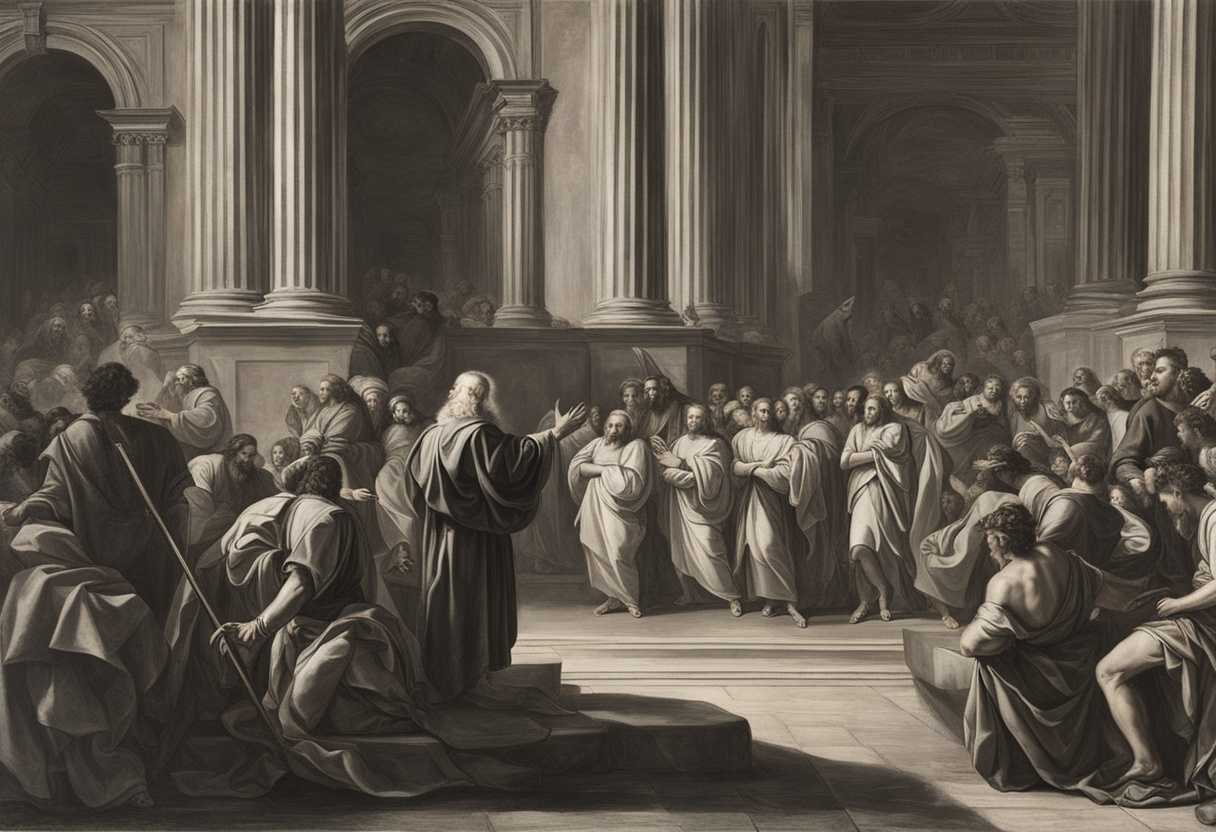
Setting the Scene for Exodus 20:22-26
The scene in Exodus 20:22-26 takes place at the foot of Mount Sinai shortly after Moses received the Ten Commandments from God. The Israelites had just witnessed the powerful display of God’s presence on the mountain, with thunder, lightning, and a thick cloud covering its summit. Overwhelmed by the experience, the people stood at a distance, fearful of the majesty and holiness of God.
Moses, Aaron, Nadab, Abihu, and seventy elders of Israel were present in this scene. They had been summoned by God to ascend partway up the mountain to receive further instructions and ordinances. As they gathered around Moses, he relayed the laws and regulations that God had given him, emphasizing the importance of obedience and reverence. The group listened intently, understanding the gravity of the moment and the significance of the covenant they were entering into with God.
The surroundings were awe-inspiring, with the mountain still shrouded in the remnants of the divine presence. The air was charged with a sense of holiness and solemnity, as the people processed the weight of the commandments they had just received. The scene was a pivotal moment in the history of the Israelites, marking the establishment of the Mosaic covenant and setting the foundation for their relationship with God for generations to come.
What is Exodus 20:22-26 about?
God provides specific instructions to the Israelites on building altars for worship in this verse. God is reinforcing the importance of purity and reverence in their worship practices by emphasizing the use of unhewn stones. The act of using natural, untouched stones conveys a sense of sanctity and respect for the sacred space where they will be offering sacrifices and seeking God’s presence.
This directive also serves as a reminder to the Israelites that their connection with God should not be tainted by human intervention or manipulation. They are acknowledging that their worship should be pure and unadulterated by abstaining from using tools to shape the stones, reflecting their sincere hearts and devotion to God. This verse challenges us to reflect on the intentionality behind our worship practices and to consider how we can approach God with humility and reverence, free from any distractions or impurities. What does it mean for us to build altars in our lives without relying on our own efforts or agendas? How can we apply the principle of using unhewn stones in our modern-day worship, seeking to honor God with genuine sincerity and authenticity?
Understanding what Exodus 20:22-26 really means
In Exodus 20:22-26, following the giving of the Ten Commandments, God continues to provide instructions to Moses for the Israelites. These verses serve as guidelines on how to properly worship God and avoid idolatry. In verse 22, God emphasizes direct divine communication, reinforcing the authority and authenticity of His commandments. This direct communication from heaven reminds us that God’s guidance is personal and encourages us to seek His voice in our lives. Deuteronomy 4:36 further supports this notion by highlighting God’s voice from heaven as a means to discipline and guide His people.
Moving on to verse 23, the prohibition against idolatry is clear as God instructs the Israelites not to make gods of silver or gold. This verse emphasizes exclusive worship of the one true God, reminding us to prioritize our relationship with Him above all else. Isaiah 42:8 echoes this sentiment by declaring that God’s glory will not be given to idols. In a world filled with distractions and materialism, this verse calls us to focus on God as the center of our worship and lives.
Verse 24 instructs the Israelites to make an altar of earth for God and to offer sacrifices on it. This simple and humble act of worship emphasizes the importance of the heart rather than elaborate rituals. John 4:24 further reinforces this idea by teaching that true worshipers will worship the Father in spirit and truth. This encourages us to approach God with sincerity and humility, reflecting on the authenticity of our worship.
In verse 25, the emphasis on using natural, unaltered materials for the altar symbolizes purity and God’s creation. This highlights the importance of authenticity in our worship and lives, steering clear of artificiality. The instruction in verse 26 to avoid going up to the altar on steps underscores the need for modesty and reverence in worship. This call to approach God with respect and humility aligns with the broader principle of modesty for all believers, as seen in 1 Timothy 2:9.
Applying these verses to modern life, we are reminded of the significance of sincere, humble worship and the dangers of idolatry in any form. In today’s context, the pursuit of validation through social media can become a modern form of idolatry, overshadowing our relationship with God. These verses urge us to return to authentic worship, prioritizing God above all else. Reflecting on our lives, we should identify any “idols” that may be taking precedence over our relationship with God and strive to worship Him in spirit and truth, with a humble and sincere heart.
How can we approach God with reverence and respect?
Approaching God with reverence and respect involves recognizing His holiness and sovereignty. We should acknowledge His authority and approach Him with humility, acknowledging that He is greater than us. This includes treating His name, His presence, and His commands with utmost respect.
Additionally, showing reverence to God involves actively listening and obeying His instructions. When we approach God, we should come with a heart that is ready to submit to His will and follow His guidance. We demonstrate our reverence for Him and our desire to honor and please Him by seeking to understand His word and adhere to His commands. It is important to show reverence and respect in all our interactions with God, whether in prayer, worship, or in our daily lives. This includes maintaining a posture of awe and gratitude towards Him, recognizing His grace and mercy towards us, and seeking to honor Him in all that we do.
Application
Just as thriving in both work and family life requires dedication and respect, God also calls for our obedience and reverence. As we ponder Exodus 20:22-26, let’s understand that following God’s guidance is akin to finding success in the chaos of the modern world. In committing to following His commandments faithfully, we pave the way for divine blessings to flow into our lives. Are you ready to embrace this challenge and align your very being with His divine will today?

Reverend Michael Johnson is an experienced Church Minister with a profound expertise in spirituality and guidance. With a serene presence and a compassionate heart, he has faithfully served his congregation for over 20 years, leading them on a spiritual journey towards inner peace and enlightenment. Reverend Johnson’s extensive knowledge of religious philosophies and profound understanding of human nature have made him a trusted confidant and mentor to many, as he seamlessly weaves his profound wisdom into life teachings. Reverend Johnson’s calming demeanor and empathetic nature continue to uplift and heal souls, nurturing a sense of unity and tranquility within his community.