
Exodus 21:12-14 is about emphasizing the value of human life and the importance of justice and accountability in cases of accidental harm or manslaughter, highlighting the need for appropriate consequences and restitution.
12 “Whoever strikes a man so that he dies shall be put to death.”
13 But if he did not lie in wait for him, but God let him fall into his hand, then I will appoint for you a place to which he may flee.
14 But if a man willfully attacks another to kill him by cunning, you shall take him from my altar, that he may die.
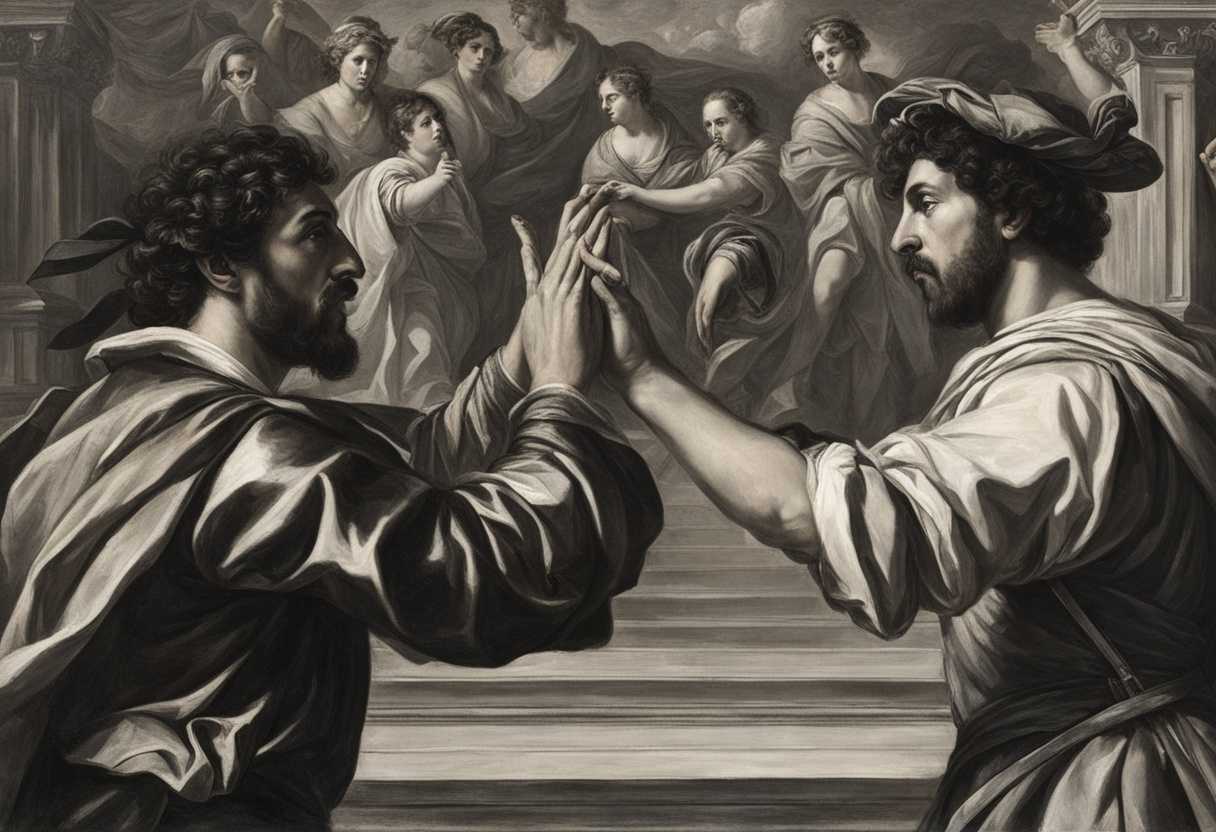
Setting the Scene for Exodus 21:12-14
In the scene described in Exodus 21:12-14, we find ourselves in the midst of a bustling marketplace in ancient Israel. The sun beats down on the dusty streets lined with vendors selling their wares, while the aroma of spices and freshly baked bread fills the air. People from all walks of life mill about, haggling over prices and catching up on the latest news.
Among the crowd, we see two men engaged in a heated argument that quickly escalates into a physical altercation. One man, named Reuben, had been tending to his livestock when his neighbor, Jacob, accused him of stealing one of his prized goats. Tempers flared, and before anyone could intervene, Reuben struck Jacob with a heavy wooden staff, causing a grievous injury.
As the onlookers gasp in shock, the elders of the community step forward to assess the situation and mete out justice according to the laws laid out in Exodus 21:12-14. They carefully examine the extent of Jacob’s injuries and deliberate on the appropriate restitution that Reuben must make to compensate for the harm he has caused. In this tense moment, the principles of justice and mercy are put to the test, as the community seeks to uphold the sanctity of life and ensure that peace is restored among their midst.
What is Exodus 21:12-14 about?
Exodus 21:12-14 reflects God’s concern for the sanctity of life and the importance of justice. This passage emphasizes the severity of taking someone else’s life through intentional killing, prescribing the death penalty as punishment. It underscores the value God places on each individual life by requiring a severe consequence for such a heinous act. But it also lays down guidelines for instances of accidental harm or manslaughter, showing a balance between justice and mercy.
Through these verses, we are called to consider our actions and their consequences on others. We are reminded of the responsibility we have in upholding the dignity and value of every human being. This passage challenges us to reflect on how we treat others and the gravity of our actions, whether they bring harm or protection to those around us. It prompts us to think about how we can contribute to a world where life is cherished and protected, where justice is served with fairness and compassion.
Understanding what Exodus 21:12-14 really means
In the context of the Mosaic Law given to the Israelites post their exodus from Egypt, Exodus 21:12-14 delves into the weighty matter of intentional and unintentional killing, offering a framework for justice and mercy. The gravity of the sanctity of human life is underscored in the directive that anyone who intentionally takes a life must face the consequence of death themselves. This uncompromising stance reflects the value placed on human life and the severity of intentionally causing harm to another individual. The law sets a clear standard that intentional harm resulting in death demands accountability and retribution.
Conversely, the verses also introduce a compassionate provision for cases of unintentional killing, where the individual responsible can seek refuge in designated cities. This concept of cities of refuge demonstrates a balance between justice and mercy, acknowledging that not all instances of death are the result of malicious intent. It offers a way for those who have caused harm unintentionally to find safety and protection from those seeking retribution. This provision showcases a nuanced understanding of human fallibility and the need for compassion in the face of tragic circumstances.
The distinction between intentional and unintentional killing is crucial in these verses, emphasizing the importance of intent in determining culpability. Deliberate, premeditated murder is met with swift and severe punishment, highlighting the significance of motive and forethought in the eyes of the law. This differentiation between intentional and unintentional acts of harm serves as a foundational principle in the pursuit of justice, ensuring that the severity of the punishment aligns with the level of culpability.
These ancient laws continue to hold relevance in contemporary society, resonating with the principles of justice, mercy, and accountability. They prompt us to reflect on the value of human life and the ethical considerations surrounding intentional harm. In our modern legal systems, we see echoes of these principles in the differentiation between degrees of homicide and the varying levels of punishment prescribed for different circumstances. The enduring relevance of these biblical teachings lies in their timeless wisdom regarding the complexities of human morality and the pursuit of justice.
Consider a scenario where a community grapples with a tragic accident resulting in loss of life. The tension between seeking justice and extending mercy mirrors the dilemmas addressed in Exodus 21:12-14. For instance, when a young individual unintentionally causes a fatal car accident, the community faces a moral quandary. Should they treat the individual as a criminal or recognize the unintended nature of the tragedy? This narrative reflects the delicate balance between accountability and compassion, mirroring the principles of justice and mercy encapsulated in the biblical laws.
In conclusion, Exodus 21:12-14 offers profound insights into the complexities of justice, the sanctity of human life, and the necessity of understanding intent in moral judgment. These verses serve as a timeless reminder that while actions have consequences, the motives behind those actions are equally significant in determining the appropriate response. They challenge us to consider the delicate interplay between justice and mercy, urging us to uphold the value of human life while navigating the complexities of moral responsibility.
What is the value of human life in God’s eyes?
The value of human life in God’s eyes is considered extremely high and sacred. Each individual is created in the image of God and is therefore priceless and cherished by Him. God places great importance on the preservation and protection of life, as seen in the severity of consequences for those who harm another person. It is a reflection of God’s love and respect for His creation that He commands the respect and sanctity of human life.
God values human life so greatly that He expects us to treat one another with care, compassion, and justice. Additionally, God’s view of the value of human life extends beyond physical life on earth to encompass the eternal significance of each soul. Therefore, the protection and honor of life are central to God’s moral guidelines for humanity, emphasizing the worth and significance of every individual.
Application
Let’s treat each other with respect and care, just as we do with our friends and colleagues. Every life is precious, and we should always prioritize peace over conflict. Let’s work on creating a safe and harmonious environment for everyone. How will you make a difference in promoting peace and understanding in your community today?

Reverend Michael Johnson is an experienced Church Minister with a profound expertise in spirituality and guidance. With a serene presence and a compassionate heart, he has faithfully served his congregation for over 20 years, leading them on a spiritual journey towards inner peace and enlightenment. Reverend Johnson’s extensive knowledge of religious philosophies and profound understanding of human nature have made him a trusted confidant and mentor to many, as he seamlessly weaves his profound wisdom into life teachings. Reverend Johnson’s calming demeanor and empathetic nature continue to uplift and heal souls, nurturing a sense of unity and tranquility within his community.