
Exodus 21:21 is about the principle of justice and proportionality in punishment, emphasizing that if a slave survives a beating for a day or two, the owner shall not be punished since the slave is their property, but if the slave dies as a result of the beating, then the owner shall be punished accordingly.
21 But if the slave survives a day or two, he is not to be avenged, for the slave is his money.
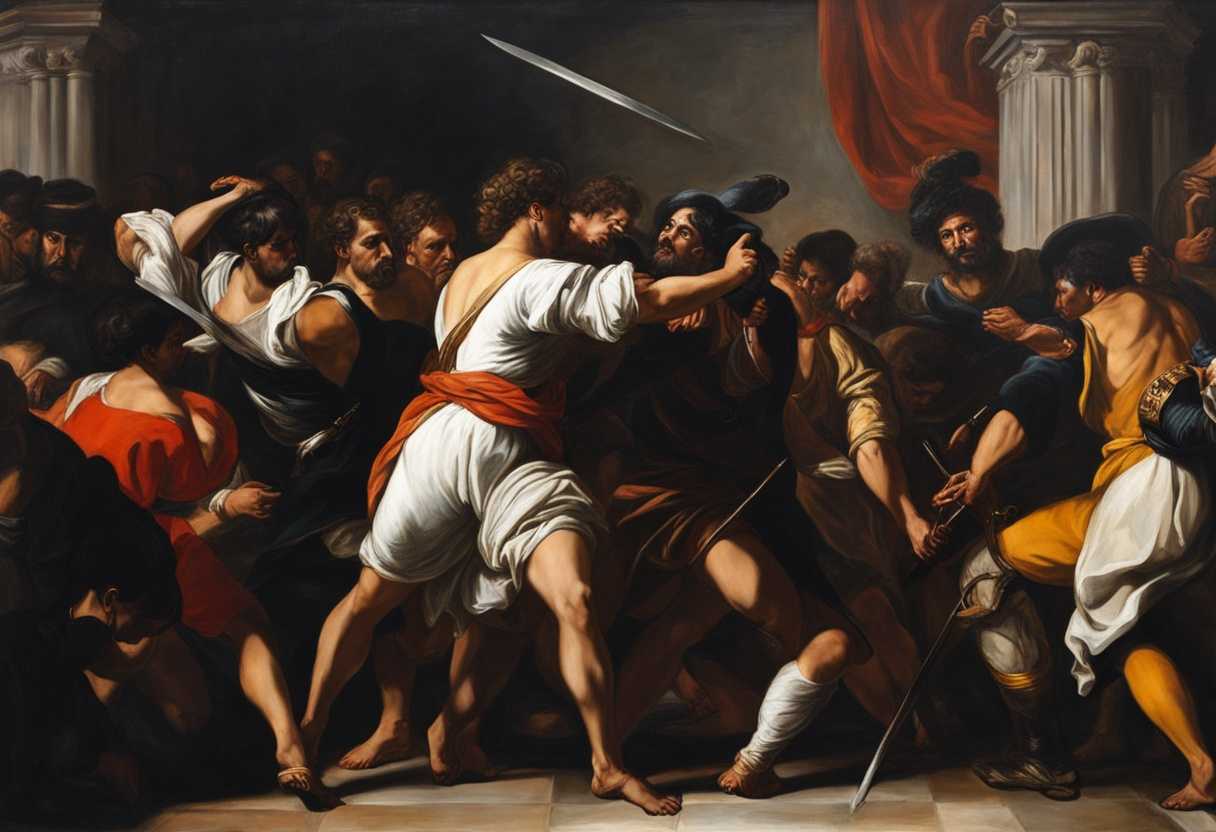
Setting the Scene for Exodus 21:21
In Exodus chapter 21, we find a scene where Moses, the great leader of the Israelites, is sitting under a large, ancient tree in the midst of the camp. Surrounding him are elders and judges of the community, gathered in a semi-circle, eagerly awaiting his wisdom and guidance on matters of law and justice. The air is filled with a sense of reverence and anticipation as the people look to Moses for direction in resolving disputes and upholding the laws given to them by God.
Among those present is Aaron, Moses’ brother and the high priest of the Israelites, dressed in his sacred garments. Also seated nearby is Miriam, their sister, a prophetess who plays a significant role in the community. The sun is beginning to set, casting a warm golden glow over the scene, creating a serene and contemplative atmosphere as Moses begins to speak, his voice carrying the authority of one who has been chosen by God to lead his people.
As Moses delves into the laws outlined in Exodus 21, addressing issues of slavery, personal injury, and property rights, the listeners hang on his every word, knowing that his judgments are guided by divine wisdom. The scene is one of solemnity and respect, as the community looks to Moses as their intermediary with God, seeking to live in accordance with His will and establish a just society in their midst.
What is Exodus 21:21 about?
This verse from the book of Exodus addresses the treatment of slaves in ancient times and the responsibilities of the slave owner. The verse in this context stipulates that if a slave is injured but eventually recovers after a day or two, the owner is not to face punishment. This regulation reflects the societal norms and practices of the time, where individuals could own slaves as property. We must consider the cultural and historical context in which this verse was written as we reflect on it. The Bible often reflects the reality of the world in which it was written, and in this case, the verse speaks to the legal and social structures of ancient Israel. It challenges us to grapple with the ethical implications of owning another human being as property and highlights the unjust power dynamics that existed in the past. We must use verses like this as opportunities to reflect on our own societal practices and values in our modern times. Questions to consider include: How have our attitudes towards human rights and dignity evolved since ancient times? What can we learn from texts like these about the importance of respecting the humanity of all individuals? We can deepen our understanding of history, ethics, and the ongoing pursuit of justice and equality by engaging critically with challenging verses like this one.
Understanding what Exodus 21:21 really means
The verse Exodus 21:21 is nestled within a section of Exodus that delves into the laws and regulations bestowed upon the Israelites post their exodus from Egypt. It specifically hones in on the treatment of servants and the repercussions of any ill-treatment meted out to them. To truly grasp the essence of this verse, delving into the historical and cultural backdrop of ancient Israel becomes imperative.
In tandem with this verse, other passages like Leviticus 25:39-43, Ephesians 6:5-9, and Colossians 4:1 also shed light on the treatment of servants, emphasizing the need for fair and humane treatment. These passages collectively underscore the importance of equitable treatment and respect for individuals, irrespective of their societal standing.
The relevance of Exodus 21:21 transcends time, resonating with contemporary scenarios such as employer-employee relationships. It advocates for equitable treatment and respect in the workplace, echoing the fundamental principle that all individuals deserve dignity and fairness in their interactions.
Imagine a scenario in a modern workplace where an employee faces mistreatment from their employer. The principles encapsulated in Exodus 21:21 and its related passages would advocate for just and fair treatment, emphasizing the significance of upholding respect and dignity in all interactions. Companies that prioritize the well-being of their employees often witness heightened morale and productivity, mirroring the biblical tenet of equitable treatment.
Within the verse itself lie poignant phrases that warrant deeper exploration. Phrases like “He is his property” underscore the historical context where servants were viewed as possessions, yet also emphasize the master’s duty to care for them without exploitation. “Not be avenged” hints at a measured approach to justice, advocating for restraint in retribution if the servant recuperates within a specified timeframe. “For he is his money” hints at the interconnectedness of the servant’s well-being with the master’s wealth, accentuating the master’s vested interest in the servant’s welfare and productivity.
In essence, Exodus 21:21 beckons us to contemplate the facets of justice and humane treatment. It prompts introspection on how we interact with those under our authority or employed by us. By embodying these principles, we pave the way for a more compassionate and just society, where dignity and fairness are upheld as paramount virtues.
What does it mean to seek forgiveness and repentance?
Seeking forgiveness and repentance means acknowledging the wrongdoing or sin that has been committed and taking responsibility for it. It involves feeling genuine remorse for the action and seeking to make amends for it. Understanding the consequences of one’s actions, recognizing the harm caused, and actively working towards reconciliation and improvement would involve seeking forgiveness and repentance in the context of Exodus 21:21.
To seek forgiveness and repentance also involves turning away from the wrong behavior and striving to make better choices in the future. It requires a commitment to change and a willingness to seek guidance and support in order to avoid repeating the mistake. Individuals demonstrate humility, a desire for spiritual growth, and a willingness to reconcile with both the offended party and with God by seeking forgiveness and repentance.
Application
Let’s embody the spirit of Exodus 21:21 in our everyday interactions. It’s our duty to uphold fairness and compassion in all that we do, whether in our relationships at work or with our family. Let’s strive to treat others with respect and dignity, even when faced with challenges. How can you show fairness and kindness in your encounters today?

Reverend Michael Johnson is an experienced Church Minister with a profound expertise in spirituality and guidance. With a serene presence and a compassionate heart, he has faithfully served his congregation for over 20 years, leading them on a spiritual journey towards inner peace and enlightenment. Reverend Johnson’s extensive knowledge of religious philosophies and profound understanding of human nature have made him a trusted confidant and mentor to many, as he seamlessly weaves his profound wisdom into life teachings. Reverend Johnson’s calming demeanor and empathetic nature continue to uplift and heal souls, nurturing a sense of unity and tranquility within his community.