
5 But if the slave plainly says, ‘I love my master, my wife, and my children; I will not go out free,’
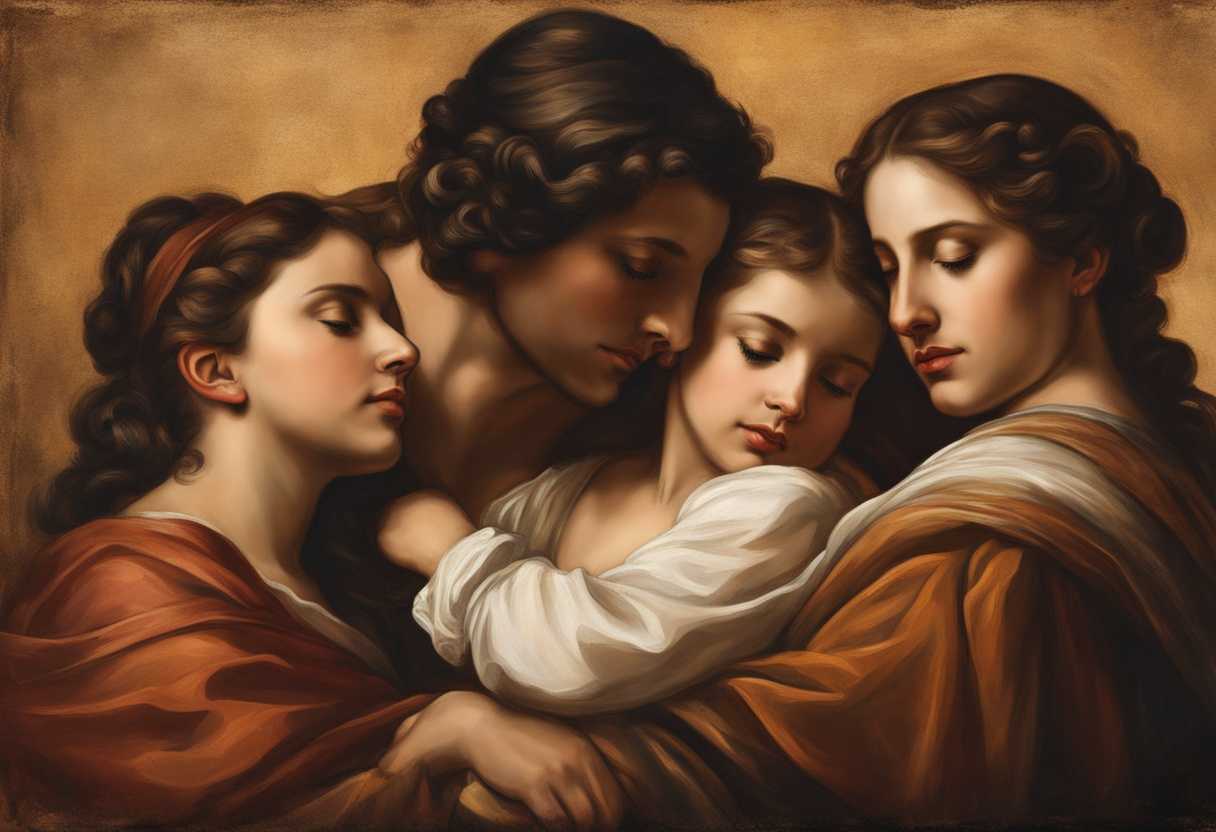
Setting the Scene for Exodus 21:5
In Exodus 21:5, we find a scene set in ancient Israel, where a Hebrew slave is making a life-altering decision. The surroundings are humble, with the dusty streets of a small village lined with simple mud-brick houses. The sun beats down on the scene, casting long shadows as the day progresses.
The main characters in this scene are the Hebrew slave and his master. The slave had willingly entered into servitude due to financial circumstances, and now, after serving for six years as agreed upon in Exodus 21, he faces a pivotal moment. His master, a fellow Hebrew, presents him with a choice: to leave as a free man or to stay and continue serving. The decision is not an easy one, as the slave must weigh his freedom against the security and provision he receives in his master’s household.
As the two men stand in the dusty street, surrounded by curious onlookers, the tension is palpable. The slave’s heart is torn between the familiarity of his current life and the unknown future that freedom would bring. This moment captures the essence of the complex social structures and moral dilemmas present in ancient Israel, as outlined in the laws of Exodus 21.
What is Exodus 21:5 about?
The Bible describes a scenario in Exodus 21:5 where a servant willingly decides to stay with their master for life. This verse highlights the concept of servitude and loyalty in ancient societies. It speaks to the idea of a servant who has formed a deep bond or connection with their master, to the extent that they willingly commit to serving them for life.
Have you ever thought about the significance of loyalty and dedication in relationships? This verse challenges us to reflect on the values of commitment and steadfastness. It prompts us to consider the depth of a relationship built on trust and mutual respect, where a servant willingly chooses to remain in service out of a sense of loyalty and fulfillment rather than obligation. Pondering upon Exodus 21:5 compels us to think about our own relationships and commitments. How do we show loyalty and devotion in our connections with others? Do we approach our responsibilities with a willing heart and a sense of dedication? Let us reflect on the importance of staying true to our commitments and fostering relationships based on trust, respect, and mutual understanding.
Understanding what Exodus 21:5 really means
Structure for Commentary:
- Introduction to Context
- Explanation of Key Phrases
- Connection to Other Biblical Passages
- Relevance for Modern Readers
- Reflective Questions
- Anecdotal Illustration
- To understand Exodus 21:5, one must grasp the broader context of Exodus 21, which outlines laws regarding Hebrew servants. This chapter provides guidance on various social justice and civil responsibilities for the Israelites. Exodus 21:5 specifically discusses the conditions under which a Hebrew servant might choose to remain with his master permanently.
Explanation of Key Phrases
The phrase “I love my master, my wife, and my children; I will not go out free” is central here. The servant’s declaration is rooted in love and commitment. He acknowledges a benevolent relationship by saying “I love my master,” contrasting sharply with notions of oppression. His mention of “my wife, and my children” indicates a deep familial bond and a desire to maintain unity and stability.
Connection to Other Biblical Passages
This verse resonates deeply with themes found in other parts of the Bible. For instance, Deuteronomy 15:16 reiterates the notion of a servant choosing to stay out of love, emphasizing voluntary servitude out of affection and loyalty. Similarly, in John 15:15, Jesus calls His disciples friends rather than servants, indicating a relationship based on love and mutual respect.
Relevance for Modern Readers
To modern readers, this verse speaks volumes about the significance of relationships built on love and commitment rather than obligation. This example underscores the power of choosing loyalty even when freedom is an option in a world where commitments can often seem transient. It challenges us to evaluate how we approach our relationships—with our employers, families, and ultimately, with God.
Reflective Questions
How do we decide when to commit ourselves fully to someone or something? Are our decisions motivated by love and a genuine desire to serve, or by convenience and obligation? These questions should prompt deep personal reflection on the nature of our commitments and the relationships we hold dear. An employee chooses to stay with a company despite lucrative offers elsewhere because of a profound respect and affection for the organization and colleagues. This decision, driven by an intrinsic sense of loyalty and community, parallels the servant’s choice. It illustrates the meaningfulness and impact of choosing bonds of love over freedom or greater financial gain.
Conclusion and Encouragement
Exodus 21:5 is more than a regulation; it’s a testament to the power of love and chosen loyalty. Let’s examine our bonds in our workplaces, families, or communities as we reflect on this verse. Let it remind us that the relationships we value should be nurtured with love and commitment. Embrace these teachings and consider how they can transform our modern lives, reinforcing kindness and fidelity in our everyday interactions. I encourage you to meditate on the relational choices you face in closing. Are they reflective of the servant’s commitment described in Exodus 21:5? Let this verse guide you toward deeper, more loving, and committed relationships, resonating with the true spirit of biblical teachings.
How should we treat those in servitude to us?
Those in servitude to us should be treated with kindness and fairness, as they are fellow human beings deserving of respect and dignity. We should not mistreat or take advantage of them, but rather provide for their well-being and treat them as we would want to be treated ourselves. Our responsibility as masters is to ensure their physical and emotional well-being, as well as to uphold their rights and protect them from harm.
It is important to remember that those in servitude are not objects or possessions, but individuals with their own feelings, thoughts, and aspirations. We should strive to create a compassionate and supportive environment for them, where they feel valued and appreciated for the work they do. By treating them with compassion and respect, we fulfill not only our moral duty but also set an example of dignity and fairness for others to follow.
Application
Think about your loyalty at work or with your family. Are you committed to your promises, sticking by your loved ones or colleagues even when the going gets tough? Reflect on the responsibility you carry and how it shapes your world. Can you stand strong and stay true, no matter the challenges ahead? How can you show unwavering dedication today?

Reverend Michael Johnson is an experienced Church Minister with a profound expertise in spirituality and guidance. With a serene presence and a compassionate heart, he has faithfully served his congregation for over 20 years, leading them on a spiritual journey towards inner peace and enlightenment. Reverend Johnson’s extensive knowledge of religious philosophies and profound understanding of human nature have made him a trusted confidant and mentor to many, as he seamlessly weaves his profound wisdom into life teachings. Reverend Johnson’s calming demeanor and empathetic nature continue to uplift and heal souls, nurturing a sense of unity and tranquility within his community.