
21 “You shall not wrong a sojourner or oppress him, for you were sojourners in the land of Egypt.
22 You shall not mistreat any widow or fatherless child.
23 If you do mistreat them, and they cry out to me, I will surely hear their cry,
24 and my wrath will burn, and I will kill you with the sword, and your wives shall become widows and your children fatherless.
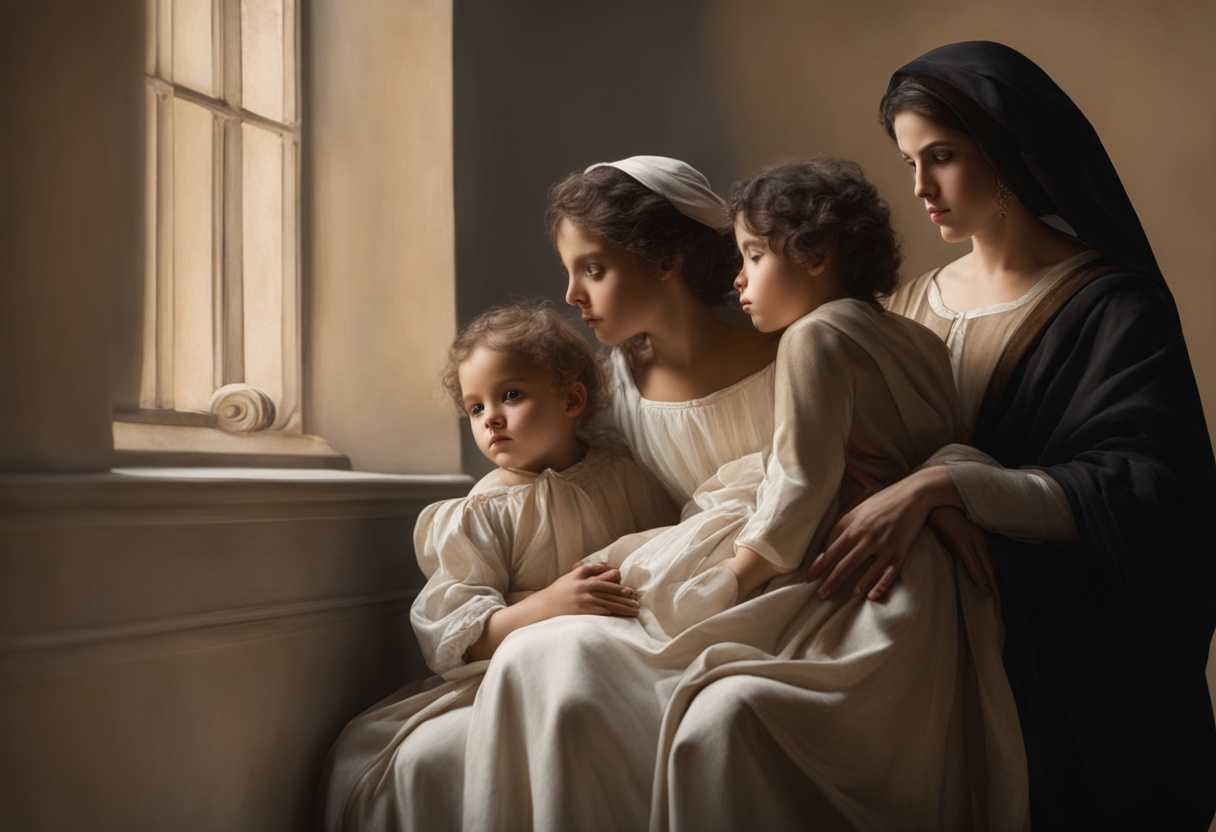
Setting the Scene for Exodus 22:21-24
In Exodus 22:21-24, the scene is set in the midst of the Israelites’ journey through the wilderness after their exodus from Egypt. The Israelites, led by Moses, have set up camp at the foot of Mount Sinai. The camp is bustling with activity as the people go about their daily tasks, with tents scattered across the desert landscape and the sound of livestock and children filling the air.
Among the crowd, Moses stands out, his face radiant from his encounters with God on the mountain. He is surrounded by a group of elders and leaders, discussing the laws and commandments that God has given them to govern their community. As they delve into the specifics of social justice and caring for the vulnerable, they emphasize the importance of showing kindness and compassion to strangers, widows, and orphans, as outlined in Exodus 22. In the background, the majestic Mount Sinai looms, a constant reminder of God’s presence and the covenant that He has made with His people. The scene is filled with a sense of reverence and awe, as the Israelites strive to live out their faith and follow God’s instructions in all aspects of their lives.
What is Exodus 22:21-24 about?
This verse underscores the importance of showing compassion and fairness towards those who are vulnerable and marginalized in society. God emphasizes the significance of extending kindness and justice not just to our own communities or familiar circles, but also to those who may be considered outsiders or disadvantaged. The verse reminds us to be inclusive, caring, and just in our interactions and treatment of others by highlighting groups such as foreigners, widows, and orphans. Identify who the “foreigners, widows, and orphans” might represent in our modern context. How can we apply the principles of kindness and justice towards those who may be experiencing hardships or discrimination? Reflect on the ways in which we can actively support and advocate for individuals who may be in need of compassion and assistance. Let us draw inspiration from this verse to strive for a world where we extend kindness and justice to all, regardless of their background or circumstances.
Understanding what Exodus 22:21-24 really means
Commentary Structure
- Introduction and Context
- Detailed Phrase Analysis
- Connecting Verses in the Bible
- Relevance Today
- Anecdotal Reflection
- God instructs the Israelites on how to treat foreigners, widows, and orphans in Exodus 22:21-24. This passage falls within a larger section of the Book of Exodus that deals with laws and guidelines for societal behaviors. Understanding this context is essential as it frames God’s expectations for the ethical treatment of vulnerable people in society.
Detailed Phrase Analysis
The passage begins with a compassionate directive: “Do not mistreat or oppress a foreigner.” This commandment emphasizes the importance of treating those who are not part of the native community with dignity and respect. Foreigners in ancient times often had no legal protection and were vulnerable to exploitation.
Furthermore, the verses stress, “Do not take advantage of the widow or the fatherless.” Widows and orphans, who lacked a male protector or provider, were particularly susceptible to hardship and injustice. The explicit mention of these groups showcases God’s concern for those marginalized in society.
God underscores the seriousness of these commands with a dire warning: “My anger will be aroused, and I will kill you with the sword; your wives will become widows and your children fatherless.” This warning conveys the gravity of violating these ethical obligations. The consequences are harsh and immediate, indicating God’s fierce commitment to justice for the oppressed.
Connecting Verses in the Bible
Other parts of the Bible echo these themes. The Israelites are reminded in Deuteronomy 10:19 to “love those who are foreigners,” further emphasizing that their mission includes treating outsiders kindly. Similarly, James 1:27 speaks of caring for the widow and orphan as pure and undefiled religion. These passages collectively emphasize a consistent biblical theme: compassion and justice for the vulnerable. Ethical treatment of marginalized groups remains incredibly pertinent in today’s world. From refugees fleeing wars to single-parent households struggling to make ends meet, the identities of the vulnerable may have expanded but the divine directive remains the same. How do we treat the “foreigners” in our communities? Are we extending love and justice to those who are most in need? A young family moved to a new country for safety and opportunity. Initially met with suspicion and isolation, they struggled until a local church decided to adopt them into their community. This act of kindness not only transformed the family’s life but also enriched the church, offering both parties a chance to witness God’s love in action. Exodus 22:21-24 serves as a powerful reminder of our duty to uphold justice and extend compassion, particularly to those who are most vulnerable. We are invited to critically evaluate our own actions and attitudes by examining these verses closely and reflecting on their broader biblical and contemporary relevance. How can we embody these divine directives in our daily lives? Through love, empathy, and actionable support, we can honor the spirit of these ancient commandments in a modern context.
How can we show hospitality and compassion to strangers?
The passage you mentioned talks about showing hospitality and compassion to strangers. One way we can do this is by welcoming strangers into our homes and treating them with kindness and respect. We, as individuals, can provide food, shelter, and companionship to those who are in need of assistance. We can make a positive impact on their lives and show them the love and care that they deserve by doing so.
Another way to demonstrate hospitality and compassion to strangers is by listening to their stories and offering support and understanding. We can show empathy towards their struggles and offer a helping hand in any way we can. We can create a sense of community and foster a spirit of generosity and compassion by taking the time to connect with strangers and showing genuine concern for their well-being. We can make a difference in their lives and contribute to building a more inclusive and caring society by embodying the values of hospitality and compassion towards strangers. Our actions can reflect the kindness and love that we are called to show towards others, regardless of their background or circumstances.
Application
Think about your daily grind—work, family, the constant hustle. Imagine if you were the one left out, the stranger, the one in need. Exodus 22:21-24 isn’t just words; it’s a call to action. Step up and show the compassion you’d want if roles were reversed. Be the beacon of hope in a world too often dark. Will you be the change someone desperately needs today?

Reverend Michael Johnson is an experienced Church Minister with a profound expertise in spirituality and guidance. With a serene presence and a compassionate heart, he has faithfully served his congregation for over 20 years, leading them on a spiritual journey towards inner peace and enlightenment. Reverend Johnson’s extensive knowledge of religious philosophies and profound understanding of human nature have made him a trusted confidant and mentor to many, as he seamlessly weaves his profound wisdom into life teachings. Reverend Johnson’s calming demeanor and empathetic nature continue to uplift and heal souls, nurturing a sense of unity and tranquility within his community.