
Exodus 22:22-25 is about protecting the vulnerable in society, emphasizing the importance of compassion and justice for the poor, widows, and orphans, and warning against exploiting them as they are under God’s care.
22 You shall not mistreat any widow or fatherless child.
23 If you do mistreat them, and they cry out to me, I will surely hear their cry,
24 and my wrath will burn, and I will kill you with the sword, and your wives shall become widows and your children fatherless.
25 “If you lend money to any of my people with you who is poor, you shall not be like a moneylender to him, and you shall not exact interest from him.
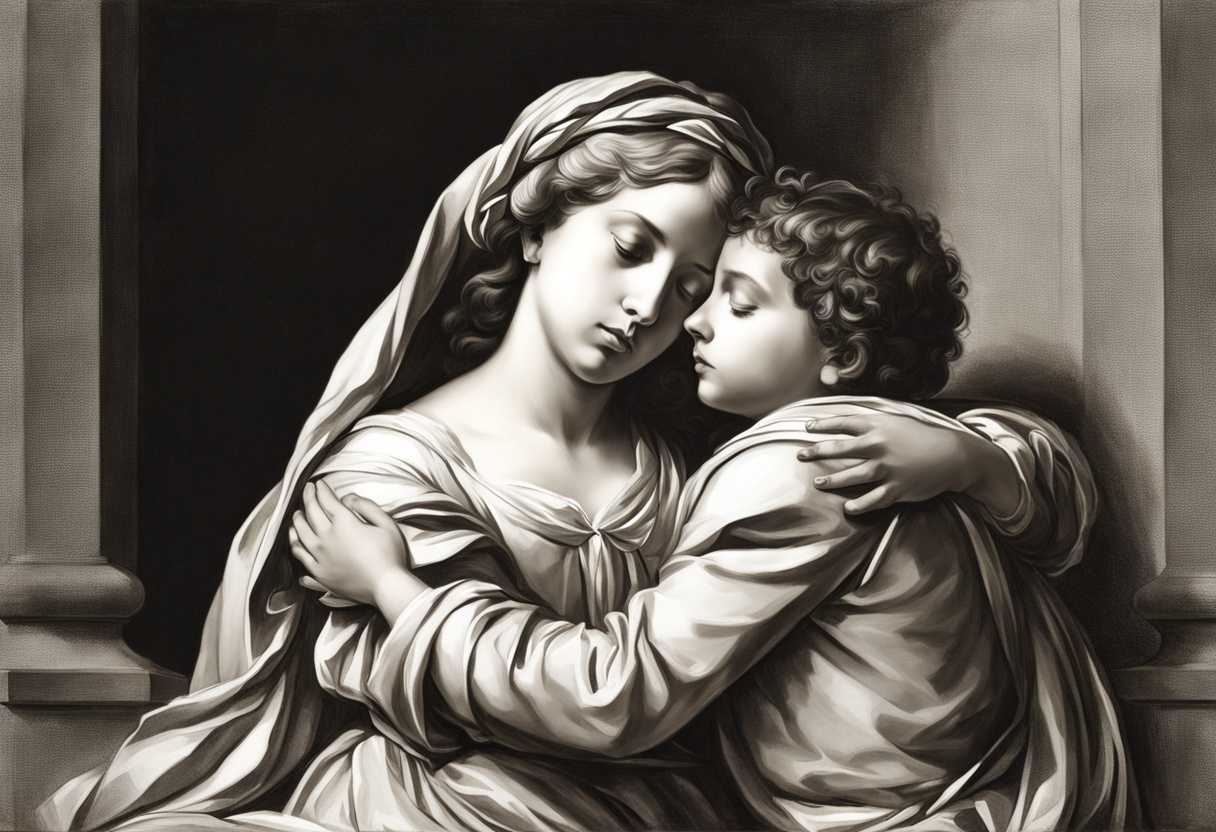
Setting the Scene for Exodus 22:22-25
In Exodus 22:22-25, the scene is set in the outskirts of a bustling marketplace in ancient Israel. The sun is setting, casting a warm golden glow over the dusty streets lined with vendors packing up their wares for the day. A group of widows, orphans, and foreigners have gathered near the city gates, seeking refuge and assistance. Among them is Miriam, a widowed mother of two young children, who has traveled from a distant village in search of help after her home was destroyed in a recent raid.
As the evening approaches, a group of local leaders, including Moses and Aaron, emerge from the city gates and notice the vulnerable group huddled together. Moved by compassion, they approach the widows, orphans, and foreigners, offering them food, shelter, and protection. The leaders remind the people of the laws given by God to protect the marginalized and vulnerable in society, as outlined in Exodus chapter 22. They ensure that justice is served and that the needy are cared for, embodying the principles of compassion and mercy that are central to their faith.
The scene is filled with a sense of community coming together to support those in need, reflecting the values of kindness and generosity that are at the heart of the biblical teachings. The dusty streets and fading light serve as a backdrop to this moment of compassion and solidarity, as the leaders and the marginalized come together in a display of unity and care for one another.
What is Exodus 22:22-25 about?
This verse carries a profound message of God’s compassion for those who are vulnerable and in need. It highlights the importance of caring for widows, orphans, and the poor, who are often marginalized and overlooked in society. It serves as a reminder of our duty to reach out and provide support to those who may not have a strong support system or resources to rely on.
Have you ever thought about how important it is to show compassion and care for those who are less fortunate than us? This verse encourages us to take a step back and reflect on our actions towards those who are in need of our help. It challenges us to think about how we can extend a helping hand to make a positive impact on the lives of others.
Let this verse serve as a guiding light, reminding us to always be mindful of the vulnerable members of our society and to actively seek ways to support and uplift them. We can contribute to creating a more just and compassionate world for all by embodying God’s compassion and extending our care to widows, orphans, and the poor.
Understanding what Exodus 22:22-25 really means
In the Covenant Code of the Old Testament, specifically in Exodus 22:22-25, we encounter a profound emphasis on social justice and the protection of vulnerable members of society. These verses highlight the importance of showing compassion and fairness towards individuals such as widows, orphans, and the poor, who are often marginalized and in need of support. The language used in these passages is striking, warning against taking advantage of the weak and promising severe consequences for those who mistreat them. This serves as a clear indication of God’s concern for the oppressed and His expectation for His people to uphold justice and kindness in their interactions with others.
The phrase “Do not take advantage of the widow or the fatherless” underscores the ethical imperative to treat vulnerable individuals with respect and care. It reminds us of the need to extend compassion and support to those who are in a position of need and vulnerability. The subsequent warning that God will hear the cries of the oppressed and respond with anger and judgment against those who oppress them reinforces the seriousness of this commandment. It demonstrates God’s unwavering commitment to justice and His active involvement in defending the rights of the marginalized.
Moreover, the instruction not to charge interest when lending money to the needy reflects a broader principle of generosity and fairness. By prohibiting the exploitation of the poor through financial transactions, this commandment promotes economic justice and equitable treatment for all members of society. It challenges us to consider our own attitudes towards wealth and poverty, urging us to prioritize compassion and solidarity over personal gain.
These teachings from Exodus 22:22-25 find resonance in other biblical passages that emphasize the importance of caring for the vulnerable and seeking justice. James 1:27, Isaiah 1:17, and Matthew 25:40 all echo the call to defend the oppressed, support the marginalized, and show kindness to those in need. They serve as reminders of our responsibility as believers to actively engage in acts of compassion and advocacy for those who are struggling.
In our contemporary context, these verses remain profoundly relevant, urging us to confront issues of inequality and exploitation in our communities. They compel us to examine our own behaviors and societal structures, challenging us to dismantle systems of oppression and work towards a more just and compassionate society. By heeding the call to defend the marginalized and support the vulnerable, we not only fulfill our moral obligations but also embody the values of love and justice that lie at the core of our faith.
Consider a modern-day scenario where a struggling single mother receives support from her local church, not just in terms of financial assistance but also through emotional and spiritual care. This tangible act of kindness not only addresses her immediate needs but also restores her sense of dignity and hope. Such examples illustrate how the principles outlined in Exodus 22:22-25 can be lived out today, demonstrating the enduring relevance of these ancient teachings in fostering a community of compassion and solidarity.
In conclusion, the verses from Exodus 22:22-25 serve as a poignant reminder of God’s call for justice and compassion in our interactions with others. They challenge us to embody these values in our daily lives, advocating for the rights of the marginalized and standing up against injustice. By aligning our actions with these principles, we not only honor God but also contribute to the creation of a more equitable and caring world for all.
How can we show compassion to the vulnerable?
One way to show compassion to the vulnerable, as indicated in the verse, is by not taking advantage of them. This means being fair and just in our dealings with those who are in a weaker or disadvantaged position. We can strive to uplift and support them rather than oppressing or exploiting them for our own gain.
Another way to show compassion to the vulnerable is by being mindful of their needs and offering assistance when possible. Whether it is through practical help or simply by showing empathy and understanding, we can make a difference in the lives of the vulnerable by extending a helping hand and showing kindness.
Furthermore, showing compassion to the vulnerable involves advocating for their rights and speaking up against injustice. We can help create a more inclusive and supportive community where everyone is treated with dignity and respect by standing up for those who are marginalized or overlooked.
Application
Fellow believers, in our modern world where we juggle multiple responsibilities like work and family, let us not forget our duty to show compassion and kindness, just as the scriptures guide us to do. Let’s extend a hand to those who are most in need, offering support and love to the widows, orphans, and foreigners in our communities. It is not just a suggestion; it is a command from God Himself that we cannot ignore. So, let’s actively seek out ways to make a difference and be a beacon of hope for those who are marginalized. Will you rise to the occasion and be the hands and feet of Christ in this broken world?

Reverend Michael Johnson is an experienced Church Minister with a profound expertise in spirituality and guidance. With a serene presence and a compassionate heart, he has faithfully served his congregation for over 20 years, leading them on a spiritual journey towards inner peace and enlightenment. Reverend Johnson’s extensive knowledge of religious philosophies and profound understanding of human nature have made him a trusted confidant and mentor to many, as he seamlessly weaves his profound wisdom into life teachings. Reverend Johnson’s calming demeanor and empathetic nature continue to uplift and heal souls, nurturing a sense of unity and tranquility within his community.