
Exodus 22:7-9 is about the responsibility for safeguarding someone else’s property when it is entrusted to you, teaching the importance of honesty and integrity in any transaction or agreement.
7 If a man gives to his neighbor money or goods to keep safe, and it is stolen from the man’s house, then, if the thief is found, he shall pay double.
8 If the thief is not found, the owner of the house shall come near to God to show whether or not he has put his hand to his neighbor’s property.
9 For every breach of trust, whether it is for an ox, for a donkey, for a sheep, for a cloak, or for any kind of lost thing, of which one says, ‘This is it,’ the case of both parties shall come before God. The one whom God condemns shall pay double to his neighbor.
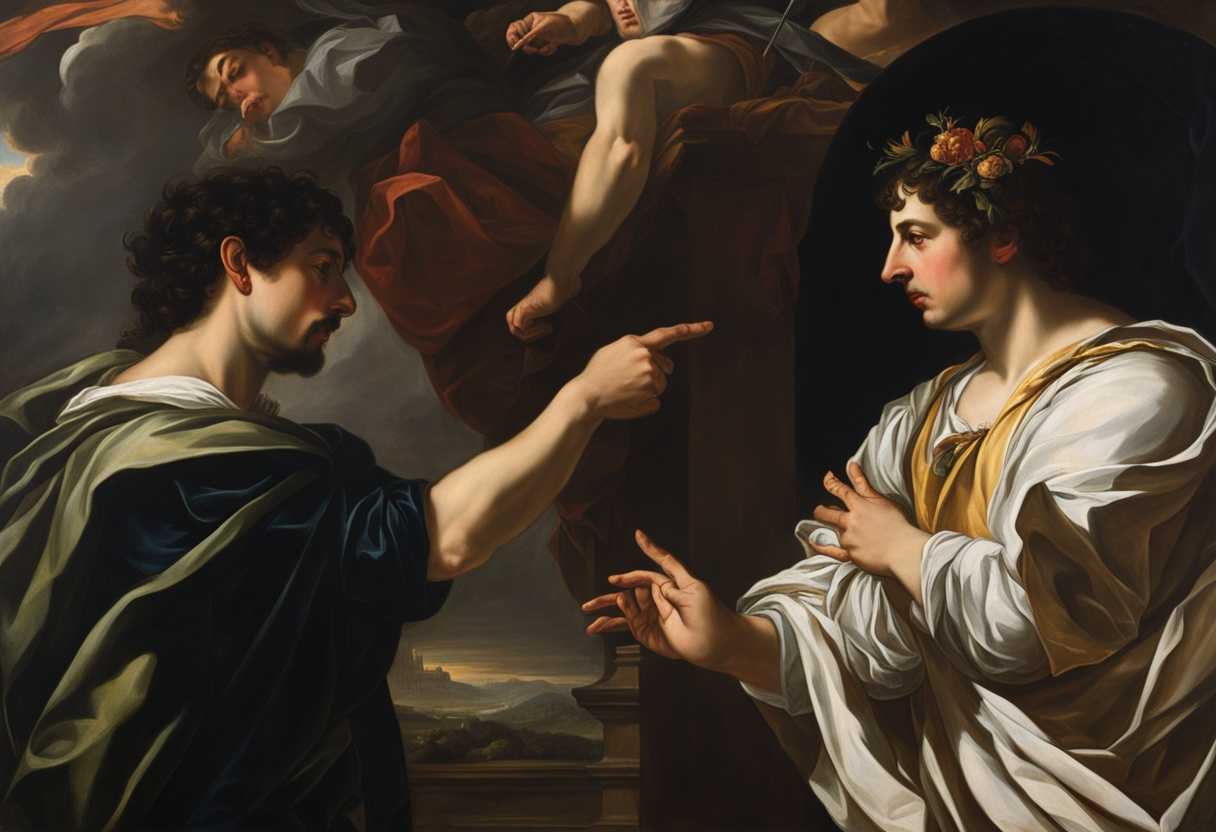
Setting the Scene for Exodus 22:7-9
In Exodus 22:7-9, we find ourselves in a bustling marketplace in ancient Israel. The scene is filled with merchants haggling over prices, the aroma of spices and livestock lingering in the air, and the sound of coins clinking as transactions take place. Among the crowd are two individuals, Reuben and Sarah, who have found themselves in a dispute over a borrowed item.
Reuben, a farmer from the nearby village, had borrowed a plow from Sarah, a widow who owned a small plot of land. However, the plow was damaged while in Reuben’s possession, and now Sarah is seeking compensation for the loss. Unable to come to an agreement on their own, they have brought their case before the local judge, who is mediating the dispute according to the laws outlined in Exodus 22. The judge, a respected elder in the community, listens attentively to both sides of the story before rendering a decision based on the principles of restitution laid out in the scripture. The onlookers watch intently as the judge delivers his verdict, ensuring that justice is served and peace is maintained in the marketplace.
What is Exodus 22:7-9 about?
God sets forth laws regarding various situations involving theft, borrowing, and damage to property in Exodus 22:7-9. These laws were designed to ensure justice and fairness among the Israelites. God understands the importance of maintaining ethical behavior and respect for one another’s belongings within a community. These laws also served to protect the vulnerable and provide guidelines for resolving disputes in a just manner.
Have you ever considered the impact of your actions on others’ property? These laws prompt us to reflect on our responsibilities in our interactions with others. It challenges us to be mindful of respecting what belongs to others and to act with honesty and integrity in all our dealings. We contribute to a harmonious society and demonstrate our reverence for God’s commandments by following these laws. Let us ponder upon these laws as we strive to be conscientious stewards of what has been entrusted to us. We should cultivate a culture of respect and accountability in our communities, honoring the principles of fairness and justice set forth by God. Through our actions, may we uphold the values of love, honesty, and empathy towards one another, creating a more compassionate and righteous society.
Understanding what Exodus 22:7-9 really means
In Exodus 22:7-9, part of the Mosaic Law given to the Israelites, we delve into a world where trust, responsibility, and justice were paramount in the community. These verses shed light on the intricate web of relationships and the importance of upholding one’s word and possessions in ancient Israelite society. The laws outlined were not merely rules but pillars that upheld social order and fairness among the people.
In understanding the context and background of these verses, we must grasp the significance of property and trust in the fabric of ancient Israelite culture. Trust was not just a concept but a currency that bound individuals together, and the responsibility that came with it was a sacred duty. These laws were not arbitrary but served as guidelines to ensure that trust was honored and justice prevailed in the community.
The key phrases in these verses carry profound meanings that resonate even in our modern world. The act of entrusting someone with our possessions or responsibilities is a reflection of our faith in them, and the repercussions of betrayal highlight the vulnerability and risks involved in such transactions. The principle of restitution, where the thief must pay back double if caught, underscores the importance of making amends and restoring what was lost, a principle that echoes through time in various legal systems.
Moving beyond the ancient context, these principles find relevance in our lives today. Trust and responsibility remain foundational in our relationships and communities, and justice and restitution are still crucial for maintaining harmony. The lessons from these verses can be applied to contemporary issues like fraud, theft, and the pursuit of justice through legal means.
In exploring related biblical passages such as Leviticus 6:1-7, Matthew 18:15-17, and Luke 19:8-9, we see a consistent theme of restitution, reconciliation, and repentance. These passages further reinforce the importance of resolving disputes, making amends, and seeking justice in all our dealings. The timeless nature of these principles transcends cultural and historical boundaries, speaking to the universal need for trust, responsibility, and justice in human interactions.
As we reflect on these principles, let us consider our own responsibilities and how we handle trust and justice in our lives. May we strive for integrity and fairness in all our dealings, seeking to uphold the values of trust and accountability that underpin a just and harmonious society. Let us be inspired by the wisdom of these ancient laws to navigate the complexities of our modern world with grace and righteousness.
How can we seek true justice and restitution?
True justice and restitution can be sought by recognizing the harm done and taking responsibility for one’s actions. It involves making amends and providing restitution to the one who has been wronged. In the context of Exodus 22:7-9, individuals must return what was stolen or damaged, acknowledge the offense, and make things right according to the law.
Seeking true justice and restitution also requires humility and a willingness to seek forgiveness from both the harmed party and from God. It is about not only rectifying the external consequences of the wrongdoing but also addressing the internal guilt and shame that may arise from one’s actions. By seeking reconciliation and restoration, we can achieve true justice in both the earthly and spiritual realms. Compassion, empathy, and a desire for resolution and harmony ultimately bring true justice and restitution. It requires a sincere effort to understand the impact of our actions on others and a commitment to making things right in a way that honors both the individual wronged and the divine principles of justice and fairness.
Application
Embrace the wisdom of Exodus 22:7-9 in your everyday life. Let integrity and honesty be your compass in work and family matters. Uphold justice and fairness with every decision you make. Will you vow to carry these values in your interactions and dealings with others?

Reverend Michael Johnson is an experienced Church Minister with a profound expertise in spirituality and guidance. With a serene presence and a compassionate heart, he has faithfully served his congregation for over 20 years, leading them on a spiritual journey towards inner peace and enlightenment. Reverend Johnson’s extensive knowledge of religious philosophies and profound understanding of human nature have made him a trusted confidant and mentor to many, as he seamlessly weaves his profound wisdom into life teachings. Reverend Johnson’s calming demeanor and empathetic nature continue to uplift and heal souls, nurturing a sense of unity and tranquility within his community.