
1 “Moreover, you shall make the tabernacle with ten curtains of fine twined linen and blue and purple and scarlet yarns; you shall make them with cherubim skillfully worked into them.
2 The length of each curtain shall be twenty-eight cubits, and the breadth of each curtain four cubits; all the curtains shall be the same size.
3 Five curtains shall be coupled to one another, and the other five curtains shall be coupled to one another.
4 And you shall make loops of blue on the edge of the outermost curtain in the first set.
5 And you shall make fifty loops on the edge of the curtain that is outermost in one set, and fifty loops on the edge of the curtain that is outermost in the second set.
6 And you shall make fifty clasps of gold, and couple the curtains one to the other with the clasps, so that the tabernacle may be a single whole.
7 And you shall make curtains of goats’ hair for a tent over the tabernacle; eleven curtains shall you make.
8 The length of each curtain shall be twenty-eight cubits, and the breadth of each curtain four cubits; all the curtains shall be the same size.
9 You shall couple five curtains by themselves, and six curtains by themselves, and the sixth curtain you shall double over at the front of the tent.
10 And you shall make fifty loops on the edge of the curtain that is outermost in one set, and fifty loops on the edge of the curtain that is outermost in the second set.
11 And you shall make fifty clasps of bronze, and put the clasps into the loops, and couple the tent together that it may be a single whole.
12 And the part that remains of the curtains of the tent, the half curtain that remains, shall hang over the back of the tabernacle.
13 And the breadth of the court on the front of the house was fifty cubits, and the breadth of the court on the front of the house was a hundred cubits.
14 And you shall make for the tent a covering of tanned rams’ skins and a covering of goatskins on top.
15 You shall make fifty loops on the edge of the curtain that is outermost in one set, and fifty loops on the edge of the curtain that is outermost in the second set.
16 Ten cubits shall be the length of a board, and a cubit and a half shall be the breadth of each board.
17 Then you shall make bars of acacia wood, five for the boards of one side of the tabernacle,
18 And you shall make the frames for the tabernacle of acacia wood, standing upright.
19 And you shall make forty bases of silver under the twenty frames, two bases under one frame for its two tenons, and two bases under the next frame for its two tenons.
20 And you shall make forty bases of silver under the twenty frames, two bases under one frame for its two tenons, and two bases under the next frame for its two tenons.
21 In the first row there shall be a curtain of blue and purple and scarlet yarns and fine twined linen, with cherubim skillfully worked into it.
22 There shall be two tenons for a frame, both tenons alike shall be made, for the one frame.
23 There shall be two tenons in one board, set in order opposite one another; thus shall you make for all the boards of the tabernacle.
24 And they shall be double at the two corners of the house.
25 And there shall be eight frames with their bases of silver, sixteen bases; two bases under one frame, and two bases under another frame.
26 And you shall make bars of acacia wood, five for the frames of the one side of the tabernacle,
27 And five bars for the frames of the other side of the tabernacle, and five bars for the frames of the side of the tabernacle at the rear westward.
28 and the middle bar in the center of the frames to pass through from end to end.
29 And you shall overlay the frames with gold and shall make their rings of gold for holders for the bars, and you shall overlay the bars with gold.
30 Then you shall erect the tabernacle according to the plan for it that you were shown on the mountain.
31 And you shall make a veil of blue and purple and scarlet yarns and fine twined linen. It shall be made with cherubim skillfully worked into it.
32 And you shall hang it on four pillars of acacia overlaid with gold, with hooks of gold, on four bases of silver.
33 And you shall hang the veil from the clasps, and bring the ark of the testimony in there within the veil. And the veil shall separate for you the Holy Place from the Most Holy.
34 You shall put the mercy seat on the ark of the testimony in the Most Holy Place.
35 And you shall set the table outside the veil, and the lampstand on the south side of the tabernacle opposite the table, and you shall put the table on the north side.
36 “You shall make a screen for the entrance of the tent, of blue and purple and scarlet yarns and fine twined linen, embroidered with needlework.”
37 And you shall make for the screen five pillars of acacia, and overlay them with gold. Their hooks shall be of gold, and you shall cast five bases of bronze for them.
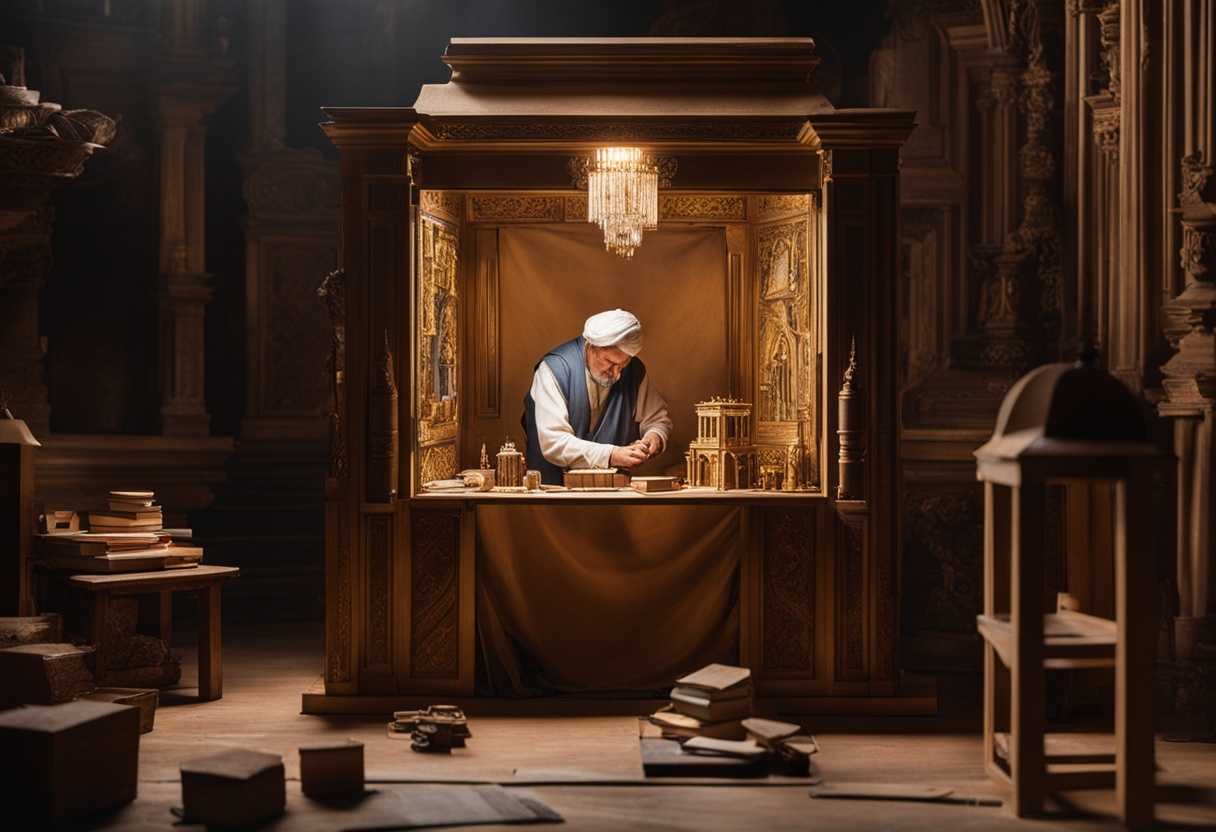
The True Meaning of Exodus 26
The Book of Exodus, the second book of the Bible, is believed to have been written by Moses, the great prophet and leader of the Israelites. In this chapter, we delve into the intricate details of the construction of the Tabernacle. We will witness the divine instructions given to Moses regarding the materials, dimensions, and arrangement of the Tabernacle as we explore this chapter. This sacred structure would not only serve as a place of worship but also as a symbol of God’s presence among His people. The chapter’s meticulous descriptions foreshadow the importance of the Tabernacle in the lives of the Israelites, as they would rely on its guidance and protection throughout their wanderings.
The Tabernacle’s construction is a testament to the Israelites’ obedience and their desire to honor God. This chapter also echoes the creation narrative in the Book of Genesis, where God meticulously designed the world. Similarly, the Tabernacle’s design reflects the attention to detail and the reverence for the divine that the Israelites were called to uphold. We are reminded of the importance of following God’s instructions and the blessings that come from faithful obedience as we study this chapter.
Exodus 26:1-6
The construction of the tabernacle, a portable sanctuary that the Israelites were instructed to build during their time in the wilderness, is the focus in Exodus 26:1-6. The construction of the tabernacle was a significant event as it signified the presence of God among His people and served as a place of worship and sacrifice.
The passage begins with God instructing Moses to make ten curtains of finely twisted linen with blue, purple, and scarlet yarn, and with cherubim woven into them. These curtains were to be intricately designed and joined together to create the walls of the tabernacle. This attention to detail and craftsmanship highlights the importance of giving our best to God and honoring Him through our work. It also emphasizes the idea of unity and coming together to create a place for God’s presence.
Additionally, the mention of the cherubim woven into the curtains is significant as cherubim are often associated with guarding the presence of God. This imagery not only adds a sense of reverence and holiness to the tabernacle but also serves as a reminder of God’s protection over His people. The inclusion of these celestial beings further reinforces the idea that the tabernacle was a sacred space where God’s presence dwelt.
Furthermore, the passage describes how these curtains were to be coupled together with loops and clasps of gold, emphasizing the importance of unity and cohesion in the community of believers. The Israelites were brought together as a unified people to worship and obey God, just as they linked the curtains to form the walls of the tabernacle. This unity among believers is a recurring theme in the Bible, highlighting the importance of fellowship and working together for the glory of God. This passage serves as a reminder of God’s desire to dwell among His people in a broader context. Throughout the Bible, we see God’s continual pursuit of a relationship with humanity, culminating in the ultimate expression of His presence through Jesus Christ. The tabernacle in Exodus foreshadows the coming of Christ, who would be the ultimate dwelling place of God among His people (John 1:14). These verses from Exodus 26 remind us of the importance of honoring God with our best work, creating spaces for His presence in our lives, and coming together in unity as believers. The intricate details of the tabernacle serve as a visual representation of the care and attention we should give to our worship and service to God.
Exodus 26:7-14
God gives intricate instructions to Moses regarding the construction of the tabernacle in Exodus 26:7-14. The tabernacle was a portable sanctuary where God would dwell among His people during their journey in the wilderness. These verses specifically address the curtains that would form the structure of the tabernacle.
The curtains were to be made of fine linen and blue, purple, and scarlet yarn, with cherubim skillfully woven into them. These detailed instructions demonstrate the importance of craftsmanship and attention to detail when it comes to serving the Lord. The use of the colors blue, purple, and scarlet symbolizes various aspects of God and His kingdom. Blue represents the heavenly realm and the divine nature of God, purple symbolizes royalty and majesty, and scarlet signifies sacrifice and redemption.
The inclusion of cherubim in the design of the curtains is significant as cherubim are often associated with the presence of God and His glory. This imagery serves as a reminder that God’s presence was to be at the center of the tabernacle and that His holiness was to be honored and revered by the Israelites.
These verses highlight the importance of obedience and reverence in the worship of God. The Israelites were called to follow God’s instructions precisely, demonstrating their faithfulness and commitment to Him. The tabernacle served as a focal point for the Israelites to come before God, offer sacrifices, and seek His presence. The Israelites were acknowledging God’s sovereignty and authority over their lives by adhering to His design for the tabernacle.
The construction of the tabernacle and the attention to detail in its design also point to the coming of Jesus Christ. “The Word became flesh and made his dwelling among us,” is stated in John 1:14.” This parallels the tabernacle, where God dwelt among His people. Jesus, as the ultimate sacrifice for sin, fulfilled the symbolism of the sacrificial system practiced in the tabernacle. Jesus provides a way for all believers to have a relationship with God, just as the tabernacle provided a way for the Israelites to come into God’s presence. Exodus 26:7-14 emphasizes the significance of the tabernacle as a place of worship and the importance of honoring God’s presence through obedience and reverence. The intricate details of the tabernacle’s construction point to deeper spiritual truths and foreshadow the coming of Jesus Christ as the ultimate sacrifice and the way to God. Believers today are called to submit to God’s will and seek His presence in their lives, just as the Israelites followed God’s instructions in constructing the tabernacle.
Exodus 26:15-25
The formation of the north side of the tabernacle is the focus in Exodus 26:15-25. Let’s break down the important sections of these verses for a deeper understanding:
-
“And thou shalt make boards for the tabernacle of shittim wood standing up.” (Exodus 26:15)
This verse introduces the construction of the boards that will form the structure of the tabernacle. These boards were made of acacia wood, a durable and long-lasting material. The upright boards symbolize stability and strength, illustrating the importance of a solid foundation in the worship of God. This attention to detail and quality in the construction of the tabernacle emphasizes the value of craftsmanship and dedication in serving the Lord. -
“Ten cubits shall be the length of a board, and a cubit and a half shall be the breadth of one board.” (Exodus 26:16)
The precise measurements given in this verse highlight the meticulous planning and design that went into the construction of the tabernacle. The attention to detail reflects the importance of offering our best to God in all aspects of our lives. It also underscores the order and symmetry that God values, emphasizing the significance of organization and structure in our worship and service. -
“Two tenons shall there be in one board, set in order one against another: thus shalt thou make for all the boards of the tabernacle.” (Exodus 26:17)
The mention of the tenons in the boards emphasizes the interconnectedness and unity of the tabernacle’s structure. Each board was designed to fit seamlessly with the others, symbolizing the unity and harmony that should characterize the community of believers. This unity reflects the body of Christ, where each member plays a unique role but works together for the greater purpose of serving God and spreading His truth. -
“And thou shalt make the boards for the tabernacle, twenty boards on the south side southward.” (Exodus 26:18)
The specific instructions regarding the placement of the boards on the south side demonstrate the importance of symmetry and balance in the tabernacle’s design. This symmetry symbolizes the order and harmony that God desires in His worship and among His people. God calls us to live lives that reflect His divine order and purpose, arranging the boards in a precise manner and working together in unity to fulfill His plan. -
“And thou shalt make forty sockets of silver under the twenty boards; two sockets under one board for his two tenons, and two sockets under another board for his two tenons.” (Exodus 26:19)
The mention of the sockets of silver highlights the support and foundation of the tabernacle. Silver is often symbolic of redemption in the Bible, pointing to the price paid for our salvation. The sockets, therefore, represent the solid foundation of redemption on which the tabernacle (representing the presence of God) stands. This serves as a reminder of the importance of Christ as the foundation of our faith and the ultimate support in our lives. These verses from Exodus 26 provide valuable insights into the meticulous planning and construction of the tabernacle, emphasizing the importance of offering our best to God, unity among believers, divine order and symmetry, and the foundational role of Christ in our faith. They remind us of the significance of craftsmanship, dedication, unity, and redemption in our worship and service to God, highlighting timeless principles that continue to guide believers in their journey of faith.
Exodus 26:26-30
A detailed description of how to construct the bars of acacia wood that are to be inserted into the rings on the sides of the tabernacle is seen in Exodus 26:26-30. The bars were to be overlaid with gold. These bars served the purpose of reinforcing and stabilizing the structure of the tabernacle. This seemingly mundane instruction reveals a deeper meaning about the importance of the structure and strength of the tabernacle, which symbolizes the presence of God among His people. The use of acacia wood, a durable and long-lasting wood, overlaid with gold, a precious metal, signifies the combination of strength and glory in the place where God’s presence dwells.
This emphasis on the strength and stability of the tabernacle carries a timeless message about the need for a firm foundation in our faith and spiritual life. Our faith is strengthened by a solid foundation in God’s Word and His promises, just as the bars were crucial for the stability of the tabernacle. Jesus speaks about the importance of building our lives on a strong foundation in Matthew 7:24-27, so that when the storms of life come, we will not be shaken.
Furthermore, the fact that the bars were to be inserted into the rings on the sides of the tabernacle highlights the interconnectedness and unity of the different components of the tabernacle. Each part had a specific function and played a crucial role in the overall structure. This can be compared to the body of Christ, as mentioned in 1 Corinthians 12:12-27, where Paul describes how each believer has a unique role to play in the body of Christ, working together in unity for the glory of God.
The use of materials like acacia wood and gold also points to the idea of offering our best to God. The tabernacle was a place where God’s glory dwelt, and therefore, it was built with the finest materials available. We are called to offer our best to God in terms of our time, resources, and talents. This reflects the principle found in Romans 12:1-2, where Paul urges believers to present their bodies as living sacrifices, holy and pleasing to God. The construction of the bars for the tabernacle in Exodus 26:26-30 may seem like a minor detail, but it carries significant symbolism and lessons for believers today. It reminds us of the importance of a strong foundation in our faith, the unity of the body of Christ, and the offering of our best to God. We are uniquely designed by God to fulfill His purposes in the world, just as every component of the tabernacle had a specific purpose and significance.
Exodus 26:31-35
The focus in Exodus 26:31-35 is on the veil that separates the Holy Place from the Most Holy Place in the tabernacle. This sacred curtain served as a barrier between the two sections of the tabernacle, symbolizing the separation between God and man due to sin. The veil was made of blue, purple, and scarlet yarn, and finely twisted linen, with cherubim woven into it. The inclusion of cherubim signifies the heavenly realm and the presence of God.
The significance of the veil and its intricate design holds spiritual lessons for believers. The fact that the veil was torn in two at the moment of Christ’s death on the cross (Matthew 27:51) symbolizes the removal of the barrier between God and humanity. Through Christ’s sacrifice, believers now have direct access to God, no longer needing an intermediary like a priest in the Old Testament. This act demonstrates the reconciliation and unity that believers can have with God through Jesus Christ. The colors of the veil – blue, purple, and scarlet – are significant in their own right. Blue represents heavenly revelation, purple symbolizes royalty and kingship, and scarlet denotes sacrifice and blood. These colors point to the attributes of Christ as the divine Son of God, the King of Kings, and the sacrificial Lamb whose blood cleanses believers from sin.
The intricacy of the veil’s design highlights the attention to detail that God values in His sanctuary. The craftsmanship and materials used underscore the importance of offering our best in service to God and in worship. Our lives should be dedicated to honoring God and reflecting His glory, just as the veil was a central component of the tabernacle. Exodus 26:31-35 describes the veil in the tabernacle, serving as a powerful reminder of the access believers now have to God through Christ’s sacrifice. It underscores the significance of Christ’s atonement, the attention to detail in worship, and the call for believers to offer their best in service to God. Reflecting on the symbolism of the veil reminds us of the privilege we have to approach God with confidence and gratitude through Jesus Christ.
Exodus 26:36-37
The text in Exodus 26:36-37 describes the making of a screen for the entrance of the tabernacle. Let’s break down these verses and delve into their significance in the broader context of Exodus and the Bible as a whole.
Starting with verse 36, it reads: “You shall make a screen for the entrance of the tent, of blue and purple and scarlet yarns and fine twined linen, embroidered with needlework.” The screen mentioned here served as a beautiful and ornate entrance to the tabernacle. The use of colors like blue, purple, and scarlet, along with fine linen, suggests a degree of opulence and splendor meant to reflect the holiness and majesty of God’s dwelling place among His people. These vibrant colors were often associated with royalty and divinity in ancient cultures, signifying the importance of the tabernacle as a sacred space where God’s presence resided.
The intricate embroidery mentioned in the verse also highlights the attention to detail and craftsmanship required in the construction of the tabernacle. This emphasis on artistic skill and beauty underscores the idea that worship and reverence for God should involve offerings of the highest quality, reflecting the best of what humanity has to offer in service to the Almighty. It reminds believers that when we present ourselves before God, we should do so with reverence, awe, and a desire to offer our very best in His honor.
Moving on to verse 37, it states: “You shall make for the screen five pillars of acacia, and overlay them with gold. Their hooks shall be of gold, and you shall cast five bases of bronze for them.” Here, the construction details of the entrance screen are further outlined. The pillars, made of acacia wood and overlaid with gold, symbolize strength, endurance, and purity. Acacia wood was known for its durability, and gold represented the preciousness and purity that was fitting for the sacred space of the tabernacle.
The use of gold for the hooks and bronze for the bases also carries symbolic significance. Gold, being a precious metal, was a symbol of divinity and holiness, while bronze, a strong and durable alloy, represented judgment and purification. Together, these materials underscore the importance of both the divine nature and the righteous judgment of God in the context of worship and the relationship between God and His people. The meticulous instructions for constructing the tabernacle and its components in Exodus serve as a powerful reminder of God’s presence among His people and the importance of approaching Him with reverence, obedience, and a willingness to offer our best in worship in the broader context of the Bible. The attention to detail in the construction of the tabernacle reflects the idea that God deserves our utmost care and devotion in all aspects of our lives.
Furthermore, the tabernacle itself foreshadows the coming of Christ, who would be the ultimate sacrifice and the true embodiment of God’s presence among His people. Christ came to dwell among humanity, offering salvation and reconciliation to all who believe in Him, just as the tabernacle was a place where God dwelled with the Israelites. The beauty and symbolism of the tabernacle ultimately point to the redemptive work of Christ and the eternal relationship God desires to have with His people.
After Exodus 26
The Lord had given Moses precise instructions for the construction of the tabernacle. The people worked diligently, following every detail to the letter. The tabernacle was now complete, a testament to their faith and obedience. A hush fell over the camp as the final touches were put in place. The people knew that this sacred space was not just a physical structure, but a dwelling place for the presence of the Almighty. They held their breath, anticipating the moment when the glory of the Lord would fill the tabernacle, sealing their covenant with Him.
This was not the end, but the beginning of a new chapter. For as the people gazed upon the completed tabernacle, they knew that their journey with the Lord was far from over. The road ahead would be filled with challenges, but with the Lord’s guidance and their unwavering faith, they would continue to walk in His ways.

Reverend Michael Johnson is an experienced Church Minister with a profound expertise in spirituality and guidance. With a serene presence and a compassionate heart, he has faithfully served his congregation for over 20 years, leading them on a spiritual journey towards inner peace and enlightenment. Reverend Johnson’s extensive knowledge of religious philosophies and profound understanding of human nature have made him a trusted confidant and mentor to many, as he seamlessly weaves his profound wisdom into life teachings. Reverend Johnson’s calming demeanor and empathetic nature continue to uplift and heal souls, nurturing a sense of unity and tranquility within his community.