
Exodus 27:28 is about the importance of attention to detail and proper care in maintaining the sacred vessels and instruments used in worship, reflecting the reverence and honor due to God in all aspects of worship.
28 And there you shall put it, and Aaron and his sons shall tend to it from evening to morning before the Lord. It shall be a statute forever to be observed throughout their generations by the people of Israel.
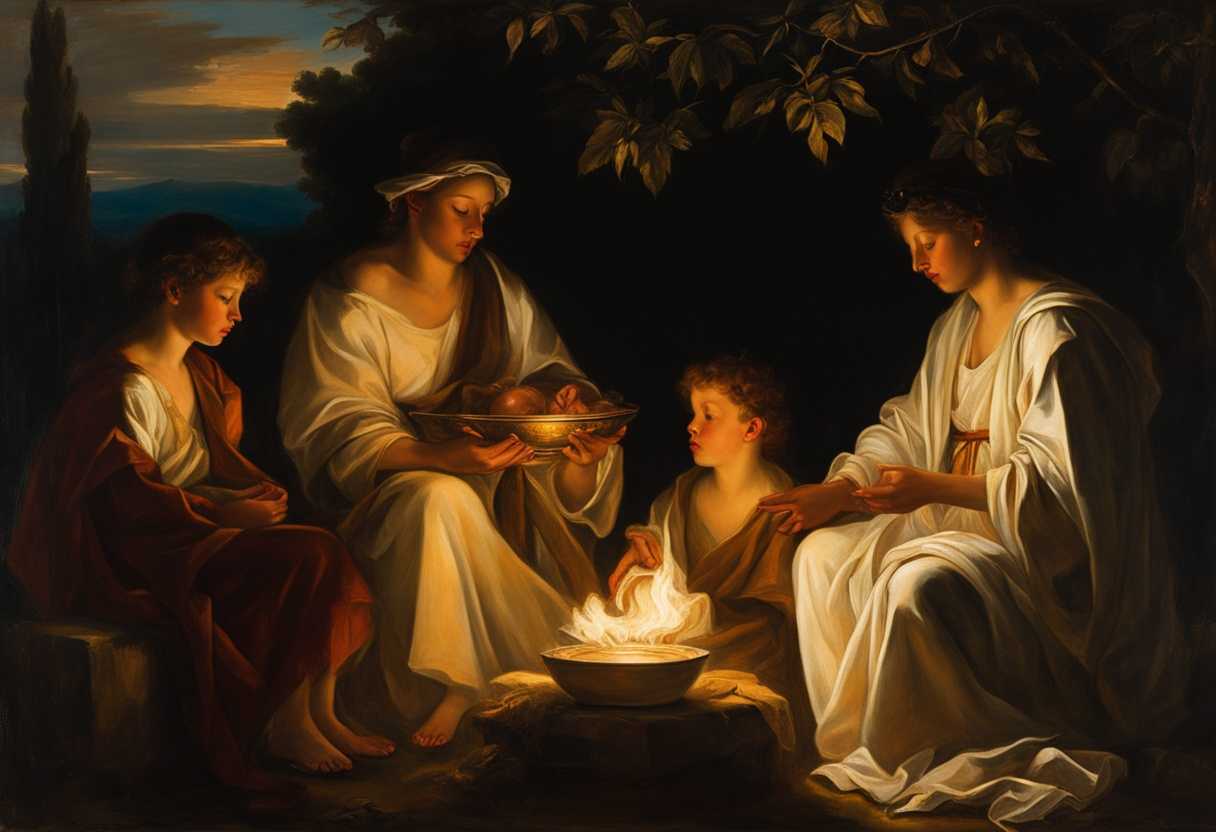
Setting the Scene for Exodus 27:28
In Exodus chapter 27, we find Moses on Mount Sinai receiving instructions from God on how to construct the altar of burnt offering for the tabernacle. The scene is set with Moses, a humble and faithful servant of God, standing in awe before the burning bush, where God is speaking to him. The atmosphere is charged with a sense of holiness and reverence as Moses listens intently to the divine instructions being imparted to him.
Surrounded by the rugged beauty of the mountain, Moses is joined by his brother Aaron, who will later become the high priest of Israel. Aaron is there to assist Moses in carrying out God’s commands and to serve as a mediator between the people and God. The two brothers, united in their devotion to God, work together to ensure that every detail of the tabernacle is constructed according to God’s specifications.
As the sun sets over the mountain, casting a warm glow over the scene, Moses and Aaron continue their work, their hearts filled with faith and determination to fulfill God’s will. The air is filled with the sound of hammers striking metal and the murmur of prayers as the two brothers labor diligently to prepare a sacred space where the Israelites can worship and commune with their Creator.
What is Exodus 27:28 about?
The instruction for priests to wear linen garments while serving in the tabernacle carries great significance in the ancient Hebrew context, as stated in Exodus 27:28. Linen was considered a symbol of purity, righteousness, and holiness in the Jewish culture. Requiring priests to wear linen garments was a way to visually demonstrate their consecration and separation for their sacred duties within the tabernacle. This act of dressing in linen served as a reminder to the priests of their responsibility to uphold the laws and commandments of God with utmost integrity and devotion.
Have you ever thought about the power of symbolism in religious practices? The concept of dressing in linen for the priests not only provided a physical representation of their spiritual purity but also served as a constant visual cue for the community about the sacredness of the tabernacle and the duties performed within it. It was a way to set the priests apart from the ordinary, emphasizing their unique role as mediators between the people and God. Next time you encounter a similar instruction in religious texts, consider the layers of meaning and symbolism behind such practices, and reflect on how they connect individuals to their faith and traditions.
Understanding what Exodus 27:28 really means
The Book of Exodus, the second book of the Bible, recounts the Israelites’ liberation from Egyptian slavery and their journey towards the Promised Land. In Chapter 27, we delve into the intricate instructions for constructing the altar of burnt offering and the tabernacle courtyard, highlighting the meticulous care given to elements of worship. One particular directive stands out in Exodus 27:28, emphasizing the significance of the poles remaining in the rings of the altar. This instruction underscores the themes of mobility and readiness in worship, signifying the need for the altar, a focal point of worship, to be prepared to move as directed by God.
Furthermore, the phrase “They shall not be removed from it” conveys a message of permanence and dedication. It symbolizes the unchanging nature of God and the importance of steadfastness in worship. This notion of unwavering commitment is echoed in related biblical passages such as Numbers 4:6, which discusses the transportation of holy items, reinforcing the idea of readiness to follow God’s guidance. Similarly, Hebrews 13:8 affirms the eternal consistency of Jesus Christ, emphasizing the enduring nature of faith and devotion.
The relevance of Exodus 27:28 extends to contemporary believers, urging us to embody spiritual readiness and permanence in faith. Just as the Israelites were called to be prepared to move with the altar, we are encouraged to be spiritually prepared to heed God’s call in our lives. The unchanging nature of the altar’s poles serves as a reminder for us to maintain unwavering faith amidst life’s uncertainties and changes.
To illustrate this concept, consider a cherished family heirloom like a grandfather’s watch, passed down through generations. Despite the passage of time and life’s transitions, the watch remains a constant symbol of heritage and continuity. Similarly, our faith should serve as an unchanging anchor, grounding us in dedication to God regardless of life’s fluctuations. Drawing a parallel to a soldier who keeps his gear ready for deployment, we are reminded of the importance of spiritual preparedness and dedication in fulfilling our mission to follow God faithfully.
In conclusion, Exodus 27:28 prompts us to reflect on our spiritual readiness and commitment to God. Are we prepared to respond to God’s guidance promptly, with unwavering faith akin to the steadfast poles of the altar? Let the unchanging nature of God inspire us to maintain a resolute and prepared faith, ready to embark on the journey wherever God may lead us.
How can we maintain our spiritual fire?
To maintain our spiritual fire, we should continuously seek a deeper connection with God through prayer, meditation, and studying His word. We can keep our spiritual flame alive and burning brightly by devoting daily time to communicate with Him and learn from His teachings. We must consistently nurture our relationship with God to keep our faith vibrant and strong, just as the priests were instructed to continually tend to the fire on the altar.
Additionally, we can stay connected to a community of believers who can provide support, encouragement, and accountability. Surrounding ourselves with fellow followers of Christ who can pray for us, lift us up, and walk alongside us on our spiritual journey can help prevent our flame from flickering out. Sharing our struggles, victories, and moments of spiritual growth with others can also inspire and motivate us to keep pressing on in our faith.
Lastly, serving others and living out our faith through acts of love and kindness can help fuel our spiritual fire. When we actively demonstrate God’s love to those around us through acts of service, generosity, and compassion, we not only glorify Him but also deepen our own spiritual walk. Keeping our focus on living out the principles of the faith we profess can help us remain passionate and dedicated to following God wholeheartedly.
Application
Let Exodus 27:28 fuel your generosity and inspire you to help those around you. Just as the Israelites brought their offerings to the tabernacle, consider how you can support your community today. Will you step up and make a difference for those in need, spreading love and kindness like never before? Your actions have the power to bring light to those in darkness. Will you rise to the challenge and be a beacon of hope for others?

Reverend Michael Johnson is an experienced Church Minister with a profound expertise in spirituality and guidance. With a serene presence and a compassionate heart, he has faithfully served his congregation for over 20 years, leading them on a spiritual journey towards inner peace and enlightenment. Reverend Johnson’s extensive knowledge of religious philosophies and profound understanding of human nature have made him a trusted confidant and mentor to many, as he seamlessly weaves his profound wisdom into life teachings. Reverend Johnson’s calming demeanor and empathetic nature continue to uplift and heal souls, nurturing a sense of unity and tranquility within his community.