
Exodus 28:1-3 is about the importance of being set apart and consecrated to serve God with special honor and reverence, indicating the significance of leadership roles within the priesthood.
1 “Then bring near to you Aaron your brother, and his sons with him, from among the people of Israel, to serve me as priests—Aaron and Aaron’s sons, Nadab and Abihu, Eleazar and Ithamar.”
2 And you shall make holy garments for Aaron your brother, for glory and for beauty.
3 You shall speak to all the skillful, whom I have filled with a spirit of skill, that they make Aaron’s garments to consecrate him for my priesthood.
Setting the Scene for Exodus 28:1-3
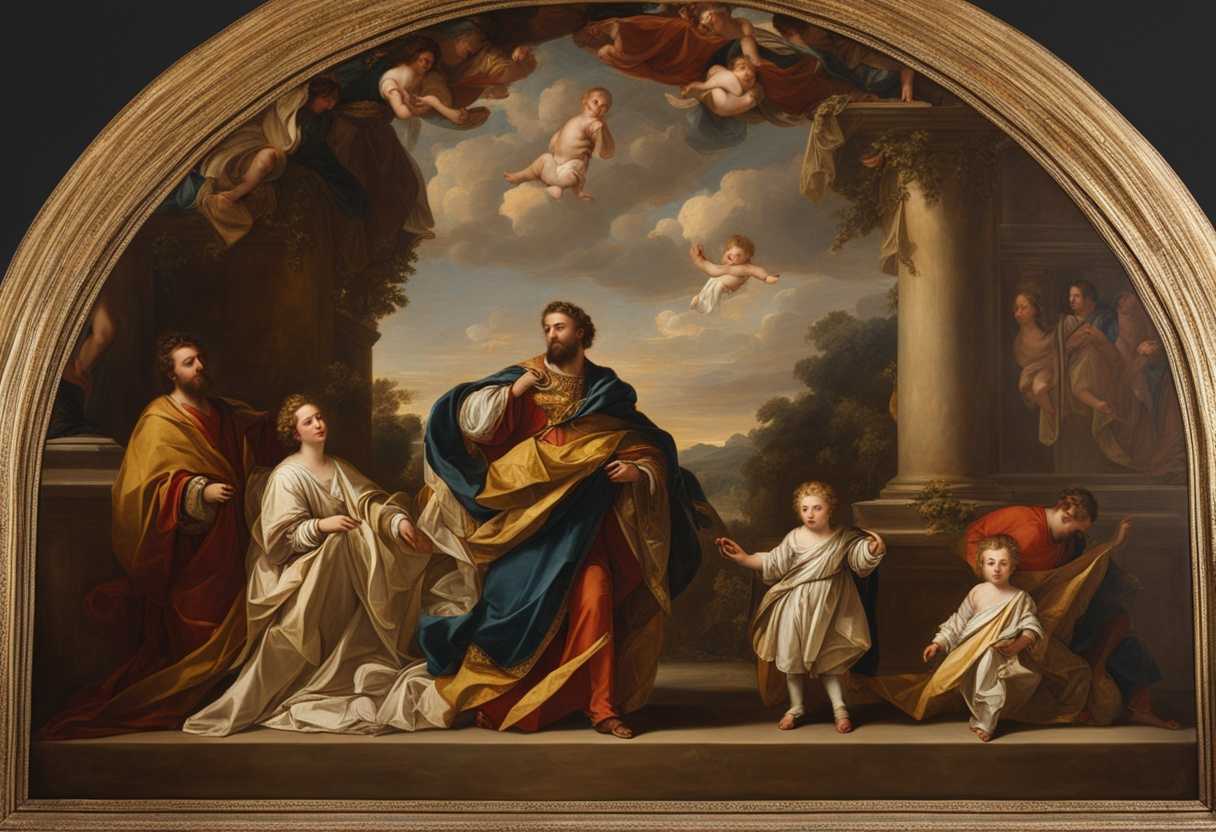
In Exodus 28:1-3, the scene is set in the wilderness at the foot of Mount Sinai. Moses, the great leader of the Israelites, has been instructed by God to bring his brother Aaron and Aaron’s sons, Nadab, Abihu, Eleazar, and Ithamar, to the tent of meeting. The tent of meeting is a sacred place where God would commune with Moses and where important ceremonies and rituals would take place.
As the group gathers at the tent of meeting, Moses begins to address Aaron and his sons. They are about to be consecrated as priests, set apart for the holy work of serving God and the people of Israel. The atmosphere is charged with anticipation and reverence as Moses explains the significance of their role and the responsibilities that come with it. The garments and accessories they are to wear are described in detail, each element carrying symbolic meaning and representing their sacred calling.
Surrounded by the vast desert landscape, with the majestic Mount Sinai looming in the background, Moses imparts God’s instructions to Aaron and his sons. The weight of this momentous occasion is palpable as the chosen priests prepare to embark on their divine mission, clad in the garments that signify their consecration and connection to the Almighty.
What is Exodus 28:1-3 about?
God’s selection and empowerment of individuals for specific roles within the community is powerfully demonstrated in this verse. God not only bestows honor upon Aaron and his sons by appointing them as priests but also sets them apart for a sacred purpose. This act of consecration highlights the significance of their role as intermediaries between God and the people, responsible for leading in worship, offering sacrifices, and upholding religious rituals.
Think about the gravity of being chosen by the divine to serve in such a crucial capacity. Imagine the weight of responsibility and the sense of awe that must have accompanied this appointment. We, as readers, can reflect on the idea that each of us has unique gifts and callings, designated by a higher power, to contribute to the betterment of our communities. This verse encourages us to consider the importance of honoring and respecting those who are entrusted with leadership roles and to recognize the sacredness of their service.
Understanding what Exodus 28:1-3 really means
The Book of Exodus takes us on a journey from the Israelites’ slavery in Egypt to their eventual arrival in the Promised Land, providing instructions for worship and the establishment of the priesthood along the way. In Exodus 28:1-3, we delve into the appointment of Aaron and his sons as priests and the detailed instructions for their sacred garments. The phrase “Bring near to you Aaron your brother, and his sons with him, from among the people of Israel, to serve me as priests” highlights the divine selection of Aaron and his sons for a special role in serving God, emphasizing the crucial role of the priesthood in mediating between God and the people.
The command to “make holy garments for Aaron your brother, for glory and for beauty” reveals that these garments are not merely functional but are designed to reflect the glory and beauty of God Himself. They serve as symbols of the sanctity and honor inherent in the priestly role. Furthermore, the directive to “speak to all the skillful, whom I have filled with a spirit of skill, that they make Aaron’s garments to consecrate him for my priesthood” underscores the collaboration between divine inspiration and human craftsmanship. The infusion of a “spirit of skill” by God enables the creation of garments that are truly worthy of the priesthood.
In exploring related biblical passages, we find further insights into the significance of the priesthood. Leviticus 8:1-13 provides additional details on the consecration of Aaron and his sons, shedding light on the priestly garments and rituals. Hebrews 4:14-16 draws a parallel between the Old Testament priesthood and Jesus as the great high priest in the New Testament. Additionally, 1 Peter 2:9 extends the concept of priesthood to all believers, declaring them a “royal priesthood.”
The relevance of Exodus 28:1-3 to people today is profound. It speaks to the call for spiritual leadership in various forms, reminding individuals of their roles in serving God and others. The emphasis on “glory and beauty” in the priestly garments serves as a reminder of the importance of reverence and excellence in our worship practices. Moreover, the passage acknowledges that our skills and talents are gifts from God, meant to be utilized for His glory.
Consider a community church preparing for a significant anniversary celebration, where each member contributes their unique skills to create a harmonious and beautiful event. This mirrors the collaborative effort described in Exodus 28:1-3, where God’s spirit of skill enables the creation of something sacred and magnificent. It illustrates how using our God-given talents for His purposes not only honors Him but also unites the community in a shared endeavor.
In conclusion, Exodus 28:1-3 teaches us about the sacredness of spiritual roles, the significance of beauty and reverence in worship, and the value of utilizing our God-given talents for His glory. It encourages us to view our contributions, regardless of their scale, as integral parts of a larger divine plan.
In service to God, how can we honor Him?
We can honor God by setting apart individuals who are called to serve Him in a particular manner by following the instructions given in Exodus 28:1-3. We can honor God by recognizing and supporting those who are dedicated to serving Him in leadership positions or other ministries, just as the priests were chosen and consecrated for their roles in the Old Testament. This demonstrates our respect for God’s design and order in His kingdom.
Additionally, honoring God can be achieved by having a reverent attitude towards those who are called to serve Him. When we show respect and appreciation for spiritual leaders and their commitment to God’s work, we are ultimately showing honor to God Himself. We fulfill the call to honor God in both our actions and attitudes by supporting and encouraging those who have been tasked with leading and guiding us in our faith journey. Recognizing His authority and sovereignty in our lives ultimately honors God. We fulfill our duty to honor and worship God by respecting and obeying those whom God has placed in positions of leadership and by supporting them in their service to Him. This not only strengthens our own faith but also builds up the body of believers as a whole, as we work together to fulfill the purposes God has for His people.
Application
Embrace the call to holiness in serving God, just like the priests in Exodus did. Let reverence and devotion guide your actions in both work and family. As you honor God in all that you do, reflect on how you can live out holiness today. How will you show reverence in your service to the Lord?

Reverend Michael Johnson is an experienced Church Minister with a profound expertise in spirituality and guidance. With a serene presence and a compassionate heart, he has faithfully served his congregation for over 20 years, leading them on a spiritual journey towards inner peace and enlightenment. Reverend Johnson’s extensive knowledge of religious philosophies and profound understanding of human nature have made him a trusted confidant and mentor to many, as he seamlessly weaves his profound wisdom into life teachings. Reverend Johnson’s calming demeanor and empathetic nature continue to uplift and heal souls, nurturing a sense of unity and tranquility within his community.