
Exodus 29:1-37 is about the detailed instructions provided by God to Moses for the consecration of Aaron and his sons as priests, emphasizing the importance of purification, anointing, and dedication for their service before the Lord.
29 “Now this is what you shall do to them to consecrate them, that they may serve me as priests. Take one bull of the herd and two rams without blemish,
2 And unleavened bread, unleavened cakes mixed with oil, and unleavened wafers smeared with oil. You shall make them of fine wheat flour.
3 You shall put them all in one basket and bring them in the basket and bring the bull and the two rams.
4 You shall bring Aaron and his sons to the entrance of the tent of meeting and wash them with water.
5 Then you shall take the garments, and put on Aaron the coat and the robe of the ephod, and the ephod, and the breastpiece, and gird him with the skillfully woven band of the ephod.
6 and you shall put the turban on his head and put the holy crown on the turban.
7 Then you shall take the anointing oil and pour it on his head and anoint him.
8 Then you shall bring his sons and put coats on them,
9 And you shall gird Aaron and his sons with sashes and bind caps on them. And the priesthood shall be theirs by a statute forever. Thus you shall ordain Aaron and his sons.
10 Then you shall bring the bull before the tent of meeting. Aaron and his sons shall lay their hands on the head of the bull.
11 Then you shall kill the bull before the Lord at the entrance of the tent of meeting,
12 And you shall take part of the blood of the bull and put it on the horns of the altar with your finger, and the rest of the blood you shall pour out at the base of the altar.
13 And you shall take all the fat that covers the entrails, and the long lobe of the liver, and the two kidneys with the fat that is on them, and burn them on the altar.
14 But the flesh of the bull and its skin and its dung you shall burn with fire outside the camp; it is a sin offering.
15 Then you shall take one of the rams, and Aaron and his sons shall lay their hands on the head of the ram,
16 and you shall burn the whole ram on the altar. It is a burnt offering to the LORD. It is a pleasing aroma, a food offering to the LORD.
17 Then you shall cut the ram into pieces, and wash its entrails and its legs, and put them with its pieces and its head,
18 And burn the whole ram on the altar. It is a burnt offering to the Lord. It is a pleasing aroma, a food offering to the Lord.
19 And you shall take the other ram, and Aaron and his sons shall lay their hands on the head of the ram,
20 Then you shall kill the ram and take part of its blood and put it on the tip of the right ear of Aaron and on the tips of the right ears of his sons, and on the thumbs of their right hands and on the great toes of their right feet, and throw the rest of the blood against the sides of the altar.
21 Then you shall take part of the blood that is on the altar, and of the anointing oil, and sprinkle it on Aaron and his garments, and on his sons and his sons’ garments with him. He and his garments shall be holy, and his sons and his sons’ garments with him.
22 “You shall also take the fat from the ram and the fat tail, and the fat that covers the entrails, and the long lobe of the liver and the two kidneys with the fat that is on them, and the right thigh (for it is a ram of ordination),”
23 And one loaf of bread and one cake of bread made with oil, and one wafer out of the basket of unleavened bread that is before the Lord.
24 and put all these in the hands of Aaron and in the hands of his sons and wave them as a wave offering before the Lord.
25 And you shall receive them from their hands and burn them on the altar as a burnt offering, a pleasing aroma before the Lord. It is a food offering to the Lord.
26 “You shall take the breast of the ram of Aaron’s ordination and wave it for a wave offering before the Lord, and it shall be your portion.
27 And you shall consecrate the breast of the wave offering that is waved and the thigh of the priests’ portion that is contributed from the ram of ordination, from what was Aaron’s and his sons’.
28 It shall be for Aaron and his sons as a perpetual due from the people of Israel, for it is a contribution. It shall be a contribution from the people of Israel from their peace offerings, their contribution to the Lord.
29 “The holy garments of Aaron shall be for his sons after him; they shall be anointed in them and ordained in them.
30 They shall eat those things with which atonement was made at their ordination and consecration, but an outsider shall not eat of them, because they are holy.
31 And you shall take the ram of ordination, and boil its flesh in a holy place.
32 And Aaron and his sons shall eat the flesh of the ram and the bread that is in the basket in the entrance of the tent of meeting.
33 They shall eat those things with which atonement was made at their ordination and consecration, but an outsider shall not eat of them, because they are holy.
34 If any of the flesh of the ordination offering or of the bread remains until the morning, then you shall burn the remainder with fire. It shall not be eaten, because it is holy.
35 “Thus you shall do to Aaron and to his sons, according to all that I have commanded you. Through seven days shall you ordain them,”
36 and every day you shall offer a bull as a sin offering for atonement. Also you shall purify the altar, when you make atonement for it, and shall anoint it to consecrate it.
37 Seven days you shall make atonement for the altar and consecrate it, and the altar shall be most holy. Whatever touches the altar shall become holy.
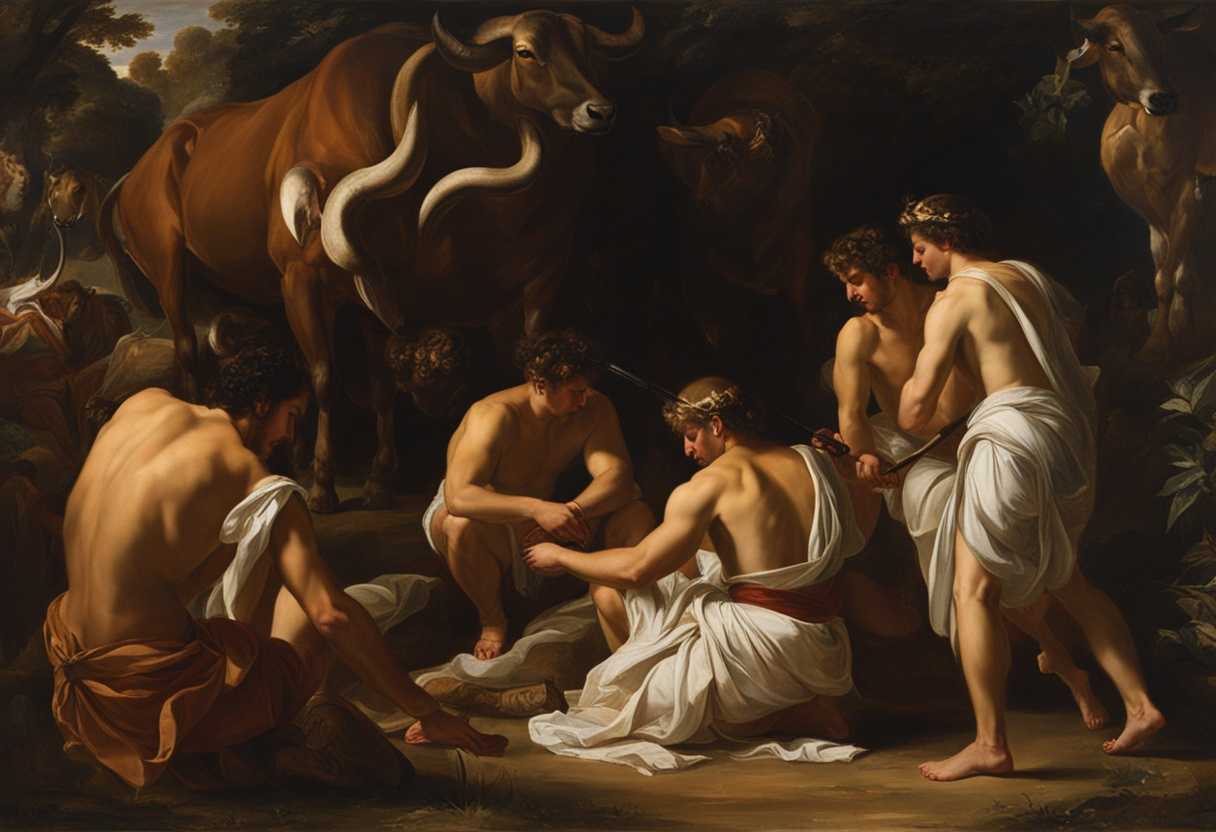
Setting the Scene for Exodus 29:1-37
The scene described in Exodus 29:1-37 takes place at the entrance of the Tabernacle in the wilderness. The Tabernacle is a sacred tent where the Israelites worship and offer sacrifices to God. The Tabernacle is surrounded by the vast desert landscape, with the golden rays of the sun shining down on the sandy ground.
In this scene, we see Moses, the great leader of the Israelites, along with his brother Aaron, the high priest, and Aaron’s sons. They have gathered at the entrance of the Tabernacle to consecrate Aaron and his sons for their priestly duties. The air is filled with the scent of burning incense and the sound of prayers being lifted up to the heavens.
Moses is dressed in his simple yet dignified robes, while Aaron and his sons are adorned in their priestly garments. The solemnity of the occasion is palpable as Moses anoints Aaron and his sons with oil, symbolizing their set-apartness for the service of God. The people of Israel watch from a distance, their hearts filled with reverence and awe at the sacred ceremony unfolding before them.
What is Exodus 29:1-37 about?
The verse gives us insight into the process of consecrating priests and making atonement for sin through the act of offering sacrifices. Priests were chosen individuals who were set apart for a holy purpose and were responsible for interceding on behalf of the people before God. The priests cleansed and prepared for their sacred duties by following specific rituals and procedures. The sacrifices and offerings served as a way to seek forgiveness for sins committed, both by the priests themselves and by the community as a whole.
Imagine the solemn atmosphere as the priests underwent the consecration process, knowing that they were dedicating themselves to serving God and the people. Picture the intricate details of the sacrifices being performed, each step carrying deep symbolism and significance. Reflect on the idea of atonement – the act of making things right and restoring harmony between humanity and the divine. How powerful is the concept of seeking forgiveness and reconciliation through these ancient rituals? We can also think about how these practices might relate to modern-day beliefs about forgiveness, repentance, and spiritual purification as we consider the historical context.
Understanding what Exodus 29:1-37 really means
Exodus 29:1-37 delves into the intricate process of consecrating Aaron and his sons as priests, shedding light on the meticulous rituals and sacrifices essential for sanctifying them for their divine calling. The passage underscores the significance of purity, dedication, and the sacred nature of the priestly role, setting a profound tone for the responsibilities entrusted to these chosen individuals. The phrase “Consecrate them, so they may serve me as priests” encapsulates the essence of setting apart Aaron and his sons for a higher purpose, emphasizing the crucial need for spiritual readiness and unwavering commitment to their sacred duties.
Within the text, the concept of atonement emerges prominently, showcasing the necessity for sacrifices aimed at reconciliation and purification before God. This theme underscores the vital importance of seeking forgiveness and maintaining a heart free from blemish in the pursuit of a close relationship with the Divine. Additionally, the symbolic use of anointing oil in the consecration process serves as a powerful representation of the Holy Spirit’s presence and the sanctification journey undertaken by the priests, highlighting the divine empowerment bestowed upon them for their holy tasks.
Drawing parallels with related biblical passages such as Leviticus 8:1-36, Hebrews 7:26-28, and 1 Peter 2:9, we gain a broader perspective on the significance of obedience, the ultimate High Priest in Jesus Christ, and the universal call to holiness for all believers. These connections deepen our understanding of the priestly consecration and its enduring relevance in guiding our spiritual lives today. Just as Aaron and his sons were set apart for a sacred purpose, contemporary believers are reminded of their call to lead lives that honor and glorify God, embodying the principles of dedication and purity exemplified in the consecration rituals.
Consider the story of Sarah, a young woman inspired to serve in her church, who diligently prepares herself through prayer, study, and mentorship. Sarah’s journey mirrors the consecration of the priests, illustrating the importance of dedication and readiness for any form of ministry or service. Through her example, we are reminded of the essential role of preparation and commitment in fulfilling our divine calling and serving God wholeheartedly.
In dissecting phrases like “Consecrate them, so they may serve me as priests,” “Atonement,” and “Anointing oil,” we unravel the layers of meaning embedded in the consecration ceremony, unveiling the depth of commitment required for those who dedicate their lives to God’s service. These elements not only enrich our understanding of the priestly consecration in Exodus but also prompt us to reflect on the timeless principles of purity, dedication, and spiritual empowerment that continue to shape our walk with God today.
How can we consecrate ourselves to serve God fully?
The passage from Exodus 29:1-37 describes the consecration ceremony of the priests in detail. This ceremony involved various rituals and offerings that were meant to set the priests apart for the service of God. To consecrate ourselves to serve God fully, we can learn from the dedication and commitment shown by the priests in this passage.
To consecrate ourselves to serve God fully, we can begin by recognizing the holiness and glory of God. We can dedicate ourselves to God through prayer, worship, and obedience to His Word, just as the priests were consecrated with specific rituals and offerings. We can fulfill our calling to serve God faithfully and wholeheartedly by setting ourselves apart for His service and offering our whole selves to Him. Consecrating ourselves to serve God fully ultimately requires us to totally surrender our lives to Him. This includes a willingness to obey His commands, to seek His will above our own, and to trust in His guidance and provision. We can consecrate ourselves to serve God with devotion, reverence, and a desire to honor Him in all that we do by following the example set by the priests in Exodus 29:1-37.
Application
Just like a dedicated employee follows a meticulous work routine, let’s dive into Exodus 29:1-37 with the same diligence. It’s a blueprint for consecrating our inner spiritual selves, shaping a path for unwavering commitment and obedience. Engrave these teachings in the core of your being, transforming yourself into a divine offering, cherished by the heavens above. Are you ready to embrace this profound calling and dedicate your soul to higher realms?

Reverend Michael Johnson is an experienced Church Minister with a profound expertise in spirituality and guidance. With a serene presence and a compassionate heart, he has faithfully served his congregation for over 20 years, leading them on a spiritual journey towards inner peace and enlightenment. Reverend Johnson’s extensive knowledge of religious philosophies and profound understanding of human nature have made him a trusted confidant and mentor to many, as he seamlessly weaves his profound wisdom into life teachings. Reverend Johnson’s calming demeanor and empathetic nature continue to uplift and heal souls, nurturing a sense of unity and tranquility within his community.