
Exodus 29:19-21 is about symbolizing the consecration and purification of Aaron and his sons as priests before the Lord through a ritual involving an offering of a ram, bread, and oil.
19 And you shall take the other ram, and Aaron and his sons shall lay their hands on the head of the ram,
20 Then you shall kill the ram and take part of its blood and put it on the tip of the right ear of Aaron and on the tips of the right ears of his sons, and on the thumbs of their right hands and on the great toes of their right feet, and throw the rest of the blood against the sides of the altar.
21 Then you shall take part of the blood that is on the altar, and of the anointing oil, and sprinkle it on Aaron and his garments, and on his sons and his sons’ garments with him. He and his garments shall be holy, and his sons and his sons’ garments with him.
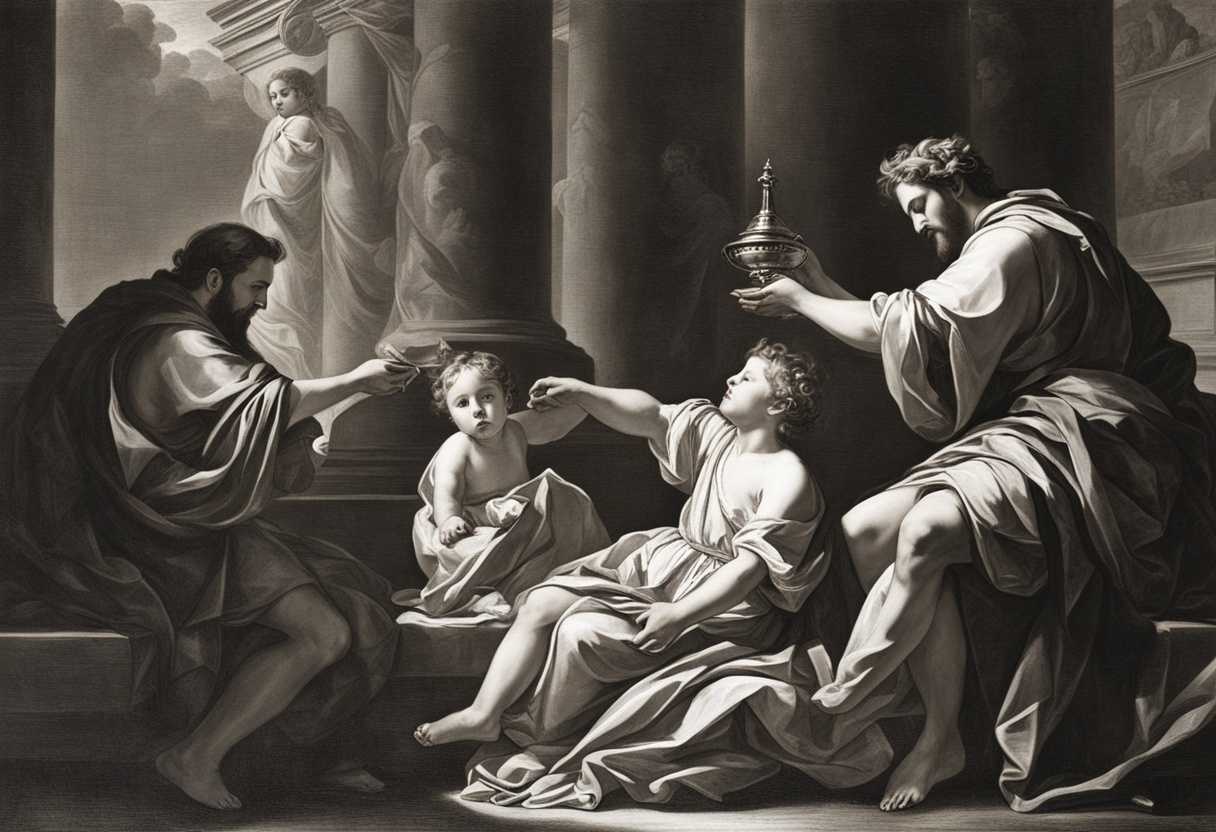
Setting the Scene for Exodus 29:19-21
In Exodus chapter 29, we find ourselves in the midst of the consecration ceremony for the priests of Israel. The scene is set in the courtyard of the Tabernacle, a sacred space filled with the aroma of burning incense and the sound of prayers being offered up to the Lord. The priests, Aaron and his sons, are standing before the altar dressed in their sacred garments, ready to be anointed for their holy service.
Moses, the great leader of the Israelites, is present, following the instructions given to him by God on Mount Sinai. He takes the anointing oil and sprinkles it on Aaron and his sons, symbolizing their set-apartness for the service of the Lord. The oil flows down their heads and beards, signifying the pouring out of God’s blessing and consecration upon them.
As the ceremony continues, the air is filled with a sense of reverence and awe as the people witness this sacred moment. The priests are being set apart to represent the people before God, to offer sacrifices on their behalf, and to intercede for them. The scene is a powerful reminder of the importance of consecration and the calling to serve God with reverence and holiness.
What is Exodus 29:19-21 about?
A powerful image of offering a ram as a burnt offering to consecrate priests for service to God is seen in this verse. It signifies a solemn and sacred moment where individuals are set apart for a specific purpose and mission in service to God. This act of consecration through sacrifice demonstrates a deep commitment and dedication to the divine calling that these priests will fulfill.
Have you ever thought about what it means to be set apart for a specific purpose in your own life? Just like these priests, we are all called to serve in various capacities, some of which may require sacrifice and dedication. The priests symbolically surrender themselves to God’s will and commit to a life of service and obedience by offering a burnt offering. This verse reminds us of the importance of consecrating ourselves to God, setting aside our own desires and ambitions to fulfill a higher calling. Let us reflect on this verse and ponder on what consecrating ourselves for service to God means. Are we willing to make sacrifices and offerings in order to fulfill the purpose and mission that God has for us? Just like the ram offered in this verse, let us present ourselves as living sacrifices, holy and pleasing to God, ready to serve Him wholeheartedly. May we be inspired by the dedication and commitment of these consecrated priests, as we seek to align our lives with God’s will and purpose for us.
Understanding what Exodus 29:19-21 really means
In Exodus 29:19-21, we delve into the intricate instructions given by God to Moses for the consecration of Aaron and his sons as priests. The ritual involves the sacrifice of a ram and the application of its blood on the priests, symbolizing their sanctification and dedication to God’s service. One key phrase instructs Aaron and his sons to lay their hands on the ram’s head, signifying the transfer of sin and the priests’ identification with the sacrifice. This act underscores the solemn nature of their role as mediators between God and the people.
Furthermore, the directive to apply the ram’s blood on specific body parts of the priests – the right ear, thumb, and big toe – holds symbolic significance. The blood on these body parts represents the sanctification of their hearing, actions, and walk, emphasizing the holistic consecration required for their priestly duties. Additionally, sprinkling blood against the altar on all sides signifies the purification and consecration of the altar, making it holy and acceptable for offerings to God. These actions highlight the meticulous care and reverence with which the priests and the sacred objects were to be set apart for divine service.
Drawing parallels to other biblical passages, such as Leviticus 8:22-24, we see a consistent emphasis on sanctification in priestly duties. The New Testament verse in Hebrews 9:22 underscores the essential role of blood in atonement and sanctification, while Romans 12:1 connects the Old Testament sacrificial system to the call for believers to offer their lives as living sacrifices to God. These connections bridge the gap between the Old and New Testaments, emphasizing the enduring principles of consecration and dedication to God’s service.
The relevance of these ancient rituals extends to contemporary believers, urging us to consider how we can consecrate our lives for God’s service. While we no longer engage in animal sacrifices, the underlying principle of living a life set apart for God remains timeless. We can apply the concept of sanctifying our ears to listen to God’s word, our hands to act according to His will, and our feet to walk in His ways in our daily lives. This practical application invites us to reflect on how we can honor God in all aspects of our existence.
To illustrate this concept, envision a modern-day scenario of a doctor dedicating their career to serving others in a mission hospital. Just as the priests were consecrated for their service, this doctor seeks God’s guidance in their work, asking for sanctification of their hands for healing, ears for listening to patients, and feet for going wherever they are needed. This anecdote brings to life the idea of consecrating our skills and professions for God’s glory, embodying the spirit of dedication and service exemplified in the priestly consecration rituals.
In conclusion, the detailed instructions in Exodus 29:19-21 prompt us to contemplate the seriousness and sacredness of serving God. They challenge us to consider how we can consecrate our actions, words, and paths, dedicating our lives to His service. Just as Aaron and his sons were set apart for the priestly ministry, may we also strive to live consecrated lives, offering ourselves wholly to God in worship and service.
How can we consecrate ourselves for God’s service?
We can consecrate ourselves for God’s service by following the instructions given in the verse. This includes taking some of the blood of the ram and putting it on the lobe of our right ear, on the thumb of our right hand, and on the big toe of our right foot. This symbolic act signifies dedicating our hearing, actions, and walk to God’s service. We surrender ourselves completely for His work and commit to live a life that is pleasing to Him. We can also consecrate ourselves by renewing our minds and hearts daily through prayer, studying the Scriptures, and seeking to align our thoughts and desires with God’s will, in addition to the physical actions described in the verse. This process involves continually surrendering our own selfish desires and submitting to God’s leading in all areas of our lives. We show our dedication and commitment to serving God faithfully by setting ourselves apart in this way and seeking to live holy and righteous lives. A continual lifestyle of worship, obedience, and devotion ultimately involves true consecration for God’s service. It goes beyond mere acts of ritual or tradition and requires a genuine desire to honor God and serve Him wholeheartedly. We can experience the joy and fulfillment of fulfilling our purpose in His kingdom and bringing glory to His name as we offer ourselves as living sacrifices, holy and pleasing to God.
Application
Let’s take a moment to reflect on the message from Exodus 29:19-21. Just like the priests dedicated themselves to serve God, we are also called to consecrate our lives for a higher purpose. It’s time to cleanse our hearts and minds, and offer ourselves completely to His divine plan. Are you ready to embrace this transformation, letting go of everything holding you back, and allow His guidance to shape our lives?

Reverend Michael Johnson is an experienced Church Minister with a profound expertise in spirituality and guidance. With a serene presence and a compassionate heart, he has faithfully served his congregation for over 20 years, leading them on a spiritual journey towards inner peace and enlightenment. Reverend Johnson’s extensive knowledge of religious philosophies and profound understanding of human nature have made him a trusted confidant and mentor to many, as he seamlessly weaves his profound wisdom into life teachings. Reverend Johnson’s calming demeanor and empathetic nature continue to uplift and heal souls, nurturing a sense of unity and tranquility within his community.