
Exodus 29:29 is about setting aside the consecrated garments of Aaron and his sons to serve as a perpetual ordinance for the Israelites, symbolizing their identity and role as priests in the service of the Lord.
29 “The holy garments of Aaron shall be for his sons after him; they shall be anointed in them and ordained in them.
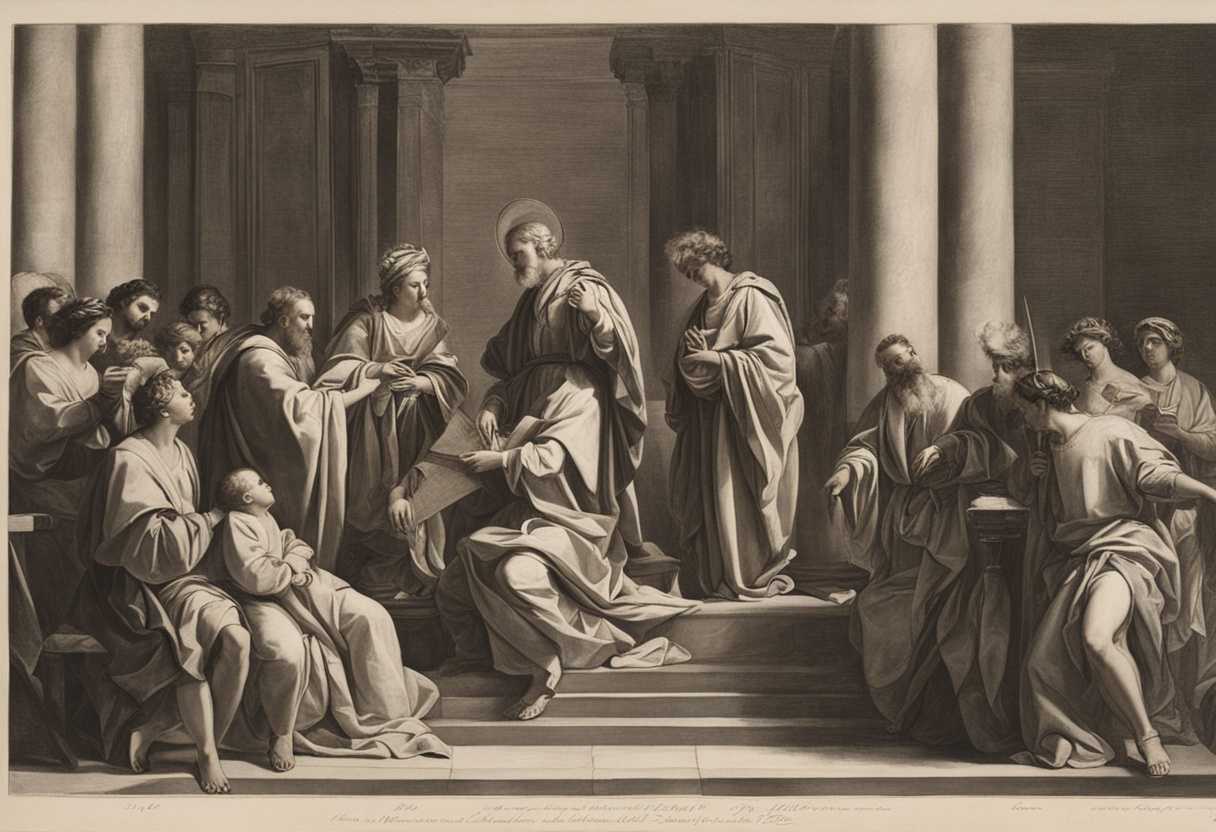
Setting the Scene for Exodus 29:29
In Exodus 29, we find ourselves in the midst of the consecration ceremony for Aaron and his sons, who are being anointed as priests by Moses. The scene is set in the courtyard of the Tabernacle, a sacred and solemn space filled with the aroma of burning incense and the sound of prayers being offered up to the Lord. The courtyard is bustling with activity as priests and Levites move about, preparing for the anointing ceremony.
Aaron, the high priest, stands at the center of the courtyard, dressed in his sacred garments and ready to receive the anointing oil. His sons, Eleazar and Ithamar, stand beside him, their faces filled with a mixture of awe and anticipation. Moses, the great leader of the Israelites, stands before them, holding the horn of consecration oil in his hands.
As the ceremony begins, Moses pours the oil over Aaron’s head, anointing him as the high priest of Israel. The oil drips down Aaron’s beard and onto his sacred garments, symbolizing the pouring out of God’s blessings and favor upon him and his descendants. The onlookers watch in reverent silence, knowing that this moment marks the beginning of a new chapter in the history of their people, as Aaron and his sons take on the sacred duty of serving as intermediaries between God and the Israelites.
What is Exodus 29:29 about?
The consecration of Aaron and his sons as priests in this verse signifies a sacred moment of dedication and empowerment. By bestowing the title of priest upon them, we entrust them with the important duty of serving as intermediaries between the people and God. The act of consecration is a symbolic gesture that signifies their separation from the ordinary and their commitment to a higher spiritual calling.
The passing down of their garments holds significant meaning as well. These garments are not just physical clothing, but symbols of their authority and connection to their priestly duties. Passing down these garments from one generation to the next establishes a sense of continuity and tradition, ensuring that the sacred responsibilities and rituals are upheld and preserved over time. It also serves as a reminder of the lineage and legacy that Aaron and his sons are a part of, connecting them to the long line of priests who have come before them. We reflect on this verse, pondering the weight of responsibility that comes with serving as a priest and the importance of passing down traditions and teachings to future generations. How can we carry on these sacred duties and uphold the values of our faith with the same reverence and dedication as Aaron and his sons? Let us consider the significance of consecration and the passing down of garments as symbols of our commitment to our spiritual calling and the preservation of our sacred traditions.
Understanding what Exodus 29:29 really means
Exodus 29:29 delves into the realm of sacred garments worn by Aaron, the high priest, shedding light on their profound significance in the consecration of future priests. This verse finds its place within a broader narrative detailing the ordination of priests and the sanctity attached to their attire.
In exploring the context of Exodus 29:29, we encounter cross-references like Leviticus 8:30, which underscores the pivotal role of garments in the consecration process of Aaron and his sons. Hebrews 4:14-16 draws a parallel between Jesus as our high priest and the Old Testament priesthood, emphasizing the enduring importance of this ancient tradition. Additionally, 1 Peter 2:9 bridges the gap between the Old and New Testaments, highlighting the priesthood of all believers and the concept of a royal priesthood.
The relevance of sacred garments extends beyond ancient rituals, serving as a metaphor for the righteousness and purity expected of those who dedicate themselves to God’s service. This notion prompts us to consider our spiritual preparedness and consecration for the roles we undertake within our faith communities. To illustrate, envision a firefighter donning their uniform before entering a blazing building; similarly, the priests’ sacred garments symbolize their readiness and unwavering commitment to serving God.
Delving into meaningful phrases within Exodus 29:29, we encounter terms like “holy garments,” which transcend mere clothing to embody spiritual significance, signifying the holiness required to approach the divine presence. The phrase “for his sons after him” underscores the continuity of the priesthood, emphasizing the passing down of spiritual responsibilities and traditions. Furthermore, “to be anointed in them and ordained in them” highlights the anointing and ordination as acts of consecration, marking a sacred separation for divine service within the priestly role.
In conclusion, Exodus 29:29 stands as a poignant reminder of the sanctity and weight of spiritual leadership, urging us to contemplate our spiritual readiness and the legacy we forge for future generations within our faith communities. By delving into the depths of this verse, we gain a richer understanding of the continuity and sacredness inherent in our spiritual duties, fostering a deeper appreciation for the profound responsibilities that come with serving God.
What spiritual lessons can we learn from hidden sacrifices?
Hidden sacrifices can teach us about the importance of humility and selflessness in our relationship with God. We should strive to perform acts of devotion and kindness without seeking recognition or praise from others, just as the sacrifices mentioned in Exodus 29:29 were to be offered in a way that was not visible or publicly acknowledged. This teaches us to focus on the pure intention behind our actions rather than the external validation we may receive.
Furthermore, hidden sacrifices remind us that God sees and appreciates the sacrifices we make in secret. Even when our acts of worship or service go unnoticed by others, we can take comfort in knowing that God sees into the depths of our hearts and values our genuine efforts to serve Him. This can encourage us to continue serving diligently, knowing that our faithfulness is seen and recognized by the One who truly matters.
Lastly, hidden sacrifices can also teach us about the discipline of obedience and trust in God. We are called to follow God’s will and guidance in our lives, even when it may involve unseen sacrifices or challenges, just as the Israelites were instructed to offer these sacrifices according to God’s specific commands. We grow in our spiritual maturity and deepen our relationship with God by submitting to His will in obedience and trust.
Application
Reflect on your path and see the importance of dedicating yourself to your higher purpose. Embrace the opportunity to commit fully to your goals and serve passionately. Will you seize the chance to set yourself apart for the work ahead?

Reverend Michael Johnson is an experienced Church Minister with a profound expertise in spirituality and guidance. With a serene presence and a compassionate heart, he has faithfully served his congregation for over 20 years, leading them on a spiritual journey towards inner peace and enlightenment. Reverend Johnson’s extensive knowledge of religious philosophies and profound understanding of human nature have made him a trusted confidant and mentor to many, as he seamlessly weaves his profound wisdom into life teachings. Reverend Johnson’s calming demeanor and empathetic nature continue to uplift and heal souls, nurturing a sense of unity and tranquility within his community.