
Exodus 2:1-3 is about the birth and miraculous protection of Moses, symbolizing God’s providence and purpose in his plan to deliver the Israelites from bondage in Egypt.
1 Now a man from the house of Levi went and took as his wife a Levite woman.
2 The woman conceived and bore a son, and when she saw that he was a fine child, she hid him three months.
3 When she could hide him no longer, she took for him a basket made of bulrushes and daubed it with bitumen and pitch. She put the child in it and placed it among the reeds by the river bank.
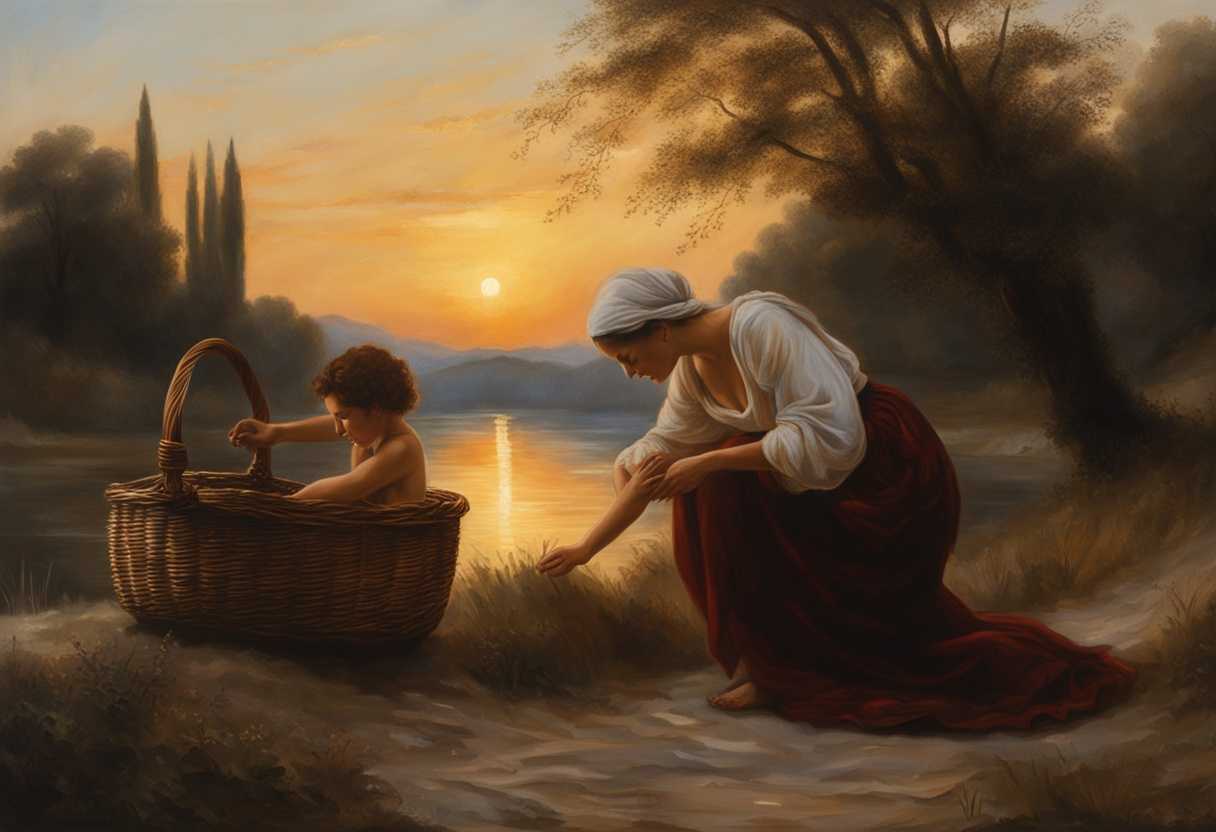
Setting the Scene for Exodus 2:1-3
In Exodus chapter 2, we find ourselves in the land of Egypt during a time when the Israelites were living as slaves under the oppressive rule of Pharaoh. The scene opens with a Hebrew woman named Jochebed, who had given birth to a baby boy. Fearing for her son’s life due to Pharaoh’s decree to kill all Hebrew male babies, she takes a bold and risky step to protect him.
Jochebed carefully weaves a basket out of reeds and waterproofs it with tar and pitch. With a heavy heart, she places her precious baby in the basket and sets it afloat on the Nile River, trusting in God’s protection. Her daughter, Miriam, watches from a distance, ensuring the basket’s safe journey down the river.
As the basket floats along the riverbank, it catches the attention of Pharaoh’s daughter, who has come to bathe in the river. Intrigued by the crying baby she finds inside, she is moved with compassion and decides to rescue him, unknowingly fulfilling God’s plan to save the child who would grow up to be Moses, the great leader of the Israelites. The scene is filled with tension, faith, and divine intervention, showcasing the power of God’s providence even in the midst of adversity.
What is Exodus 2:1-3 about?
We witness the miraculous birth of Moses, a pivotal figure in the history of the Israelites in this powerful passage from the book of Exodus. Born at a time when Pharaoh had decreed that all Hebrew male babies should be killed, Moses’ parents took a tremendous risk to save their son. They showed incredible bravery and faith by building a basket and placing Moses in it, then sending him down the Nile River, trusting in God’s plan for his safety. Parents have a profound love for their children and are willing to go to great lengths to protect them as we reflect on this verse. We also see the hand of God at work behind the scenes, orchestrating events to fulfill His divine purpose. This passage challenges us to consider how we trust in God’s plan for our lives, even when faced with seemingly insurmountable challenges and dangers. It asks us to reflect on our own moments of fear and uncertainty, and how we can turn to God for guidance and protection, just like Moses’ parents did. How would you respond if faced with a similarly difficult situation? What does this story teach us about the power of faith and God’s providence in our lives?
Understanding what Exodus 2:1-3 really means
The Book of Exodus, the second book of the Bible, unfolds the narrative of the Israelites’ exodus from Egypt, a pivotal event in their history. In these opening verses, we are introduced to the birth of Moses, a central figure in Israelite history. The backdrop is a time when Pharaoh had decreed the death of all Hebrew baby boys, setting the stage for a tale of courage and divine intervention.
“A man of the house of Levi went and took as wife a daughter of Levi,” a seemingly simple statement, holds profound significance. This union within the tribe of Levi, later designated for priestly duties, underscores the importance of lineage and heritage in biblical narratives. The birth of a son to this couple marks the beginning of a remarkable journey that would lead to the deliverance of the Israelites from bondage.
The mother’s actions speak volumes about maternal instinct and faith as she recognizes the beauty and potential of her child. Hiding him for three months showcases her unwavering courage and determination to protect him despite the perilous circumstances. Placing the child in an ark of bulrushes, coated with asphalt and pitch, and setting it among the reeds by the river’s bank, symbolizes a profound act of faith and trust in God’s providence, echoing themes of salvation and divine protection.
Hebrews 11:23 and Psalm 139:13-14 further illuminate the faith and value attributed to Moses’ birth. These passages emphasize the unwavering trust of Moses’ parents and the intrinsic worth and beauty of every human life, resonating with the mother’s recognition of her child’s value. The story transcends time, offering a poignant reminder of the sanctity of life and the lengths to which parents will go to safeguard their children.
In a world fraught with challenges and dangers, the narrative of Moses’ birth serves as a beacon of hope, urging readers to place their trust in God’s plan even amidst adversity. It underscores the universal themes of faith, courage, and the enduring love that compels parents to protect and nurture their offspring. Just as Moses’ mother defied Pharaoh’s decree out of love and faith, modern-day examples abound of individuals who exhibit similar sacrificial love for their children in the face of adversity.
The account of Moses’ birth transcends mere historical retelling; it embodies timeless lessons of faith, courage, and the sanctity of life. It prompts reflection on the divine providence that guides human affairs and the inherent worth found in every individual, regardless of their circumstances. As we ponder this ancient tale, we are encouraged to trust in God’s plan and to cherish the potential and dignity inherent in every human life.
How can we trust God’s timing in our lives?
We can trust God’s timing in our lives by recognizing that God has a plan for each of us, and His timing is perfect. God orchestrated the events in the lives of Moses and his family in the book of Exodus, just as He is also in control of our own lives. When we trust in God’s timing, we can rest assured that He knows what is best for us and will bring things to fruition at the perfect moment.
It is important to remember that God’s timing may not align with our own desires or expectations. Despite any delays or obstacles we may face, we can have faith that God’s plan is unfolding exactly as it should. Our role is to remain patient, trusting that God’s timing is always for our ultimate good, even if we cannot see the bigger picture in the present moment. We can experience peace and contentment by surrendering to God’s timing and submitting to His will, knowing that He is in control of every aspect of our lives.
Application
Just like Moses’ mother boldly defied Pharaoh to protect her son, are you ready to take brave steps in your own life? Trust in God’s plan like she did, even when faced with obstacles. Be resilient, like the reeds that sway but never break in the river. Can you be as fearless as Moses’ mother, entrusting your path to the divine flow of life?

Reverend Michael Johnson is an experienced Church Minister with a profound expertise in spirituality and guidance. With a serene presence and a compassionate heart, he has faithfully served his congregation for over 20 years, leading them on a spiritual journey towards inner peace and enlightenment. Reverend Johnson’s extensive knowledge of religious philosophies and profound understanding of human nature have made him a trusted confidant and mentor to many, as he seamlessly weaves his profound wisdom into life teachings. Reverend Johnson’s calming demeanor and empathetic nature continue to uplift and heal souls, nurturing a sense of unity and tranquility within his community.